 3 images
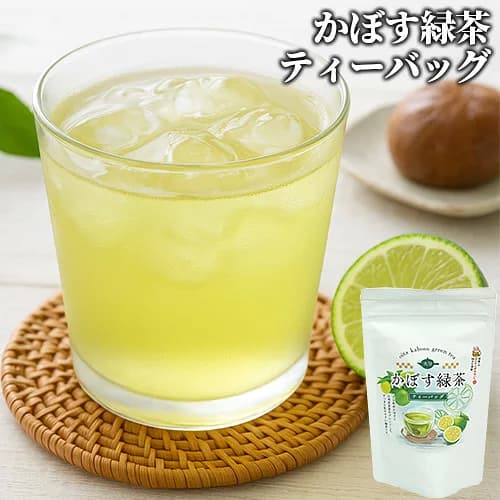
九州産茶葉&大分県産カボス使用 大分かぼす緑茶ティーバッグ (3g×5袋) 緑茶ティーバッグ 国産茶葉 ご当地茶 日本茶 水出しOK お茶の坂本園
コスメボックス
Japanese name大分かぼす
Across Oita Prefecture — in Usuki, Taketa, Bungo-ono, Kunisaki, and Bungotakada — growers raise a tennis-ball-sized green citrus whose juice, milder than lemon or sudachi, gets squeezed over grilled fish, hot pot, and miso soup.
Information last updated 18 days ago
Ordering from abroad works when the recipient has a Japanese address.
None of the listings below mentions gift wrapping in its name; check noshi and wrapping options on the Rakuten page.
3 imagesコスメボックス
First time buying on Rakuten? How residents in Japan order →
In Oita Prefecture, late-summer and autumn tables tend to carry a round, green citrus about the size of a tennis ball: kabosu. It is grown throughout the prefecture, with Usuki, Taketa, Bungo-ono, Kunisaki, and Bungotakada among the main growing areas, and in 2022 Oita alone accounted for roughly 99% of Japan's kabosu. People rarely eat it whole. Instead they squeeze the juice over grilled fish, fried food, hot pot, and miso soup. Its aroma is fresh, and among fragrant acidic citrus its sweetness runs higher and its sourness softer, so it lifts a dish without covering the main ingredient. What follows traces the fruit from the orchards of Oita to the old trees of Usuki, through harvest and storage, the handwork of the groves, and the everyday table.
Kabosu is a specialty fruit tree of Oita Prefecture, cultivated across the whole prefecture. The main growing areas cluster around Usuki, Taketa, Bungo-ono, Kunisaki, and Bungotakada, in commercial orchards and in scattered garden trees alike. Both the prefecture and the growers' association describe Oita as supplying almost all of Japan's kabosu — about 99% of national output in 2022.
Fruit sold under the name Oita kabosu is simply kabosu grown within the prefecture; the name fixes the growing ground to Oita rather than to any single town. Usuki and Taketa, by contrast, mark where cultivation was earliest and is densest, not the only places the trees stand.
A kabosu is about as big as a tennis ball, a size larger than the similar-looking sudachi. Cut it open and the flesh is juicy, the scent clean. Among fragrant acidic citrus its sweetness is comparatively strong and its sourness rounded, so a squeeze over grilled fish or grilled meat draws out the ingredient's own flavor while the acidity stays in the background.
It also carries a faint mineral saltiness, which is why using kabosu in place of some salt can help cut sodium, and its juice holds citric acid and vitamin C. Together these traits explain the habit of squeezing it only as the food reaches the table, so the aroma and acidity land fresh.
Kabosu was planted early in household gardens around Taketa and Usuki, kept as a medicinal plant. In Usuki's Otomi district a local account survives: that in the Edo period a doctor named Sogen brought a seedling back from Kyoto and planted it, taken as the start of cultivation. This is oral local tradition rather than a documented, dated origin.
Usuki does, though, keep living witnesses. One tree in the city is said to be around 300 years old, and several more of roughly 200 years are scattered about. The word kabosu first appears in writing only in the mid-Showa years after the war. Because trees this old are not found in other prefectures, Oita is widely taken to be where the fruit originated.
Kabosu is at its peak from August to October, when juice and aroma are fullest. To stretch the shipping window, growers link greenhouse, open-field, and stored fruit: greenhouse fruit runs from about mid-March to early August, open-field fruit follows from August, and from October cold-stored fruit takes over.
Storage is about holding the peel green and the aroma intact into winter. In November and December there is also yellow kabosu, left to ripen on the tree and harvested late. Through this arrangement Oita's kabosu reaches the table from late summer well into the following spring, beyond the two or three months of open-field harvest.
Much of a kabosu's green color and quality comes from handwork in the grove. Growers prune, clear the branches that block light, and expose each fruit to the sun so the peel colors a clear green; they also watch for the tree's tendency to bear in alternate years and even out the yield. Harvest in high summer is hard going, and many steps are still done by hand where mechanization remains limited.
The cultivated varieties differ too — among them Oita No. 1 and Toyo Midori. In Kunisaki, one grower works about 22 hectares and runs a juice-processing facility, shipping fresh fruit and making processed goods alike. These are the choices of individual farms, not a single rule across the whole prefecture.
In Oita the commonest use of kabosu is a squeeze just before eating. It cuts the richness of grilled fish, grilled meat, and fried food; a few drops into hot pot or miso soup freshen the bowl; and it turns up in cocktails, highballs, soft drinks, and sweets. Because its sweetness runs high and its sourness stays rounded, the juice carries the ingredient's aroma forward instead of masking it.
Many growers' own favorite way is simply to squeeze it fresh. The association, too, stresses how plain the method is: squeeze the juice into a dish or a drink, and that is all. That habit of a single squeeze is what lets the fruit slip into an everyday meal.
At the end of July 2020, the JA Oita kabosu section and the Usuki City kabosu promotion council ran an outreach class for about 30 fifth-graders at Shimominami Elementary School in Usuki. That year the pandemic pushed the start of summer break later, so the children happened to catch the season's first harvest.
The class ran in three parts: first a harvest in the grove of Kazuo Ninomiya, a member of the southern Oita kabosu section, where children picking with shears for the first time were nervous and delighted; then a lesson on the history and distribution of Oita kabosu; and finally making kabosu lassi, a yogurt drink. One child said they were surprised Oita grows more kabosu than anywhere in Japan; another saw how hard the harvest is for farmers. Oita kabosu reaches its busiest stretch just after Obon.
From the old trees in Usuki's gardens to the orchards now spread across Oita, kabosu has kept its place in the prefecture through one small act: a squeeze over grilled fish, hot pot, or miso soup. Growers harvest, prune, and sun the fruit through high summer, then use greenhouses and cold storage to carry that green peel into winter and spring, while schoolchildren pick up harvest shears for the first time in the grove. It is these concrete tasks and scenes that set the green fruit into the daily life of Oita.
Compiled from public records and official sources; see the recognition links below. Details may change over time.
Where this product is officially registered, designated, or recognized in Japan.
It is written as 大分かぼす in Japanese. Search Rakuten and other Japanese sites with that spelling — the English name will not bring up the listings.
Oita kabosu is a fragrant acidic citrus grown throughout Oita Prefecture, mainly in Usuki, Taketa, Bungo-ono, Kunisaki, and Bungotakada. In 2022 Oita accounted for about 99% of Japan's kabosu production. The fruit is about the size of a tennis ball, a size larger than sudachi, with juicy flesh, a fresh aroma, and acidity gentler than lemon or sudachi.
Peak season is August to October, when juice quality, quantity, and aroma are strongest. Greenhouse fruit runs from mid-March to early August, open-field fruit from August, and cold-stored fruit from October, which keeps the green peel and aroma available. In November and December, 'yellow kabosu' is harvested after ripening on the tree. A local account in Usuki's Otomi district tells of a doctor, Sogen, bringing a seedling from Kyoto in the Edo period, and one tree in Usuki is said to be about 300 years old.
Squeeze the juice over grilled fish, grilled meat, fried food, hot pot, miso soup, or drinks. It also goes on sweets, where the gentle acidity and aroma lift the main ingredient.
Storage varies by product — shelf-stable, refrigerated, or frozen — and is stated on the packaging and the Rakuten listing. Shelf-stable processed foods usually need refrigerating once opened and eating within a few days; chilled and frozen items go straight into storage on arrival. Treat the best-before date on the physical packaging as authoritative.
Many countries restrict bringing in this kind of food, so check your destination's rules before you pack it, or enjoy it in Japan.
On Rakuten: the shops listed here right now are コスメボックス. We don't sell directly; purchase, payment, stock, and delivery are all handled on the Rakuten product page.