 3 images
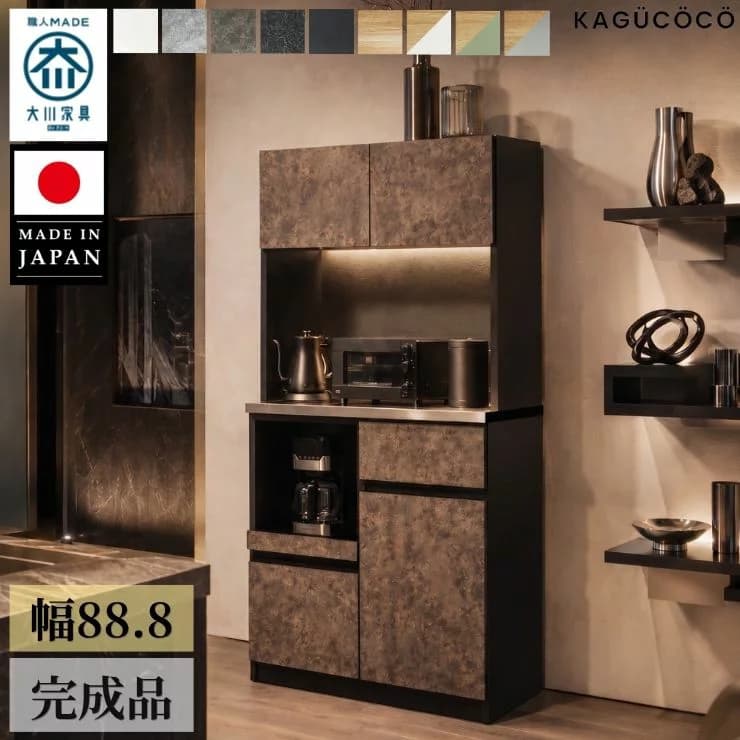
Okawa Furniture Napoli 3 Assembled Kitchen Cabinet
食器棚 大川家具 レンジ台 キッチンボード 完成品 幅88.8cm 奥行 45cm 高さ 181cm キッチン 引き出し 収納 レンジボード ダイニングボード キッチン収納 電子レンジ台 おしゃれ 組み立て不要 ナポリ
W88.8 x D45 x H181 cmKAGUCOCO
4.6 / 1192 reviews
Japanese name大川家具
In Okawa City, Fukuoka, Hita timber, Enokizu shipwright skill, tansu storage, tables, and chairs grew from a river-port setting into a broad woodworking field.
Information last updated yesterday
3 images食器棚 大川家具 レンジ台 キッチンボード 完成品 幅88.8cm 奥行 45cm 高さ 181cm キッチン 引き出し 収納 レンジボード ダイニングボード キッチン収納 電子レンジ台 おしゃれ 組み立て不要 ナポリ
W88.8 x D45 x H181 cmKAGUCOCO
4.6 / 1192 reviews
 3 images
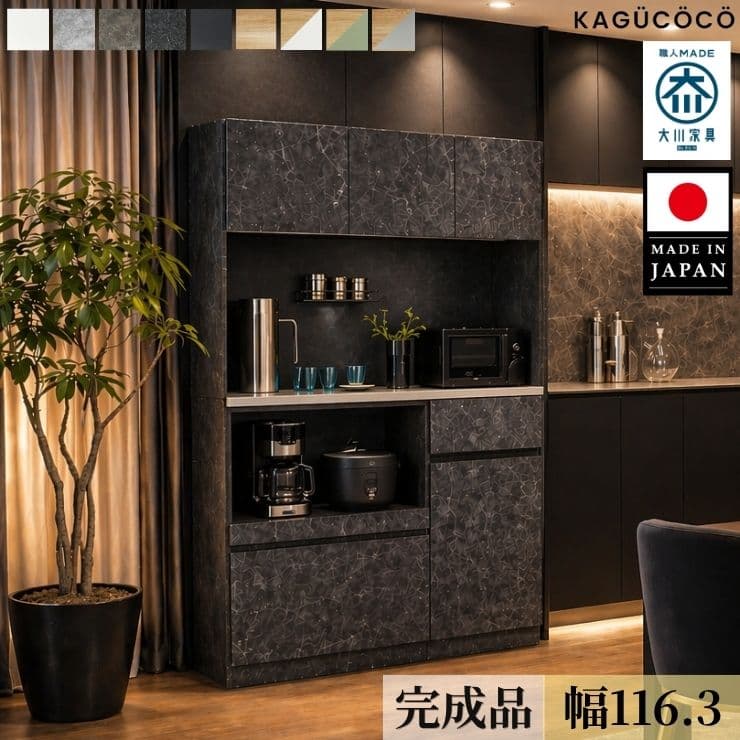
食器棚 大川家具 レンジ台 キッチンボード 完成品 キッチン 引き出し 収納 カップボード 120 レンジボード ダイニングボード キッチン収納 電子レンジ台 おしゃれ 組み立て不要 大容量 北欧 白 黒 日本製 ナポリ
116.3 cm widthKAGUCOCO
4.5 / 926 reviews
 3 images
食器棚 大川家具 レンジ台 キッチンボード 完成品 キッチン 引き出し 収納 カップボード 120 レンジボード ダイニングボード キッチン収納 電子レンジ台 おしゃれ 組み立て不要 大容量 北欧 白 黒 日本製 ナポリ
116.3 cm width大川家具工房
4.5 / 120 reviews
 3 images
シン パッソ | チェスト 完成品 木製 幅75cm 75cm 6段 北欧 【 収納棚 おしゃれ 国産 ホワイト 引き出し たんす 大川家具 日本製 衣服収納 ランドリー 収納 新生活 タンス 引き出し リビング 子供部屋 白 キャビネット ハイチェスト 箪笥
75 cm wide, 6 drawers出会いに感謝 アルファタカバ
4.3 / 101 reviews
First time buying on Rakuten? How residents in Japan order →
All 4 listings of this product on Rakuten, lowest price first.
| Listing | Price | Shop | Reviews | Open listing |
|---|---|---|---|---|
Okawa Furniture Shin Passo Wooden Chest 75 cm wide, 6 drawersLowest price | ¥24,900 | 出会いに感謝 アルファタカバ | 4.3 / 101 reviews | View on Rakuten → |
Okawa Furniture Napoli 3 Assembled Kitchen Cabinet W88.8 x D45 x H181 cmMost reviewed | ¥32,999 | KAGUCOCO | 4.6 / 1192 reviews | View on Rakuten → |
Okawa Furniture Napoli 3 Kitchen Cupboard 116.3 cm widthValue pick | ¥34,999 | KAGUCOCO | 4.5 / 926 reviews | View on Rakuten → |
大川家具 Napoli 3 Assembled Kitchen Cupboard 116.3 cm widthValue pick | ¥34,999 | 大川家具工房 | 4.5 / 120 reviews | View on Rakuten → |
Japanese · new tab
Okawa Furniture begins with a practical geography of water and wood. Okawa City sits at the mouth of the Chikugo River, where timber from Hita moved downstream and routes led toward the Ariake Sea. In Enokizu, shipbuilders and repair craftsmen gathered around timber, tools, and river transport; their woodworking skill is tied to Enokizu sashimono, a key thread behind the furniture town.
Okawa City stands where the Chikugo River reaches its mouth, and timber from Hita could collect after moving downstream. The city also held a transport position toward the Ariake Sea, giving wood, boats, and craftspeople a working meeting point. Enokizu is described as the place connected with Okawa Furniture's origin, and its shipbuilders and repair craftsmen handled large timber, joins, and durable structures in daily work.
The woodworking line behind Okawa Furniture rests on concrete conditions: Hita timber, the Chikugo River route, shipbuilding, ship repair, and the emergence of Enokizu sashimono. By the mid-Edo period, Enokizu was known for shipbuilding and farm tools. In the later Edo period, waterwheels, shoji, cupboards, and fine woodwork moved from the area to the Yanagawa domain, showing a workshop base for useful wooden objects before modern furniture took shape.
After the Meiji period, Okawa Furniture entered a period of growth. In 1935, the opening of the National Railway Saga Line expanded its sales routes across Kyushu, adding rail movement to the older river-mouth and sea-route setting. Tansu, cupboards, and other wooden furnishings could travel beyond the local river corridor, tying the production town to a wider regional network.
A named design moment sharpened Okawa's reputation in 1955. At the West Japan products exhibition in Osaka, Ryo Kawachi's handleless tansu won the top prize. The cabinet joined design judgment and woodworking skill in a single storage form, and the award helped make Okawa known across Japan as a furniture town while leaving room for the wider production area behind it.
Today's Okawa Furniture covers a broad field of household and project interiors. The Fukuoka-Okawa Furniture Industry Cooperative lists categories including Japanese, folk-style, and paulownia tansu; shelves; kitchen storage; living boards; tables; chairs; desks; sofas; beds; entrance storage; wall storage; custom furniture; contract furniture; and component processing. That range places Okawa work in storage rooms, dining spaces, living rooms, bedrooms, and built interiors.
Okawa's current woodworking scene also appears through named community initiatives. The Okawa Ishin no Kai brings together young managers and technicians from furniture, fittings, lumber, and related wood industries, and since 2012 it has developed the Okawa Takumi no Sekai Collection around living-space proposals and brand-image work. Okawa Conserve began in 2009 as a chamber of commerce project using accumulated woodworking skill and local natural resources to create dining-table settings where wood and food meet. The Okawa no Takumi system recognizes skilled woodworkers who have supported the local wood industry.
Okawa Furniture is best understood through connected particulars: the Chikugo River mouth, Hita timber, Enokizu shipwrights, Enokizu sashimono, the 1935 Saga Line, the 1955 handleless tansu, and today's maker network. Together they describe a Fukuoka furniture family that reaches from storage cabinets to tables, chairs, sofas, beds, custom pieces, and component work for everyday interiors.
Compiled from public records and official sources; see the recognition links below. Details may change over time.
Where this product is officially registered, designated, or recognized in Japan.
Regional collective trademark
Registered as a Regional Collective Trademark with the Japan Patent Office.
Sources1
It is written as 大川家具 in Japanese. Search Rakuten and other Japanese sites with that spelling — the English name will not bring up the listings.
Okawa Furniture is a furniture and woodworking family associated with Okawa City, Fukuoka. Its place story centers on the Chikugo River mouth, timber from Hita, routes toward the Ariake Sea, Enokizu shipwrights, and Enokizu sashimono. The 1935 Saga Line expanded sales across Kyushu, and Ryo Kawachi's handleless tansu won a top prize in Osaka in 1955. Today Okawa makers cover storage furniture, tables, chairs, desks, sofas, beds, custom furniture, contract furniture, and component processing.
Enokizu is described as an area tied to the origin of Okawa Furniture and to shipbuilders and repair craftsmen. Enokizu sashimono is linked to timber access and woodworking skill in the Enokizu area. Okawa Conserve began in 2009 as a project using Okawa woodworking skill and natural resources to create dining-table settings where wood and food meet.
Storage items such as tansu, wardrobes, chests, shelves, entrance storage, and wall storage are used for household storage. Tables, chairs, desks, sofas, and TV boards are used to furnish dining and living spaces. The Okawa Conserve project uses woodworking skill to create dining-table settings where wood and food meet.
Keep wood, bamboo, and lacquer out of prolonged soaking, dishwashers, and direct sun — wipe dry after use and let them air out in the shade. For metal and fabric goods, follow the care notes on the listing.
Most options are shelf-stable, boxed, and travel well, so they suit gifting or bringing home. Confirm the final storage and delivery terms on the Rakuten listing.
On Rakuten: the shops listed here right now are KAGUCOCO, 大川家具工房, 出会いに感謝 アルファタカバ. We don't sell directly; purchase, payment, stock, and delivery are all handled on the Rakuten product page.