 3 images
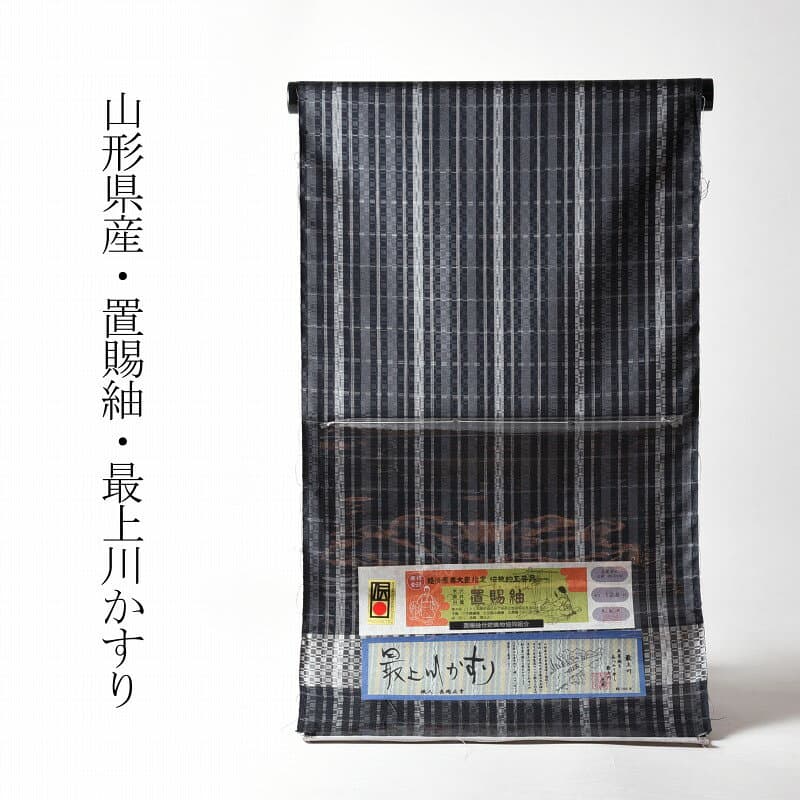
Yamagata Oitama Tsumugi Nagai Tsumugi Mogamigawa Kasuri Kimono with Hand-Sewn Tailoring
置賜紬 手縫いお仕立て付き 山形県産 長井紬 最上川かすり 縞柄 濃淡グレー色【着物/和服/和装/パーティ/ショッピング/食事/お出掛け着】【裄72.5cmまで】送料込み
light and dark gray stripes, yuki up to 72.5 cmさわらび〜ほりだし堂〜
Japanese name置賜紬
In southern Yamagata, Oitama Tsumugi gathers Yonezawa plant dyeing, Nagai kasuri, and Shirataka board-resist work around raw silk, dupion silk, floss-silk spun yarn, and plain weaving after the yarn is dyed.
Information last updated 120 days ago
3 images置賜紬 手縫いお仕立て付き 山形県産 長井紬 最上川かすり 縞柄 濃淡グレー色【着物/和服/和装/パーティ/ショッピング/食事/お出掛け着】【裄72.5cmまで】送料込み
light and dark gray stripes, yuki up to 72.5 cmさわらび〜ほりだし堂〜
 3 images
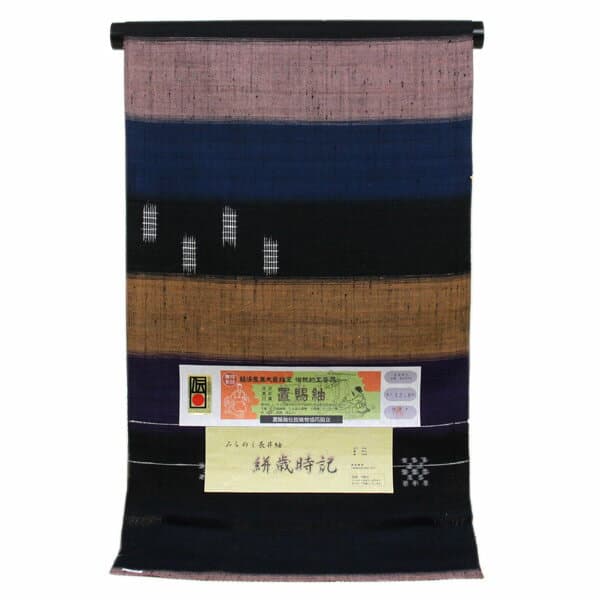
反物 手織りシリーズ 置賜紬 経済産業大臣指定 絣歳時記 あすかや [商品番号t2006]
approx. 36cm x 12mあすかや
 3 images
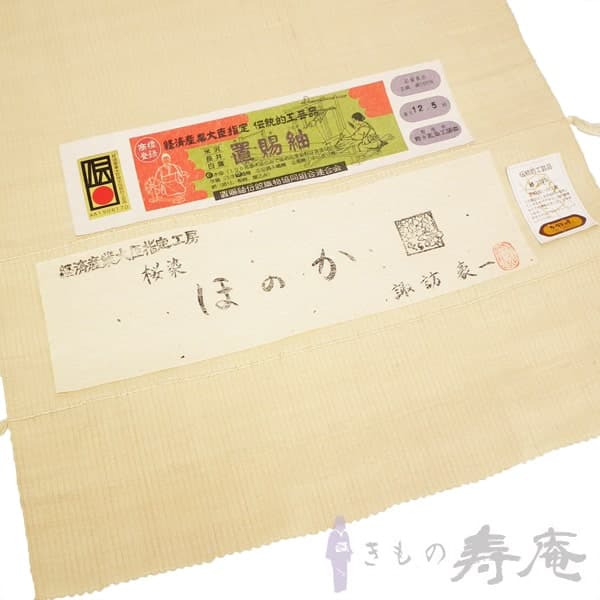
着物 紬 無地 着尺 反物 置賜紬 米沢紬 桜染ほのか ベージュ 伝統工芸品 諏訪豪一 野々花染工房 経済産業大臣指定工房 お茶会 パーティー セミフォーマル カジュアル 正絹 日本製 新品 未仕立
beige, 12.5 m x 39 cm帯きもの寿庵 京都発 新品和装専門
First time buying on Rakuten? How residents in Japan order →
In the Oitama region of southern Yamagata, one textile name gathers three local centers: Yonezawa plant-dyed cloth, Nagai Tsumugi, and Shirataka Tsumugi. The route begins with yarn before a finished bolt: raw silk, dupion silk, and floss-silk spun yarn are dyed, then woven in plain weave. Across that shared base, Yonezawa brings safflower and other plant dyes, Nagai develops kasuri through weft or warp-and-weft alignment, and Shirataka uses patterned boards to make small kasuri motifs.
Oitama Tsumugi belongs to the Oitama region in southern Yamagata. Within that region, Yonezawa City is tied to plant-dyed work, Nagai City to Nagai Tsumugi, and Shirataka Town in Nishioitama District to Shirataka Tsumugi. The family includes plant-dyed tsumugi, weft kasuri, combined warp-and-weft kasuri, and board-resist small kasuri, so the first concrete view is a map of places and techniques.
The growth of Oitama Tsumugi is linked to Uesugi Yozan of the Yonezawa domain, whose encouragement of local industry is tied to the textile’s fuller development. That history matters because the cloth is described through work inside a region: dyeing in Yonezawa, kasuri in Nagai, and board-resist dyeing in Shirataka. The visible division of work among the three places carries the historical context in concrete form.
The material base is concrete: raw silk, dupion silk, and floss-silk spun yarn. Many Oitama Tsumugi techniques share the practice of dyeing the yarn before plain weaving, which means color and kasuri placement are prepared before the fabric is formed. When warp and weft meet in weaving, plant color and resist-dyed sections have already been set into the yarn.
Yonezawa plant-dyed tsumugi uses plant dyes such as safflower, kariyasu, and logwood. The safflower route gives a concrete sequence: flowers are picked, washed and kneaded, fermented into safflower cakes, then the color is drawn out with ash lye and applied to yarn. The finished color is connected to a chain of flower, water, fermentation, lye, and dyeing.
In Shirataka board-resist small kasuri, pattern is prepared before weaving by winding warp and weft threads around carved boards. The boards are clamped, dye enters the spaces or grooves, and the thread is dyed in separated areas. Later, the warp and weft kasuri threads are matched by hand so the small motifs appear in plain weave instead of being added afterward.
Nagai Tsumugi is described through two kasuri routes. In weft kasuri, the kasuri thread is used in the weft; in combined kasuri, kasuri threads are used in both warp and weft. The pattern depends on hand alignment of dyed threads, and the dyeing methods can include hand tying, hand rubbing, or stencil printing, so the motif is planned in the yarn before the fabric surface appears.
Oitama Tsumugi is made for use as cloth, with kimono fabric, hakama, obi, and bags named among its main products. Those uses give the techniques a practical frame: Yonezawa’s plant-dyed yarn, Nagai’s aligned kasuri, and Shirataka’s board-resist small motifs all return to fabric that is worn, tied, or carried. The textile’s variety stays close to the body and to handled objects.
Seen from southern Yamagata, Oitama Tsumugi is a textile family held together by place, yarn, and sequence. Yonezawa moves safflower and other plant dyes into thread; Nagai sets kasuri through weft or warp-and-weft alignment; Shirataka uses patterned boards to divide dye before weaving. One regional name contains several ways of making cloth, each visible in the yarn before the fabric is complete.
Compiled from public records and official sources; see the recognition links below. Details may change over time.
Where this product is officially registered, designated, or recognized in Japan.
It is written as 置賜紬 in Japanese. Search Rakuten and other Japanese sites with that spelling — the English name will not bring up the listings.
Okitama Tsumugi is a textile family from the Okitama region of southern Yamagata, covering Yonezawa plant-dyed cloth, Nagai Tsumugi, and Shirataka Tsumugi. It uses raw silk, dupion silk, and floss-silk spun yarn, often dyed before plain weaving. Yonezawa centers plant dyes such as safflower, Nagai develops weft and combined kasuri, and Shirataka uses board-resist small kasuri. Main products include kimono fabric, hakama, obi, and bags.
Okitama Tsumugi received national traditional craft designation in 1976. The development of Okitama Tsumugi is linked to Uesugi Yozan's encouragement of local industry. The main production places named for Okitama Tsumugi are Yonezawa City, Nagai City, and Shirataka Town in Nishioitama District. Nagai Tsumugi includes weft kasuri, which uses kasuri thread only in the weft, and combined kasuri, which uses kasuri thread in both warp and weft.
The cloth is used for kimono fabric, hakama, obi, and bags. Yonezawa plant-dyed tsumugi is worn to show the colors of dyes such as safflower. Shirataka's board-resist kasuri creates fine patterns such as tortoiseshell (kikko), cross, and mosquito (ka-gasuri) motifs, enjoyed in garments and obi.
Naturally dyed textiles shed some colour on first wash. Hand-wash separately with a neutral detergent, avoid long soaking and bleach, and dry in the shade to prevent fading. Silk, ramie, and traditionally dyed pieces often need professional cleaning — the care label on the listing takes precedence.
Most options are shelf-stable, boxed, and travel well, so they suit gifting or bringing home. Confirm the final storage and delivery terms on the Rakuten listing.
On Rakuten: the shops listed here right now are さわらび〜ほりだし堂〜, あすかや, 帯きもの寿庵 京都発 新品和装専門. We don't sell directly; purchase, payment, stock, and delivery are all handled on the Rakuten product page.