 3 images
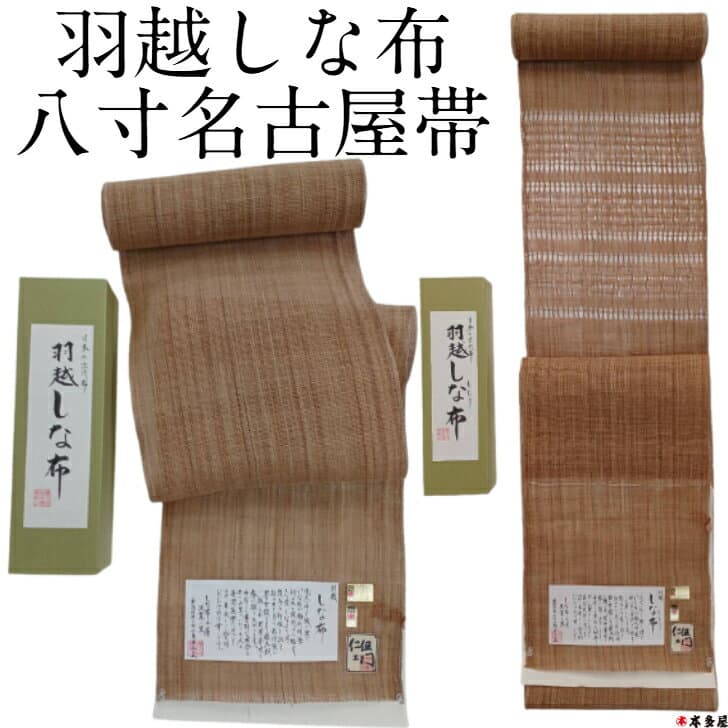
Uetsu Shinafu Eight-Sun Nagoya Obi
榀布 科布 しな布 自然布 八寸 名古屋帯 八寸名古屋帯 榀 科 しな シナ 布 無地織 もじり織 無地 もじり もじり柄 山形県 鶴岡市 関川 新潟県 村上市 雷 山熊田 羽越 しな織り しな織 古代布 帯 なごや おび 羽越しな布 伝統的工芸品 伝産マーク
きもの 本多屋 楽天市場店
Japanese name羽越しな布
In Sekikawa, Yamakumada, and Ikazuchi, bark from shinanoki and related linden trees becomes hand-spliced thread, plain weave, and a coarse, durable cloth.
Information last updated 120 days ago
3 images榀布 科布 しな布 自然布 八寸 名古屋帯 八寸名古屋帯 榀 科 しな シナ 布 無地織 もじり織 無地 もじり もじり柄 山形県 鶴岡市 関川 新潟県 村上市 雷 山熊田 羽越 しな織り しな織 古代布 帯 なごや おび 羽越しな布 伝統的工芸品 伝産マーク
きもの 本多屋 楽天市場店
 3 images
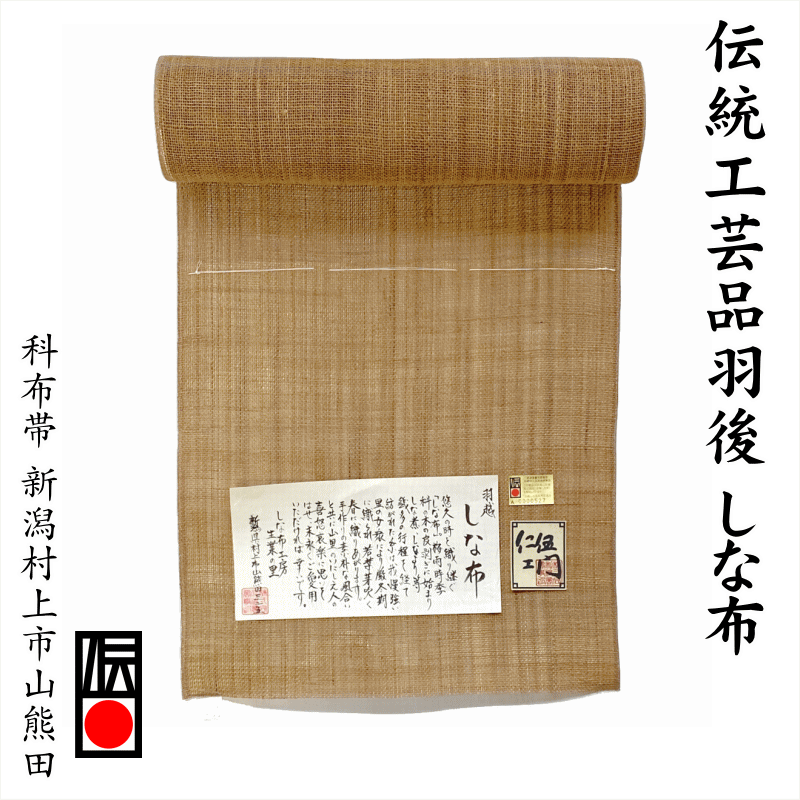
素材で楽しむ植物天然繊維・・・科布帯 新潟村上市山熊田 しな布 八寸名古屋帯 No.9396 羽越しな布 素材:純国産品 未仕立て 経済産業大臣指定伝統的工芸品 羽越しな布(しな100%)生成素無地 自然布 民芸手織り シール・パッケージ写真と違う場合あり パンフ無い場合もあり
Un仕立て, natural plainキモノ 仙臺屋 本店
First time buying on Rakuten? How residents in Japan order →
Uetsu shinafu begins in mountain villages on both sides of the Yamagata-Niigata border: Sekikawa in Tsuruoka, and Yamakumada and Ikazuchi in Murakami. The cloth is made from bast fiber taken from the bark of shinanoki and related linden trees, then turned by hand into thread, twist, and plain weave. Its surface is coarse and quiet, and the same material character appears in obi cloth, noren, bags, hats, and small goods.
Sekikawa belongs to Tsuruoka City in Yamagata; Yamakumada and Ikazuchi belong to Murakami City in Niigata. Together, the three mountain communities give Uetsu shinafu a production area that crosses a prefectural line. The geography matters because the work is tied to mountain-grown bark, rainy-season stripping, winter weaving, and local workshop bases such as the Sekikawa Shinaori Center.
The material is bark before it is thread. Shinanoki, obabodaiju, and nojiribodaiju growing in the Uetsu mountain area provide the bast fiber. Once the usable fiber is separated, the finished cloth is known for a rough hand and a subdued surface, traits connected to the bark fiber at its core.
From thread making to weaving, the work takes about one year and can be followed through twenty-two steps. It starts with bark stripped during the rainy season, then boiling with lye, washing in a river, soaking in rice bran, splitting the fiber to about three millimeters, hand-splicing it into thread, adding twist with a spinning wheel, and weaving mainly in plain weave.
In older village households, shina cloth belonged to winter work. Families once handled the thread making and weaving through snowy months; in one Niigata village pattern, men went into the summer mountains for bark, while autumn shinaumi thread making and weaving sat with women's handwork. The takabata loom and the plain weave gave the hand-spliced thread a steady structure while keeping the bark fiber's rough character visible.
Use explains the surface. In the Uetsu area, shina cloth served as clothing, workwear, fishing nets, straining cloth, bedding, and storage bags before modern textiles narrowed demand. Activity grew again from the late Showa period, and the cloth now appears in obi cloth, noren, bags, hats, and many small daily objects. It is durable, resists water, and grows more supple with use.
At the Sekikawa Shinaori Center in Tsuruoka, the work has a visible base. Visitors can see product displays, weaving, processing, and production work, and a reservation-based coaster activity narrows the large year-long process to a small woven square. The center gives the cloth a human scale: bark, hand-spliced thread, loom, and finished object can be followed in one place.
Uetsu shinafu is easiest to understand through its sequence: mountain bark, rainy-season stripping, lye and river water, rice-bran soaking, three-millimeter splits, hand-spliced thread, twist, and plain weave. The cloth's coarse calm comes from that sequence, and each obi length, noren, bag, hat, small object, or coaster carries the border villages' year of work in its surface.
Compiled from public records and official sources; see the recognition links below. Details may change over time.
Where this product is officially registered, designated, or recognized in Japan.
Traditional craft
Designated a Traditional Craft (dentō kōgeihin) by Japan's Ministry of Economy, Trade and Industry.
Sources1
It is written as 羽越しな布 in Japanese. Search Rakuten and other Japanese sites with that spelling — the English name will not bring up the listings.
Uetsu shinafu is a plant-fiber textile from Sekikawa in Tsuruoka, Yamagata, and Yamakumada and Ikazuchi in Murakami, Niigata. Makers turn bast fiber from shinanoki and related linden bark into hand-spliced thread, then plain weave it through a process described as about one year and twenty-two steps. The cloth is coarse, subdued, durable, and water-resistant, and is used for obi cloth, noren, bags, hats, and small goods.
The main production area crosses Yamagata and Niigata, including Sekikawa in Tsuruoka and Yamakumada and Ikazuchi in Murakami. The material is bast fiber taken from the bark of shinanoki, obabodaiju, or nojiribodaiju trees growing in mountain areas. Key steps include rainy-season bark stripping, lye boiling, river washing, rice-bran soaking, splitting to about three millimeters, hand-splicing, twisting, and plain weaving. Older household work included winter thread making and weaving, with one Niigata village pattern tying bark stripping to summer and shinaumi thread making to autumn.
The cloth becomes softer with use, while staying durable and water resistant. It is made into obi cloth, noren, bags, hats, and small goods. The Sekikawa Shinaori Center in Tsuruoka offers views of weaving and processing, along with reservation-based coaster making.
Naturally dyed textiles shed some colour on first wash. Hand-wash separately with a neutral detergent, avoid long soaking and bleach, and dry in the shade to prevent fading. Silk, ramie, and traditionally dyed pieces often need professional cleaning — the care label on the listing takes precedence.
Most options are shelf-stable, boxed, and travel well, so they suit gifting or bringing home. Confirm the final storage and delivery terms on the Rakuten listing.
On Rakuten: the shops listed here right now are きもの 本多屋 楽天市場店, キモノ 仙臺屋 本店. We don't sell directly; purchase, payment, stock, and delivery are all handled on the Rakuten product page.