 2 images
Oku-Aizu Amikumi Craft Matatabi Rice Washing Basket
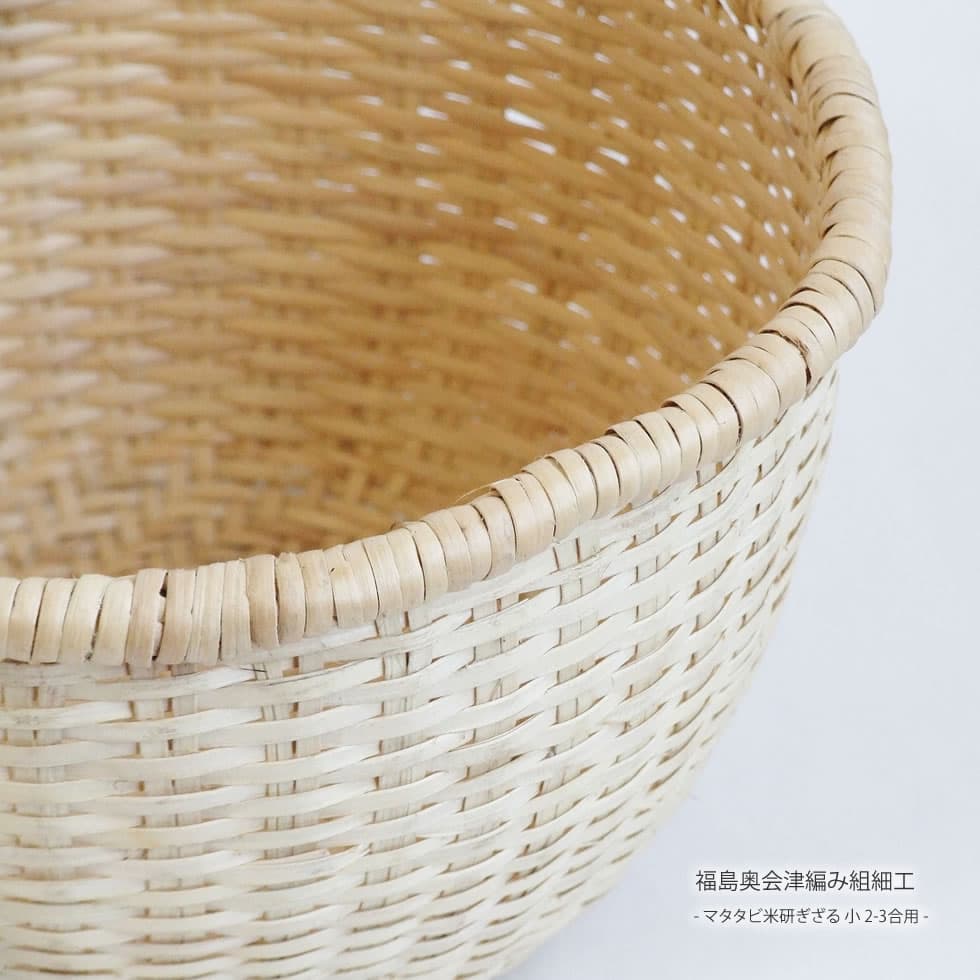
【福島奥会津編み組細工】マタタビ米研ぎざる 小 2-3合用
Small, for 2-3 goおまめ
3.9 / 13 reviews
Japanese name奥会津編み組細工
Around Mishima in Fukushima, winter handwork turns mountain sedge, vine bark, and matatabi into baskets, sweet trays, and kitchen sieves shaped by farming, mountain work, and cooking.
Information last updated yesterday
2 images【福島奥会津編み組細工】マタタビ米研ぎざる 小 2-3合用
Small, for 2-3 goおまめ
3.9 / 13 reviews
First time buying on Rakuten? How residents in Japan order →
Mishima Town in Onuma District, Fukushima, is the main production area for Oku-Aizu Amikumi Zaiku. When snow covers the fields and farm work slows, plants gathered in the mountains of Oku-Aizu become baskets and sieves for daily use. Hand baskets, shoulder baskets, sweet trays, and rice-washing sieves carry the craft back to farming, mountain work, and the kitchen.
Oku-Aizu is known as heavy-snow country, and winter moves much of Mishima’s mountain life indoors. After farm work ends, natural materials are worked into household implements; baskets and sieves have served farming, mountain work, and everyday life. In 2003, Oku-Aizu Amikumi Zaiku became a national traditional craft; in practice, the name gathers three material lines, hirolo, wild grapevine, and matatabi, each made by hand from gathering to finishing.
Hirolo refers to sedges known as Miyama-kansuge and Okuno-kansuge. Leaves gathered from fields and hills are twisted into cord, and that cord is woven into hand baskets, carrying baskets, and shoulder baskets. The fine mesh gives the surface a lace-like density, a texture that comes from turning plant fiber into cord before the basket takes shape.
Wild grapevine work uses bark from the mountain vines of Oku-Aizu, with single bark taken around June, when chestnut flowers bloom, treated as an important material. The bark is dried, soaked, softened, and aligned to width before it becomes hand baskets, carrying baskets, or sweet trays. Its toughness suited baskets for hard mountain work, and the surface gains a deeper gloss as it is used.
Matatabi work uses mature, thick branches that extend from a vine, often about one to three meters long. After peeling, splitting, scraping, and width-aligning, the material is woven into rice-washing sieves and yotsume sieves for the kitchen. These sieves drain water well, become supple when wet, and have been used for washing vegetables and rinsing rice; after weaving, cold exposure or snow exposure adds strength.
The Arayashiki site yielded about 10,000 late-Jomon rope and basketry-related remains from roughly 2,500 years ago. Those excavated pieces place plant weaving in Oku-Aizu on a long local timeline, while Aizu Nosho, Toyu Zakki, and Ina Ihokuya Yotsugumi Fuzokucho show early forms of baskets and sieves in the eighteenth and early nineteenth centuries. Since 1972, Mishima has supported a life-craft movement through town exhibitions; today more than 100 makers are involved, while successor training and raw-material procurement remain current issues.
The Mishima Life Craft Center in the Nairi area of Mishima is one place to meet Oku-Aizu Amikumi Zaiku through materials and hands-on work. Displays and activities bring visitors close to hirolo, wild grapevine, and basketry, including strap-making by reservation and making menus connected with hirolo, wild grapevine, basketry, and woodwork. Recent production also brings in designs suited to contemporary life, keeping hand baskets and small objects within everyday reach.
From hirolo cord and wild grapevine single bark to the water-draining mesh of matatabi sieves, Oku-Aizu Amikumi Zaiku ties Mishima’s snow season to mountain plants and household tools. One end of its timeline touches the Arayashiki site and old named writings; the other rests in today’s hands as makers gather, align, and weave the material into form.
Compiled from public records and official sources; see the recognition links below. Details may change over time.
Where this product is officially registered, designated, or recognized in Japan.
Traditional craft
Designated a Traditional Craft (dentō kōgeihin) by Japan's Ministry of Economy, Trade and Industry.
Sources1
It is written as 奥会津編み組細工 in Japanese. Search Rakuten and other Japanese sites with that spelling — the English name will not bring up the listings.
Oku-Aizu Amikumi Zaiku is a plant-based basketry craft centered on Mishima Town, Fukushima, using hirolo sedge, wild grapevine bark, and matatabi vine for hand baskets, carrying baskets, shoulder baskets, sweet trays, and kitchen sieves. It grew from winter handwork in a heavy-snow region; its long local timeline runs from Arayashiki basketry remains and old named writings to Mishima's life-craft movement and more than 100 makers today.
Oku-Aizu Amikumi Zaiku is mainly produced in Mishima Town, Onuma District, Fukushima, using plants gathered in Oku-Aizu mountain areas. Hirolo refers to Miyama-kansuge and Okuno-kansuge; it is twisted into cord and woven into hand, carrying, and shoulder baskets. Wild grapevine work uses strong vine bark, including single bark gathered around June, and the material is dried, soaked, softened, width-aligned, and woven, gaining gloss with use. Matatabi sieves drain well, become supple when wet, were used for washing vegetables and rice, and are finished with cold or snow exposure after weaving.
Hand baskets, carrying baskets, and shoulder baskets are used in everyday life, a use handed down from winter handwork in a heavy-snow mountain region. Matatabi sieves drain well and become supple when wet, so they have been used for washing vegetables and rinsing rice. Mishima's Seikatsu Kogeikan (life craft hall) displays and sells the craft year round, holds related events in June, October, and March, and offers hands-on experiences such as making strap charms.
Keep craft pieces out of direct sunlight, damp, and sharp temperature swings, and store them where they won't knock against anything. Wood, bamboo, lacquer, and paper don't tolerate water — wipe any moisture off immediately. Specific care notes are on the listing.
Most options are shelf-stable, boxed, and travel well, so they suit gifting or bringing home. Confirm the final storage and delivery terms on the Rakuten listing.
On Rakuten: the shops listed here right now are おまめ. We don't sell directly; purchase, payment, stock, and delivery are all handled on the Rakuten product page.