 3 images
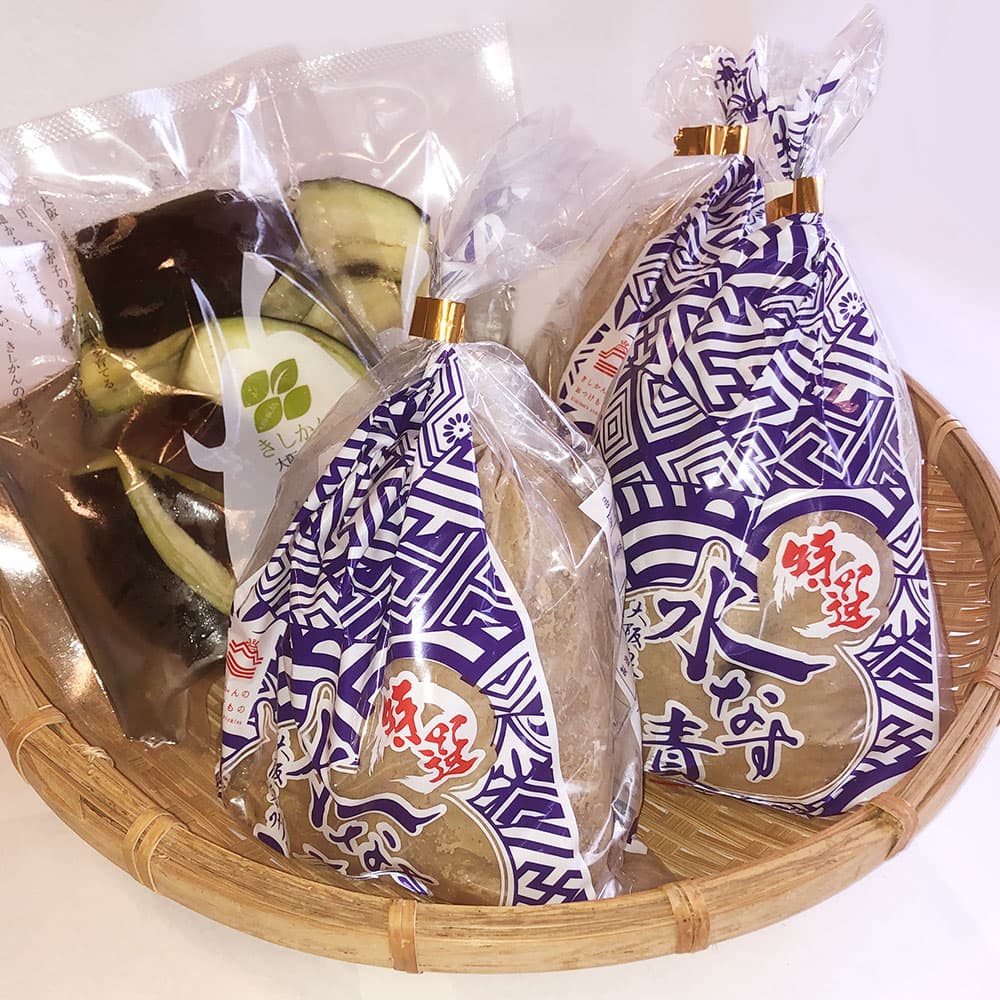
Osaka Senshu Mizunasu Pickles Set
【生きた乳酸菌入り】大阪・泉州水なす漬 ぬか漬3個+液漬2個 ギフトに最適です☆ 水ナス糠漬け お漬物 【水茄子】【漬物】【贈答品】
3 nukazuke + 2 liquid-pickled packsきしかん楽天市場店
4.7 / 31 reviews
Japanese name泉州水なす
In the Senshu area south of Kishiwada, a moisture-rich eggplant is known for tender skin, low bitterness, gentle sweetness, and a table life that runs through raw pieces, salt rubbing, nuka beds, and asazuke.
Information last updated 119 days ago
3 images【生きた乳酸菌入り】大阪・泉州水なす漬 ぬか漬3個+液漬2個 ギフトに最適です☆ 水ナス糠漬け お漬物 【水茄子】【漬物】【贈答品】
3 nukazuke + 2 liquid-pickled packsきしかん楽天市場店
4.7 / 31 reviews
First time buying on Rakuten? How residents in Japan order →
Senshu Mizunasu belongs to Osaka’s southern Senshu area, especially fields south of Kishiwada and places such as Izumisano, Kishiwada, Kaizuka, and Tajiri. Its name carries the idea of water, and the eating qualities follow that clue: soft flesh and skin, high moisture, low acridity, and a distinct sweetness that makes raw eating, salt rubbing, salad, asazuke, nuka pickles, and liquid pickles natural parts of its table life.
The place behind Senshu Mizunasu begins with southern Osaka names: Izumisano, Kishiwada, Kaizuka, Tajiri, and the broader belt of fields south of Kishiwada. Its growing conditions are often connected with warm weather, water-retentive soil, and reservoirs across Senshu; in one Kishiwada water-eggplant shipping group, growers describe daily attention to ridge nutrients, water volume, and the condition of each plant.
The defining qualities appear before any cooking begins: tender skin, soft flesh, abundant moisture, low bitterness, and a gentle sweetness unusual enough to make raw eating possible. Those traits explain why Senshu Mizunasu can be torn by hand, served in salad, rubbed lightly with salt, or eaten fresh; the old image of farm workers easing thirst with raw mizunasu places that moisture back in the field where it grew.
The modern market type is commonly described as Senshu Kinukawa Mizunasu. It is linked to pouch-shaped water eggplants present around the Showa 30s, then improved into a darker type that could carry the Senshu name in the market. Older origin accounts do not point to only one place: one line connects the Sawa name in Kaizuka with the Muromachi-era mention of “Sawa nasu,” while another places the likely birthplace near Kamino-go in Izumisano, so the careful way to read the past is as layered local memory rather than a single settled origin.
The JA Izumino water-eggplant production and shipping group in Kishiwada gives one concrete view of cultivation. The group uses both greenhouse and open-field growing to ship from about April through October, while watching soil nutrition, water balance, and plant condition. Its growers cut fruit at 5 a.m. so the skin keeps gloss and firmness for the next step; that dawn practice belongs to this named Kishiwada group and should not be stretched into a rule for every Senshu farm.
Until around Showa 40, many Senshu households kept nuka beds, and water eggplant often appeared as a simple pickle at home. It also became familiar through asazuke and liquid pickles; because the flesh is soft, it can be torn lengthwise by hand so the moisture and mild sweetness reach the tongue directly. Here, tradition means a concrete set of household practices: nuka beds in Senshu, hand-torn pieces, and quick pickles on the table.
JA Osaka Senshu’s water-eggplant section has 145 members and shipped about 1,100 tons in Reiwa 6; heated cultivation begins around December, greenhouse cultivation runs from March to August, and open-field cultivation from May to November. Senshu Mizunasu also carries a regional collective mark and was registered as a geographical indication on January 31, 2025; for readers, that background mainly shows that the name, place, and producer community have defined boundaries, while the immediate identity remains the soft skin, moisture, and asazuke taste of southern Osaka fields.
Senshu Mizunasu does not need a grand label to hold attention. Its concrete details are already strong: fields south of Kishiwada, place names such as Izumisano and Kaizuka, soft high-moisture flesh, the Senshu Kinukawa type developed around the Showa 30s, a Kishiwada example of dawn harvest, and household nuka beds that carried the vegetable into everyday pickles. Together, those details show how a regional Osaka eggplant moves from water-rich soil to the moment it is torn open by hand at the table.
Compiled from public records and official sources; see the recognition links below. Details may change over time.
Where this product is officially registered, designated, or recognized in Japan.
Regional collective trademark
Registered as a Regional Collective Trademark with the Japan Patent Office.
Sources1
It is written as 泉州水なす in Japanese. Search Rakuten and other Japanese sites with that spelling — the English name will not bring up the listings.
Senshu mizunasu eggplant is a water eggplant from Osaka's southern Senshu area, especially fields south of Kishiwada and places including Izumisano, Kishiwada, Kaizuka, and Tajiri. It has high moisture, tender skin and flesh, low bitterness, and a distinctive sweetness. The current Senshu Kinukawa Mizunasu type is linked to improvements of pouch-shaped water eggplants around the Showa 30s.
Older origin accounts differ, connecting the crop to Kaizuka Sawa and a Muromachi-era Sawa nasu reference, or to the Kamino-go area of Izumisano. The JA Izumino water-eggplant shipping group in Kishiwada uses greenhouse and open-field timing, ships from about April to October, and emphasizes soil, water balance, and cutting fruit at 5 a.m. JA Osaka Senshu reports a 145-member water-eggplant section with about 1,100 tons shipped in Reiwa 6. An educational study notes that until around Showa 40, most households in Senshu had nuka beds and water eggplant was a simple everyday pickle before later transport and processing spread it farther.
High moisture, softness, low acridity, and sweetness support eating it raw, in salad, and in salt-rubbed preparations. It is also used for asazuke, nuka pickles, and liquid pickles; JA Osaka Senshu calls asazuke a local specialty. An educational study describes water eggplant as disliking contact with metal and being eaten by tearing it lengthwise by hand.
Storage varies by product — shelf-stable, refrigerated, or frozen — and is stated on the packaging and the Rakuten listing. Shelf-stable processed foods usually need refrigerating once opened and eating within a few days; chilled and frozen items go straight into storage on arrival. Treat the best-before date on the physical packaging as authoritative.
Most options are shelf-stable, boxed, and travel well, so they suit gifting or bringing home. Confirm the final storage and delivery terms on the Rakuten listing.
On Rakuten: the shops listed here right now are きしかん楽天市場店. We don't sell directly; purchase, payment, stock, and delivery are all handled on the Rakuten product page.