 3 images
Senshu Towel Japanese Cotton Face Towels
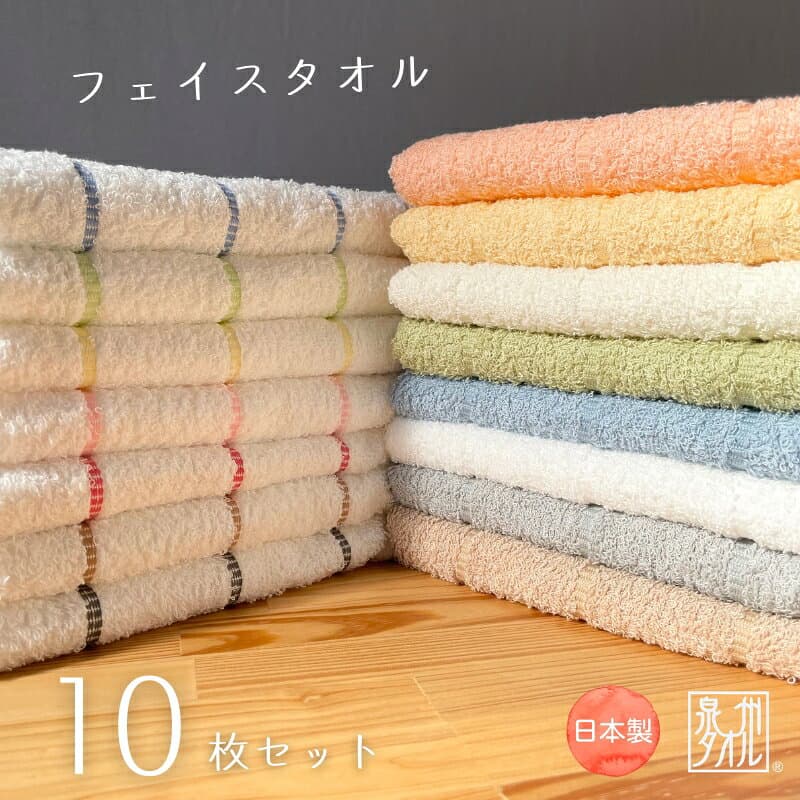
\6/6★1時間限定/¥2380→¥1900 タオル フェイスタオル 10枚セット 日本製 白色 綿100% 泉州タオル ブランドタオル まとめ買い 約35×85cm 速乾 白 ホワイト 200匁 国産 コットン 保育園 吸水性抜群 ふわふわ 柔らか ふかふか 子供 薄手 薄い メンズ 10枚組 送料無料
White, set of 10こもれび楽天市場店
4.5 / 1078 reviews
Japanese name泉州タオル
Cotton yarn is sized, woven into long undyed cloth, then washed and bleached after weaving. In southern Osaka, Senshu Towel is shaped by Sano village’s loom history, soft groundwater from the Izumi Mountains, and a district of divided work.
Information last updated 120 days ago
3 images\6/6★1時間限定/¥2380→¥1900 タオル フェイスタオル 10枚セット 日本製 白色 綿100% 泉州タオル ブランドタオル まとめ買い 約35×85cm 速乾 白 ホワイト 200匁 国産 コットン 保育園 吸水性抜群 ふわふわ 柔らか ふかふか 子供 薄手 薄い メンズ 10枚組 送料無料
White, set of 10こもれび楽天市場店
4.5 / 1078 reviews
 3 images
日本製 フェイスタオル 10枚セット (ボーダーライン) 泉州タオル 国産 タオル フェイス フェイスタオル セット 240匁 中厚 まとめ買い 普段使い デイリー やわらかい 送料無料【P12倍(5/25~5/27 1:59)】
10 towels, 240 mommeタオルの やす吉
4.4 / 760 reviews
First time buying on Rakuten? How residents in Japan order →
Senshu Towel comes from southern Osaka’s Senshu area, with an early scene in Sano village, now Izumisano City, in 1887. Enjiro Satoi, a white-cotton merchant, adapted a cotton-cloth loom after studying German towels so it could make looped towel fabric; the following year, Moemon Nakai named the machine Uchide-ki. The absorbent feel that reaches the hand comes through cotton yarn sizing, long-cloth weaving, and post-weaving washing and bleaching.
Before towel making, Senshu already had a cotton base: cultivation, spinning, tenugui cloth, and bleached cotton cloth trade grew in a warm, low-rainfall Seto Inland Sea climate in southern Osaka. The materials around Sano village were concrete everyday goods: cotton yarn, flat hand cloth, and white cotton cloth. In 1887, Satoi altered a cotton-cloth loom so it could raise looped threads on the surface. Those loops gave towel cloth a fuller, softer hand than flat tenugui cloth.
The process begins before the cloth looks like a towel. Cotton yarn is wound, treated with starch, dried, and rewound so it gains strength and moves more smoothly through weaving. The loom then produces long, undyed, uncut towel cloth. At that stage, the cloth still carries cotton oils, impurities, and sizing materials, so the next water stage is part of how absorbency is made.
Ato-zarashi means the towel is woven first and washed afterward. Water washing and bleaching remove cotton oils, impurities, dirt, and starch; dyeing, printing, or cutting comes later. This order is tied to absorbency from first use, as well as the clean feel and gentle texture associated with Senshu towels. Finishing companies control washing, bleaching, and dyeing conditions as long cloth becomes a usable daily textile.
Washing and bleaching require substantial water, which gives the Izumi Mountains a practical role in the process. Groundwater from the mountains is soft water suited to white towel making, and it enters the work during washing and bleaching. The connection between Senshu towels and white towels is therefore grounded in cotton cloth, soft water, bleaching, and post-weaving washing rather than color alone.
One Senshu towel moves through several kinds of work. The district includes sizing companies, around 70 weaving makers, and around four post-washing companies; smaller firms carry separate parts of sizing, weaving, washing, dyeing, and finishing. Daiwa Towel Cooperative gives one finishing-side example, with washing, bleaching, and dyeing handled through 36 factory processes and about 100 staff members. The production community is best understood through these linked tasks rather than a single workshop image.
The absorbency created by ato-zarashi ends up in ordinary rooms: at the sink, beside the bath, and under wet feet. A 2022 product group included handkerchief towels, hand towels, face towels, small bath towels, bath towels, and bath mats, while describing Senshu towels as relatively thin, quick-drying, and easy to store. The district also contains maker-specific paths: in Kaizuka, Roshichi Towel has made hotel-use towels since 1935, emphasizing durability through repeated washing and drying, softness, and absorbency in its own work.
Senshu Towel continues through cotton yarn, starch, water, looped pile, and companies linked by separate steps. The 1887 loom in Sano village, the soft groundwater of the Izumi Mountains, ato-zarashi washing after weaving, and the thin, quick-drying feel of everyday towels bring this southern Osaka cloth into home sinks, bathrooms, bath mats, and the hotel linens made by individual makers.
Compiled from public records and official sources; see the recognition links below. Details may change over time.
Where this product is officially registered, designated, or recognized in Japan.
Regional collective trademark
Registered as a Regional Collective Trademark with the Japan Patent Office.
Sources1
It is written as 泉州タオル in Japanese. Search Rakuten and other Japanese sites with that spelling — the English name will not bring up the listings.
Senshu Towel is a towel family from southern Osaka’s Senshu area, with an early loom scene in 1887 Sano village, now Izumisano City, where Enjiro Satoi adapted a loom for looped towel fabric. Its core process is ato-zarashi: cotton yarn is sized, woven into long undyed cloth, then washed and bleached after weaving to remove oils, impurities, dirt, and starch. Soft groundwater from the Izumi Mountains, divided production work, and absorbent, relatively thin, quick-drying daily use define the family’s character.
In 1887 Enjiro Satoi adapted a cotton-cloth loom to produce looped towel fabric, and the following year Moemon Nakai named the machine Uchide-ki. Before towel making, Senshu already had cotton cultivation, spinning, tenugui cloth, and bleached cotton cloth trade, supported by a warm, low-rainfall Seto Inland Sea climate. Preparing yarn for weaving involves winding, sizing, drying, and rewinding cotton yarn so it gains strength for smoother weaving. The Senshu production district divides work among sizing companies, around 70 weaving makers, and around four post-washing companies.
Senshu towels are used as everyday bath and hand towels, since ato-zarashi improves absorbency and a newer brand concept highlights thin, quick-drying, compact towels for daily use. White Senshu towels are linked to the soft local groundwater, and post-weave washing and bleaching remove cotton oils, impurities, dirt, and starch, suiting simple household linens. Some member makers, such as Roshichi Towel, have produced hotel-use towels since 1935, emphasizing durability through washing and drying, softness, and absorbency; this reflects a maker-specific use context rather than a claim about the whole family.
Naturally dyed textiles shed some colour on first wash. Hand-wash separately with a neutral detergent, avoid long soaking and bleach, and dry in the shade to prevent fading. Silk, ramie, and traditionally dyed pieces often need professional cleaning — the care label on the listing takes precedence.
Most options are shelf-stable, boxed, and travel well, so they suit gifting or bringing home. Confirm the final storage and delivery terms on the Rakuten listing.
On Rakuten: the shops listed here right now are こもれび楽天市場店, タオルの やす吉. We don't sell directly; purchase, payment, stock, and delivery are all handled on the Rakuten product page.