 3 images
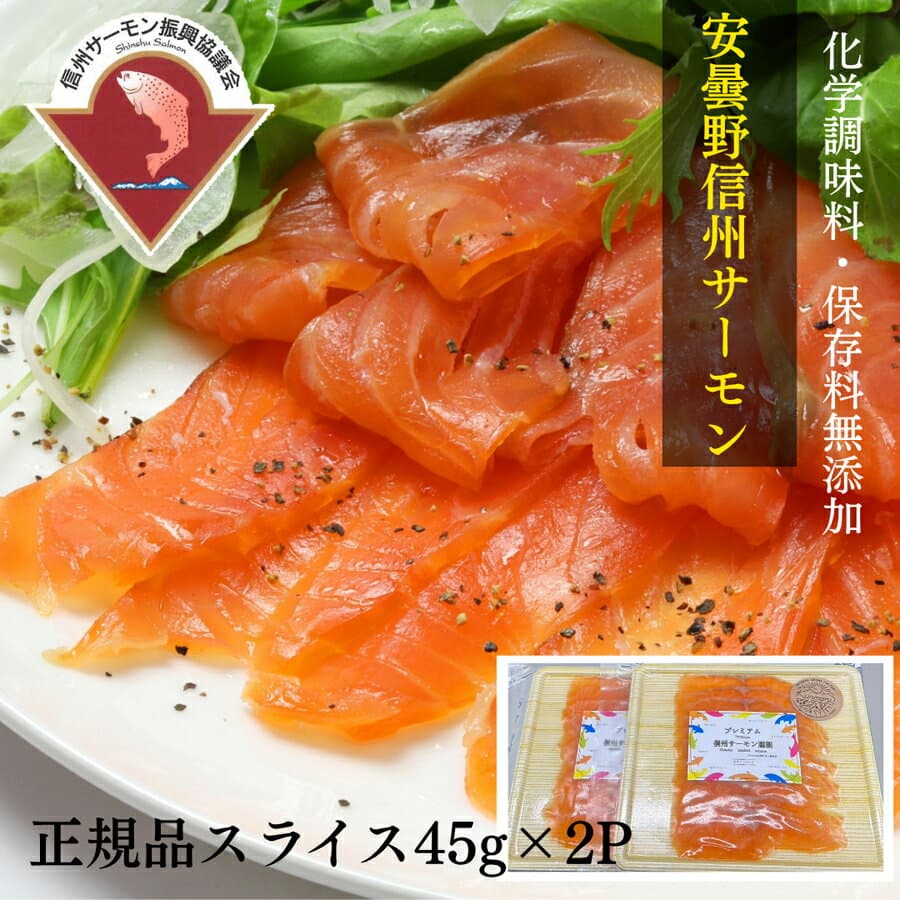
Shinshu Salmon Smoked Fillet Slices
送料無料 無添加 新鮮 な 信州サーモン の お取り寄せ 信州 長野県 ブランド魚 信州サーモン スモーク 燻製 グルメ 川魚 骨なし 自宅用 お取り寄せ おつまみ 魚介類 産地直送 長野県 安曇野 お土産 ハラス 健康食品 オメガ3脂肪酸
approx. 45g x 2 packsギフト・プチギフトのプレシア
Japanese name信州サーモン
A silver-bodied trout with red flesh grew from Nagano's breeding work, local inns, and demand for sashimi and sushi.
Information last updated 119 days ago
3 images送料無料 無添加 新鮮 な 信州サーモン の お取り寄せ 信州 長野県 ブランド魚 信州サーモン スモーク 燻製 グルメ 川魚 骨なし 自宅用 お取り寄せ おつまみ 魚介類 産地直送 長野県 安曇野 お土産 ハラス 健康食品 オメガ3脂肪酸
approx. 45g x 2 packsギフト・プチギフトのプレシア
First time buying on Rakuten? How residents in Japan order →
Shinshu Salmon began at the Nagano Prefecture Fisheries Experimental Station as an aquaculture trout variety. The fish is made by crossing a female tetraploid rainbow trout with a male brown trout, and it carries a silver body with salmon-like red flesh. In landlocked Nagano, hotels and inns wanted a local fish for guests, and demand was growing for raw preparations such as sashimi and sushi; the breeding work followed those dining needs.
Nagano has no coastline, yet its hotels and inns wanted a regional fish to place before visitors. The prefecture already had a rainbow trout base, with large-scale production beginning around 1950. As eating habits shifted and sashimi and sushi became more important, the fisheries station looked toward a fish suited to raw preparations and aquaculture.
The name Shinshu Salmon points to salmon color, while the fish's roots sit in Nagano trout farming. A silver body, red flesh, fine texture compared with rainbow trout, and thick meat gave inns, hotels, and restaurants a concrete way to serve a Nagano fish at the table.
The parentage is exact: female tetraploid rainbow trout crossed with male brown trout. The pairing creates a triploid aquaculture fish without reproductive ability, so each generation is produced for farming through managed broodstock and seed fish at the fisheries station.
This method also fits existing farms. Rainbow trout facilities and techniques can be used, and the fish is stronger against diseases that rainbow trout are prone to. The result keeps the visible traits that define the table experience: silver skin, red flesh, and meat that is fine and thick.
Development began in 1994 and ran for about ten years. The demanding step was making tetraploid rainbow trout. Over that period, about 220,000 fertilized eggs were pressure-treated, and 43 tetraploid rainbow trout were produced.
Those numbers give the fish a tactile timeline. Year after year, fertilized eggs had to be treated, a broodstock group had to grow large enough to provide eggs, and the triploid fish had to move from breeding work into Nagano aquaculture.
Shinshu Salmon does not produce eggs, so nutrients are not drawn into spawning. Its flesh stays consistently good to eat, thick, fine-textured, and rich in flavor; those qualities match the original aim of a fish for sashimi and sushi.
From fry, it takes roughly two years to reach about 50 to 60 centimeters and 1.5 to 2 kilograms. That body size and meat thickness give the red flesh a clear presence on the plate. On Nagano tables, the fish appears as a farmed trout with salmon-like color.
Production then moves from the fisheries station into the prefecture. The station produces seed fish and supplies fry to Nagano aquaculture operators. The promotion council noted the start of fry shipments in both 2023 and 2024, and it announced a fish-farming seminar with fisheries station staff as instructors.
The cooperative side shows another step after farming. The Nagano Prefecture Aquaculture Cooperative includes Shinshu Salmon among the fish it handles and describes smoked preparations made from fish raised by cooperative members and finished by makers in different parts of Nagano. Tanks, fry shipments, farms, and processing hands all sit inside the same prefectural flow.
In 2024, the promotion council pointed to twenty years of Shinshu Salmon through development work, aquaculture operators, and restaurants. That milestone places the fish beyond its first breeding stage and inside production and dining scenes in Nagano.
What lasts around Shinshu Salmon is visible in specific work: inns asking for a regional fish, the fisheries station managing broodstock and seed fish, farmers receiving fry, restaurants handling red trout flesh, and makers smoking fish raised by cooperative members. Its place in Nagano is built through tanks, shipments, farming skill, and plates set for guests.
Shinshu Salmon connects Nagano's fisheries work, trout farms, and hospitality tables. Its silver body belongs to a farmed trout, and its red flesh answers demand for sashimi and sushi. From the cross between tetraploid rainbow trout and brown trout to fry supplied within the prefecture, the fish takes shape through inland breeding technique and meals served across Nagano.
Compiled from public records and official sources; see the recognition links below. Details may change over time.
Where this product is officially registered, designated, or recognized in Japan.
Regional collective trademark
Registered as a Regional Collective Trademark with the Japan Patent Office.
Sources1
It is written as 信州サーモン in Japanese. Search Rakuten and other Japanese sites with that spelling — the English name will not bring up the listings.
Shinshu salmon is an aquaculture trout variety developed by the Nagano Prefecture Fisheries Experimental Station. It is produced by crossing female tetraploid rainbow trout with male brown trout, and has a silver body and salmon-like red flesh. The variety met a wish among Nagano inns and hotels for a local fish, as demand grew for sashimi and sushi.
Shinshu salmon is a triploid aquaculture fish without reproductive ability. Development began in 1994 and took about ten years before approval as an aquaculture variety in 2004. From fry, the fish grows in about two years to roughly 50-60 cm and 1.5-2 kg. Seed production is carried out only by the Nagano Prefecture Fisheries Experimental Station, which supplies fry to aquaculture operators within Nagano.
It is used for raw dishes such as sashimi and sushi, and is served as a local ingredient at inns and hotels. Because it does not carry eggs, nutrients are not taken by spawning, so the flesh remains stable and can be eaten at any time; the flesh is thick and fine-textured. The Nagano Prefecture Aquaculture Fisheries Cooperative handles smoked products made from Shinshu salmon farmed by members and finished by producers in various parts of Nagano.
Storage varies by product — shelf-stable, refrigerated, or frozen — and is stated on the packaging and the Rakuten listing. Shelf-stable processed foods usually need refrigerating once opened and eating within a few days; chilled and frozen items go straight into storage on arrival. Treat the best-before date on the physical packaging as authoritative.
Most options are shelf-stable, boxed, and travel well, so they suit gifting or bringing home. Confirm the final storage and delivery terms on the Rakuten listing.
On Rakuten: the shops listed here right now are ギフト・プチギフトのプレシア. We don't sell directly; purchase, payment, stock, and delivery are all handled on the Rakuten product page.