 3 images
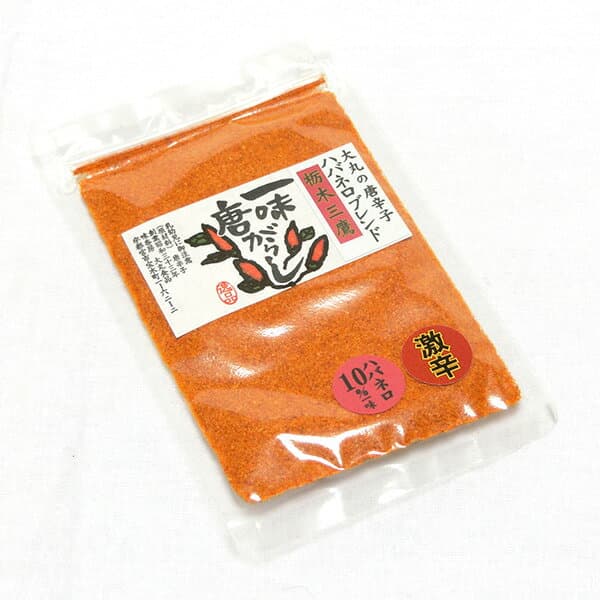
Daimaru Tochigi Mitaka Habanero Blend Ichimi Chili Pepper
【激辛】ハバネロ混合比率を選択 ハバネロブレンド 栃木三鷹 一味唐辛子 1袋 大丸
1 bag, selectable habanero blend ratio物産展グルメ
5.0 / 2 reviews
Japanese name栃木三鷹
In Ohtawara, Santaka peppers connect Genichiro Yoshioka's curry-powder work, mid-October fields in Sakuyama, and the heat, aroma, and umami of ichimi and shichimi.
Information last updated 120 days ago
3 images【激辛】ハバネロ混合比率を選択 ハバネロブレンド 栃木三鷹 一味唐辛子 1袋 大丸
1 bag, selectable habanero blend ratio物産展グルメ
5.0 / 2 reviews
First time buying on Rakuten? How residents in Japan order →
Tochigi Santaka begins with a clear place and material: a Santaka chili pepper variety grown in Ohtawara, Tochigi, and a chili powder made from Santaka peppers produced in the Ohtawara area. Its character is direct. The pepper is known for strong heat, good color, uniform shape, and practical handling, while the powder brings aroma and umami to ichimi and shichimi. Behind that seasoning is a path from Tokyo curry-powder work to Tochigi fields, led by Genichiro Yoshioka, and a remembered Sakuyama landscape that turned red around mid-October.
Tochigi Santaka is easiest to understand when the parts of the name stay close to the field. It refers to a chili pepper variety cultivated in Ohtawara, and in powder form the name centers on Santaka-variety peppers produced in the Ohtawara area. That plain boundary separates the living crop from the ground seasoning without splitting them apart: red fruit in the field, chili powder on the table, and ichimi or shichimi as familiar ways the pepper reaches food.
The Ohtawara connection took shape in the early Showa years through Genichiro Yoshioka. In Tokyo's Shinjuku district, Yoshioka worked in the manufacture and sale of chilies for curry powder, while cultivation around Musashino was becoming difficult to expand. Seeking larger fields and better quality, he moved cultivation work toward Tochigi, began by asking farmers in the Nasu area to grow chilies, and later lived in Ohtawara as he pushed broader cultivation there.
In Showa 30, Yoshioka named the improved variety Tochigi Kairyo Santaka, later shortened to Tochigi Santaka. The date matters because it marks the moment when the variety name took shape. The listed traits are both sensory and agricultural: strong heat, good color, uniform shape, high yield, easier picking and drying, and keeping quality. Those traits explain why the pepper could matter beyond a single harvest season.
The pepper's appeal sits in the meeting point between taste and handling. Among domestic varieties, Tochigi Santaka is described as strongly pungent; once ground, it also carries aroma and umami. In the field and after harvest, good color, even shape, easier picking, easier drying, and strong keeping quality give the variety a practical profile. For a chili powder, those details shape both the work before grinding and the impression after the powder reaches a bowl or spice blend.
Sakuyama gives the Ohtawara chili landscape its most vivid image. Around mid-October, when the pepper fruit colored, fields in that district were remembered as turning red. After the discovery of Tochigi Santaka, chili cultivation in Ohtawara increased and reached a peak around the Showa 30 to 40 period, without needing a ranking to carry the scene. The stronger image is simpler: red fields, harvest timing, and a variety whose name stayed tied to local ground.
Once ground, Tochigi Santaka's clearest table roles are ichimi and shichimi, where heat is joined by aroma and umami. In Ohtawara's wider chili activities, chili also appears in foods such as ramen, gyoza, dorayaki, and yokan, and in hands-on shichimi mixing, ra-yu making, and school garden activities. The pepper family is easiest to understand through those concrete uses: a field crop with enough heat, color, and keeping quality to move from harvest work into everyday seasoning.
Tochigi Santaka stays memorable because its outline is concrete: Ohtawara as the place, Santaka as the pepper, Showa 30 as the naming point, and strong heat, color, drying, and keeping quality as the working traits. Sakuyama's mid-October red fields give the name a landscape, while ichimi and shichimi bring the powder back to daily meals. The result is a local chili understood through fields, hands, grinding, aroma, and the steady heat of a familiar table seasoning.
Compiled from public records and official sources; see the recognition links below. Details may change over time.
Where this product is officially registered, designated, or recognized in Japan.
Regional collective trademark
Registered as a Regional Collective Trademark with the Japan Patent Office.
Sources1
It is written as 栃木三鷹 in Japanese. Search Rakuten and other Japanese sites with that spelling — the English name will not bring up the listings.
Tochigi mitaka chili is a Santaka-variety pepper grown in Ohtawara, Tochigi, and the name also applies to chili powder made from Santaka peppers grown in the Ohtawara area. In the early Showa years, Genichiro Yoshioka moved curry-powder chili cultivation from Tokyo to Tochigi, and in Showa 30 he named the improved variety Tochigi Kairyo Santaka. The variety is known for strong heat, good color, uniform shape, easy picking and drying, and keeping quality, and it is used in ichimi and shichimi seasonings.
As a chili powder name, Tochigi Santaka refers specifically to Santaka peppers produced in the Ohtawara area. Genichiro Yoshioka worked with curry-powder chilies in Tokyo's Shinjuku district before shifting cultivation toward Tochigi. The variety yields well and is easier to pick and dry than earlier types. Tochigi Santaka powder carries strong heat, aroma, and umami, making it a main raw material for ichimi and shichimi.
Ohtawara-grown Santaka chili powder serves as a main raw material for ichimi and shichimi, adding strong heat, aroma, and umami to dishes. In everyday cooking, the pepper is used as a seasoning that brings pungency, aroma, and umami to a range of dishes. Local uses linked to the chili include ramen, gyoza, dorayaki, yokan, yakisoba, bread, ra-yu, miso, curry, sake, confectionery, and soy sauce, along with hands-on shichimi- and ra-yu-making activities through school or community programs.
Storage varies by product — shelf-stable, refrigerated, or frozen — and is stated on the packaging and the Rakuten listing. Shelf-stable processed foods usually need refrigerating once opened and eating within a few days; chilled and frozen items go straight into storage on arrival. Treat the best-before date on the physical packaging as authoritative.
Most options are shelf-stable, boxed, and travel well, so they suit gifting or bringing home. Confirm the final storage and delivery terms on the Rakuten listing.
On Rakuten: the shops listed here right now are 物産展グルメ. We don't sell directly; purchase, payment, stock, and delivery are all handled on the Rakuten product page.