 3 images
Kanuma Kumiko Coaster Set
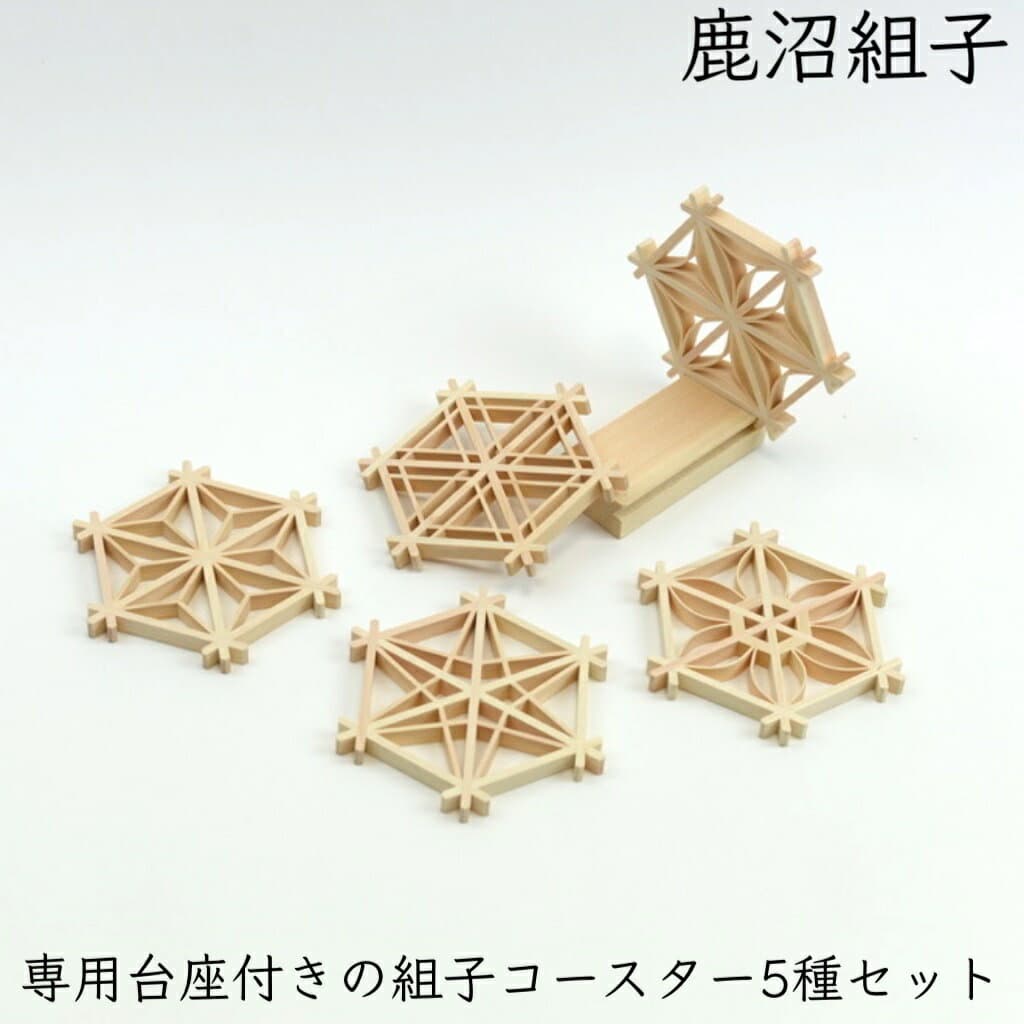
組子コースター5種セット(台座付き)組子 組子細工 鹿沼組子 茶托 国産 木工 ギフト 新築祝い 引き出物 内祝い ギフト 贈り物 和食器 父の日 母の日 麻の葉模様 胡麻 七宝 皐月 竜胆 伝統工芸 職人
5 designs with standkanumano
4.7 / 3 reviews
Japanese name鹿沼組子
In Kanuma City, Tochigi, finely split Kiso cypress, Akita cedar, Nikko cedar, and related woods are fitted by hand without nails, carrying asanoha, goma, and shippo patterns from shoin shoji and ranma into trays and coasters.
Information last updated yesterday
3 images組子コースター5種セット(台座付き)組子 組子細工 鹿沼組子 茶托 国産 木工 ギフト 新築祝い 引き出物 内祝い ギフト 贈り物 和食器 父の日 母の日 麻の葉模様 胡麻 七宝 皐月 竜胆 伝統工芸 職人
5 designs with standkanumano
4.7 / 3 reviews
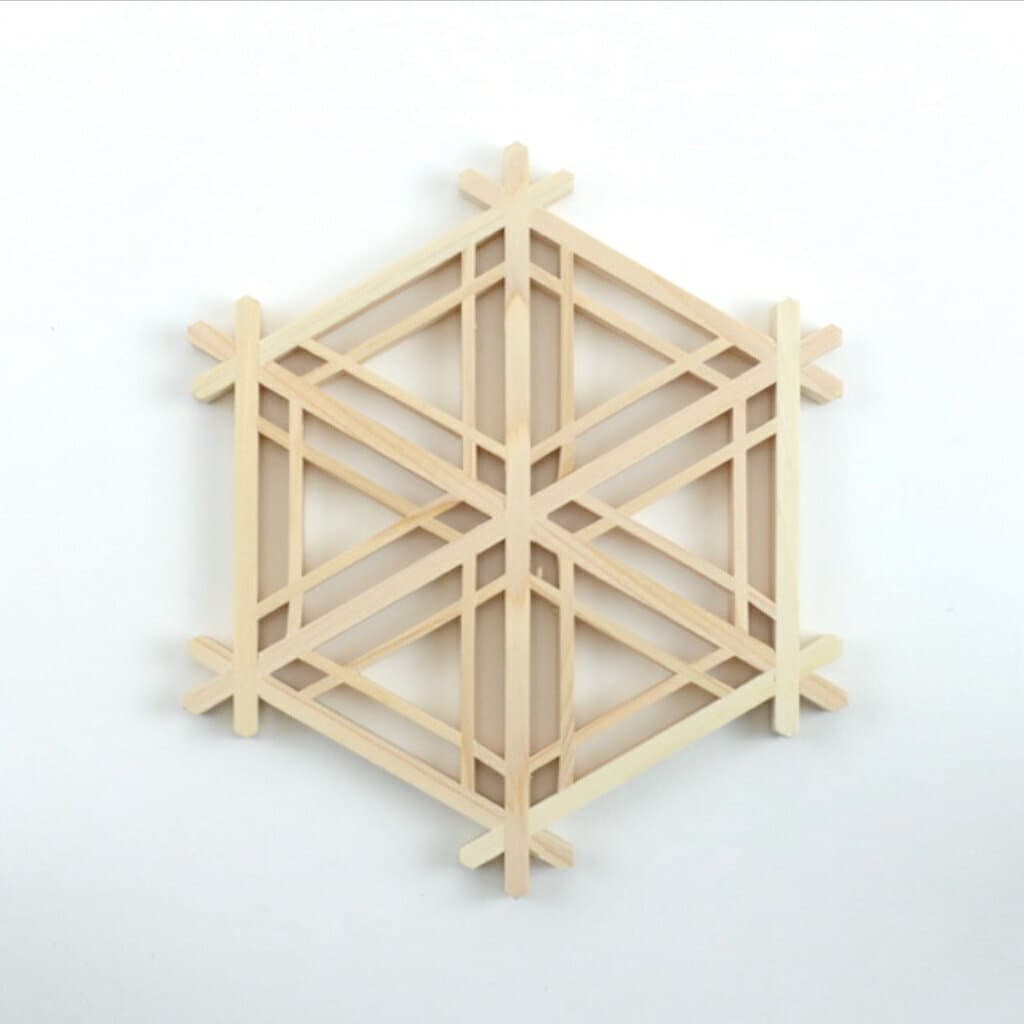
組子コースター 胡麻(ごま)組子細工 組子 鹿沼組子 国産 木工 茶托 ギフト 木製カトラリー 和風 和モダン ギフト プレゼント 贈り物
sesame patternkanumano
5.0 / 2 reviews
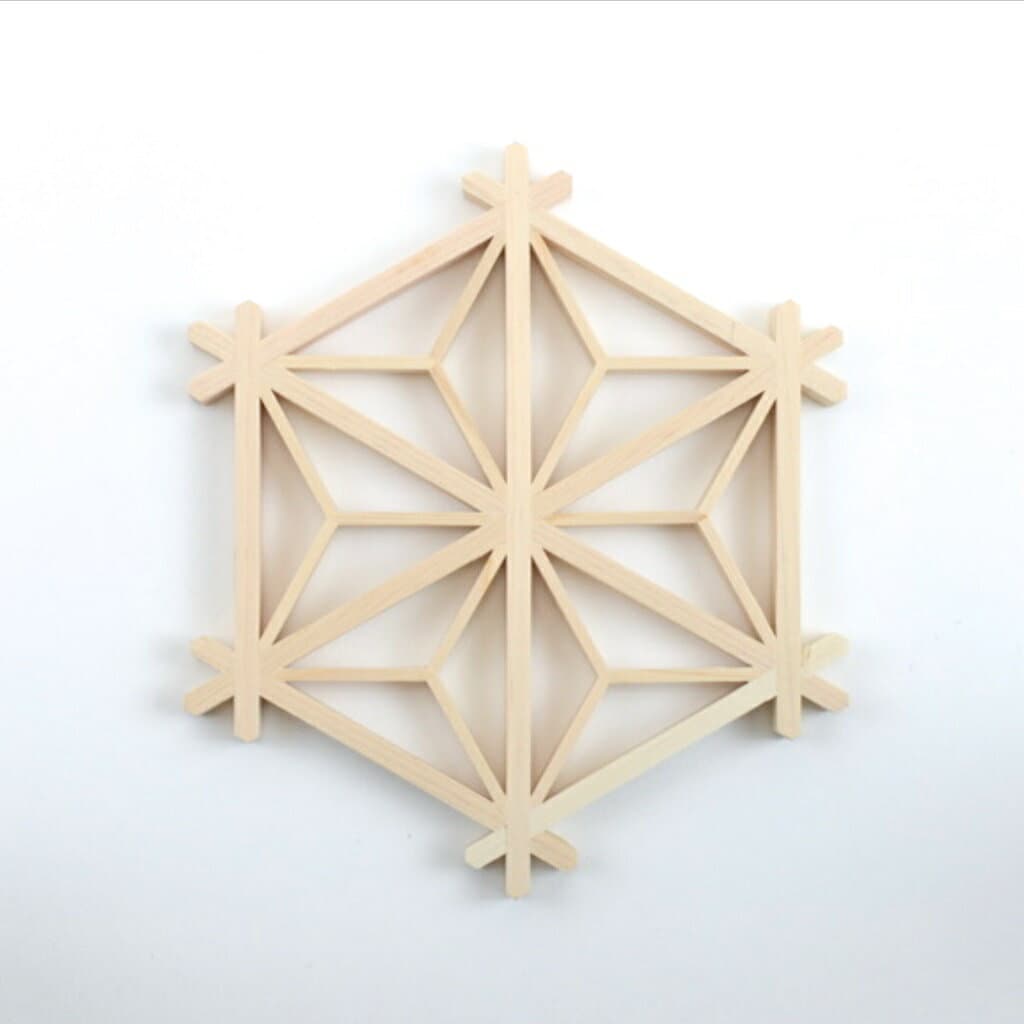
組子コースター 麻の葉(あさのは)組子細工 組子 鹿沼組子 国産 木工 茶托 ギフト 木製カトラリー 和風 和モダン ギフト プレゼント 贈り物
Asanoha hemp leaf patternkanumano
5.0 / 2 reviews
First time buying on Rakuten? How residents in Japan order →
Kanuma City sits between the Ashio mountains to the west and the Nikko range to the north, with the Arai, Oashi, and Kurokawa rivers tied to its woodworking landscape. Nearby Nikko Toshogu gives the craft a remembered starting point: woodworkers gathered for its construction are said to have carried techniques into Kanuma, where good Nikko cedar decorated shoji lattices. Kanuma kumiko still begins with split wood, hand fitting, and geometry held together without nails.
Kanuma’s woodworking begins with a specific landscape. The Ashio mountains lie to the west, the Nikko range to the north, and the Arai, Oashi, and Kurokawa rivers connect forested hills with the city’s use of timber. Proximity to Nikko Toshogu and the route toward Edo and Tokyo also shaped Kanuma as a place where wood and woodworking could gather.
That setting gives Kanuma kumiko a practical home in joinery and interior woodwork. Kanuma has a local association of joinery and woodworking businesses, and kumiko appears in shoin shoji, ranma transoms, and screens where small pieces of wood turn a room opening into a patterned wooden surface.
Kanuma kumiko uses woods such as Kiso cypress, Akita cedar, and Nikko cedar, split into small pieces. Craftspeople cut angled parts and fit them by hand, using notches without nails or metal fittings, until the parts form a flat geometric surface.
The process is concrete and exacting: small stock, angle, cut, and hand fitting all have to work together. In a shoji lattice or a ranma transom, the pattern holds because the wooden pieces meet each other in the right order and position.
Pattern gives the fitted pieces their visible shape. Asanoha is a representative motif in Kanuma kumiko, and goma, shippo, satsuki, and rindo are also named among its designs; Kanuma kumiko has more than two hundred patterns. These names turn thin strips and angled pieces into plant-like and geometric surfaces.
The same set of motifs appears at a smaller scale in Kanuma’s kumiko-making experience, where asa and goma patterns are combined into a coaster. On a palm-sized object, the lines and angled forms show how little pieces of wood can carry a larger design.
Kanuma kumiko is closely tied to shoji latticework, and its established uses include shoin shoji and ranma transoms. In those architectural pieces, finely split wood carries plant motifs and geometric forms across openings and interior surfaces.
The same hand-fitted construction also appears in interior goods and small objects. Long trays, coasters, phone stands, and amulets place Kanuma kumiko on tables, desks, and in the hand, while keeping the nail-free fitting and named motifs visible at close range.
At Kanuma’s woodcraft museum, Kanuma kumiko shoin shoji is displayed alongside carved festival floats and Kanuma all-paulownia chests. The display places the shoji lattice beside other local wood objects, so the city’s joinery and decorative woodworking can be seen at object scale.
The same museum also offers a kumiko-making experience in which visitors combine representative asa and goma patterns into a coaster. Moving from a shoin shoji display to a small fitted coaster keeps the craft grounded in the city, the museum room, and the touch of individual wooden parts.
Kanuma kumiko stays close to small, visible actions: split Kiso cypress, Akita cedar, or Nikko cedar; cut the angled parts; fit them into asanoha, goma, shippo, and other patterns; place the finished work in shoji, ranma, trays, or coasters. From the remembered link with Nikko Toshogu to the museum room where a coaster can be assembled by hand, the craft continues through Kanuma’s mountains, rivers, wood, and hand fitting.
Compiled from public records and official sources; see the recognition links below. Details may change over time.
Where this product is officially registered, designated, or recognized in Japan.
Regional collective trademark
Registered as a Regional Collective Trademark with the Japan Patent Office.
Sources1
It is written as 鹿沼組子 in Japanese. Search Rakuten and other Japanese sites with that spelling — the English name will not bring up the listings.
Kanuma kumiko is a woodworking craft from Kanuma City, Tochigi, made by hand-fitting angled and notched pieces of finely split wood without nails or metal fittings. Woods used include Kiso cypress, Akita cedar, and Nikko cedar, and the pieces form patterns such as asanoha, goma, and shippo. Its origin is linked to woodworkers gathered for Nikko Toshogu, who used good Nikko cedar to decorate shoji lattices.
Kanuma kumiko is associated with Kanuma's identity as a woodworking town. More than two hundred named patterns exist for Kanuma kumiko, including asanoha, goma, shippo, satsuki, and rindo. Kanuma kumiko is made from finely split woods such as Kiso cypress, Akita cedar, and Nikko cedar. Pieces are fitted by hand using angles and notches, without nails or metal fittings.
Kanuma kumiko decorates shoin shoji and ranma transoms. It also appears in interior goods such as long trays, coasters, phone stands, and amulets. Kanuma's woodcraft museum offers coaster making that combines asa and goma patterns.
Keep craft pieces out of direct sunlight, damp, and sharp temperature swings, and store them where they won't knock against anything. Wood, bamboo, lacquer, and paper don't tolerate water — wipe any moisture off immediately. Specific care notes are on the listing.
Most options are shelf-stable, boxed, and travel well, so they suit gifting or bringing home. Confirm the final storage and delivery terms on the Rakuten listing.
On Rakuten: the shops listed here right now are kanumano. We don't sell directly; purchase, payment, stock, and delivery are all handled on the Rakuten product page.