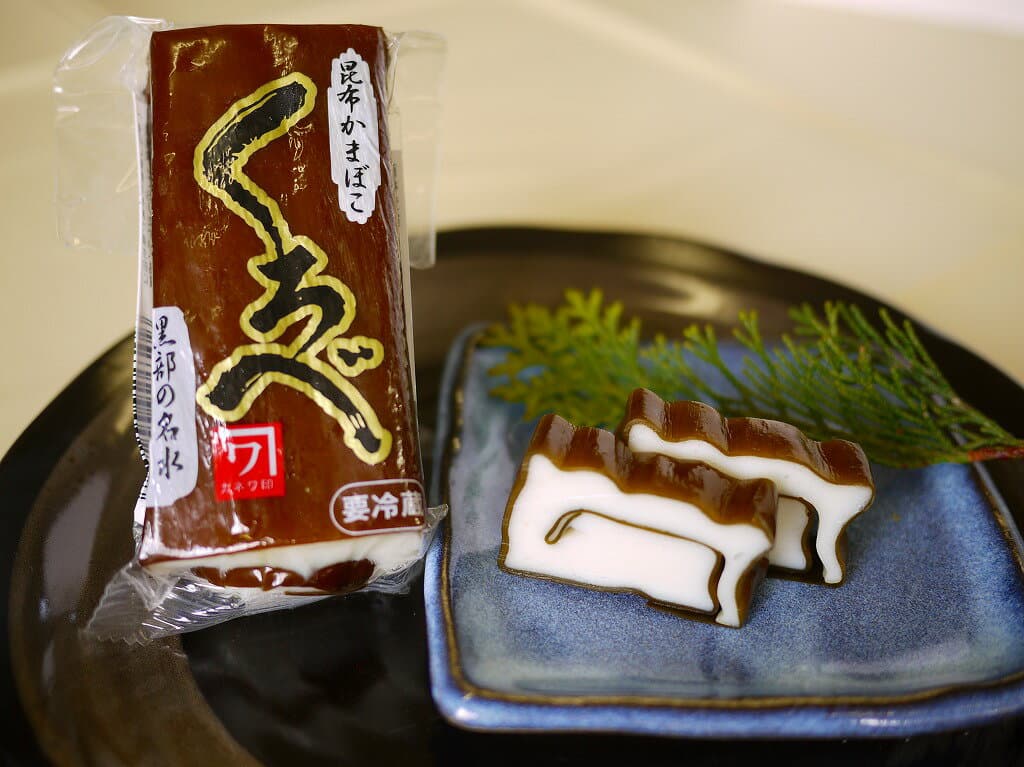
Toyama Specialty Kelp-Wrapped Kamaboko
富山名産昆布巻かまぼこ
Approx. 135g富山の生地蒲鉾楽天市場店
4.9 / 23 reviews
Japanese name富山名産昆布巻かまぼこ
Toyama meisan kombu-maki kamaboko is made by spreading fish surimi over kombu, rolling it into a black-and-white spiral, and steaming it, linking Toyama Bay port life with household bowls, slices, and celebration tables.
Information last updated 120 days ago
富山名産昆布巻かまぼこ
Approx. 135g富山の生地蒲鉾楽天市場店
4.9 / 23 reviews
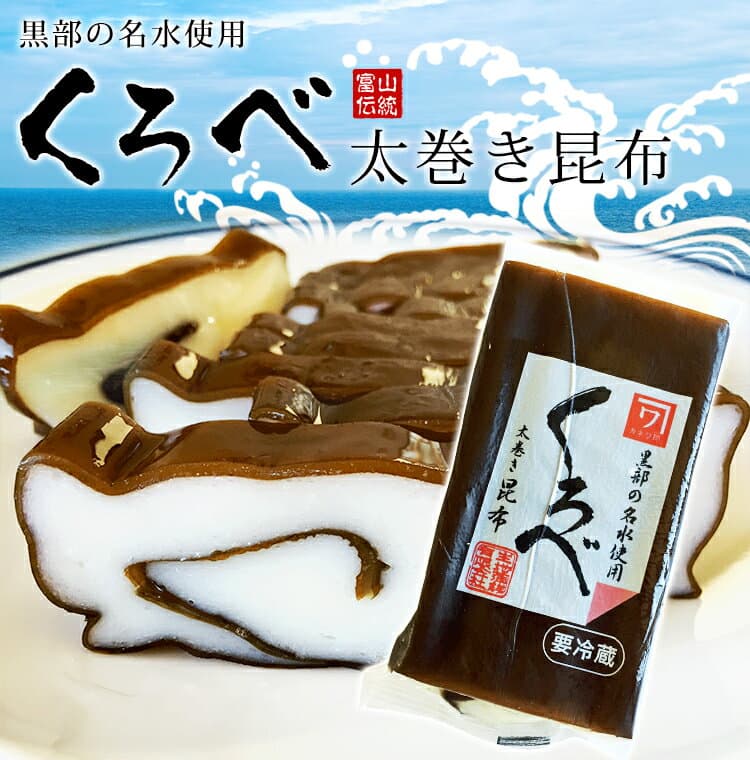 2 images
富山名産昆布巻かまぼこ(大)
Large, approx. 220g富山の生地蒲鉾楽天市場店
4.5 / 12 reviews
First time buying on Rakuten? How residents in Japan order →
Toyama kombu-wrapped kamaboko begins with a visible form: dark kombu around white fish surimi, cut into a spiral. The food belongs to Toyama's maki-kamaboko practice, where kamaboko is commonly made without a board. Its method is direct: spread surimi thinly over kombu, roll it as one would roll norimaki, then steam it. Behind that form is a port landscape. In the Edo period, Kitamaebune ships brought Hokkaido kombu to river-mouth ports facing Toyama Bay, and kombu became part of local cooking and kamaboko making.
Toyama meisan kombu-maki kamaboko is defined by fish surimi, kombu, rolling, and steam. Maki-kamaboko is transmitted across Toyama Prefecture, and Toyama kamaboko is widely associated with a boardless form, which sets it apart from many board-mounted kamaboko styles elsewhere in Japan. The cut face gives the food its plainest signature: white surimi and dark kombu turning together in a spiral.
The shared name also carries a place range. Toyama meisan kombu-maki kamaboko points to kombu-wrapped kamaboko produced within Toyama Prefecture, with the prefectural kamaboko cooperative connected to the name. The point for readers is concrete: the name ties the food to Toyama, to a producer community, and to a particular wrapped-and-steamed form.
In the Edo period, river-mouth ports along Toyama Bay became stops on the Kitamaebune routes. Large quantities of Hokkaido kombu reached Toyama through these ports and became an important material in the region's cooking. Kombu-maki kamaboko places that movement into a sliceable food: kombu on the outside, fish surimi inside, joined by steam.
The connection is visible through objects and routes. Toyama Bay faces the Sea of Japan, Kitamaebune ships connected Toyama's ports with Hokkaido kombu, and that kombu moved from local dishes into the kamaboko workshop. A sheet of seaweed became one of the clearest signs of place in Toyama's rolled fish cake.
The making sequence is spare and exact. Fish surimi is spread thinly over kombu, rolled like norimaki, and steamed. Steam finishes the rolled fish paste, while the kombu's umami moves through the kamaboko. When the roll is cut, the dark kombu and white surimi show the spiral made by the rolling.
Steamed kamaboko is common in Toyama, and the kombu roll puts method and appearance into the same cross-section. The spiral comes from the order of the materials. Kombu wraps the fish paste, the roll is steamed, and each slice carries the dark line made by the sheet of kombu.
Older Toyama kamaboko production used fresh fish from Toyama Bay, including horse mackerel, barracuda, and flounder. These fish were made into surimi and worked into kamaboko that could be steamed, sliced, and served at the table.
Later, frozen surimi widened the range of fish that could be used and supported production throughout the year. That change gives the present food two visible layers: a memory of fish landed near Toyama Bay and a modern surimi supply that keeps the wrapped-and-steamed form available beyond a single catch or season.
In Toyama homes, kombu-maki kamaboko has straightforward uses. It can be cut to a moderate thickness and eaten as it is with wasabi soy sauce. A lightly seared surface deepens the flavor. It also appears in oden, clear soup, udon, chirashi sushi, and salad, moving easily among hot broth, noodles, rice, and cold dishes.
These uses keep the roll close to daily eating. A slice shows the spiral before it is eaten; in a bowl, the fish cake carries the flavor of kombu into soup. Toyama kamaboko is also connected with celebration tables and gift occasions, while kombu-maki kamaboko remains especially legible through ordinary actions: cutting, searing, simmering, and setting it into a bowl or plate.
The Toyama kamaboko cooperative continues to place kamaboko in learning settings and public events. Its activities include kamaboko-making experiences, sea-environment learning through fish used as ingredients, Toyama Kamaboko School, and a project in which Toyama elementary school students helped create an original kamaboko.
Continuity takes a physical form here: children encounter fish, surimi, kombu, steam, and the table through hands-on work and sea learning. For Toyama meisan kombu-maki kamaboko, the next generation meets the food through cooperative activity, school projects, making experiences, and a slice whose spiral still shows how it was made.
Toyama meisan kombu-maki kamaboko brings together a small set of concrete things: Toyama Bay ports, Hokkaido kombu carried by Kitamaebune routes, fish surimi spread thin and steamed, and home uses with wasabi soy sauce, soup, udon, chirashi sushi, and salad. Its black-and-white spiral lets the material speak first. Through that slice, Toyama's boardless rolled kamaboko practice remains visible at the table.
Compiled from public records and official sources; see the recognition links below. Details may change over time.
Where this product is officially registered, designated, or recognized in Japan.
Regional collective trademark
Registered as a Regional Collective Trademark with the Japan Patent Office.
Sources1
It is written as 富山名産昆布巻かまぼこ in Japanese. Search Rakuten and other Japanese sites with that spelling — the English name will not bring up the listings.
Toyama kombu-maki kamaboko is a rolled fish cake from Toyama Prefecture. Fish surimi is spread thinly over kombu, rolled into a spiral, and steamed. The name Toyama meisan kombu-maki kamaboko is tied to production within Toyama Prefecture and to the Toyama Prefecture kamaboko cooperative.
In the Edo period, Kitamaebune ships brought Hokkaido kombu to river-mouth ports facing Toyama Bay, helping kombu enter Toyama cooking. Toyama maki-kamaboko has been passed down across Toyama Prefecture, and Toyama kamaboko is known for a boardless form. Older Toyama kamaboko used fresh Toyama Bay fish such as horse mackerel, barracuda, and flounder; later frozen surimi widened fish choices and supported year-round production. The Toyama kamaboko cooperative supports making experiences, sea-environment learning, Toyama Kamaboko School, and elementary-student collaboration.
It is cut to a moderate thickness and eaten with wasabi soy sauce, and the surface may be lightly seared to deepen the flavor. It is used in oden, clear soup, udon, chirashi sushi, and salad. Kombu-wrapped and colored rolled kamaboko are familiar in households and valued for gifts, and kamaboko is placed on Toyama tables and celebration seats.
Storage varies by product — shelf-stable, refrigerated, or frozen — and is stated on the packaging and the Rakuten listing. Shelf-stable processed foods usually need refrigerating once opened and eating within a few days; chilled and frozen items go straight into storage on arrival. Treat the best-before date on the physical packaging as authoritative.
Most options are shelf-stable, boxed, and travel well, so they suit gifting or bringing home. Confirm the final storage and delivery terms on the Rakuten listing.
On Rakuten: the shops listed here right now are 富山の生地蒲鉾楽天市場店. We don't sell directly; purchase, payment, stock, and delivery are all handled on the Rakuten product page.