 3 images
大貫本店 Amagasaki Ankake Champon
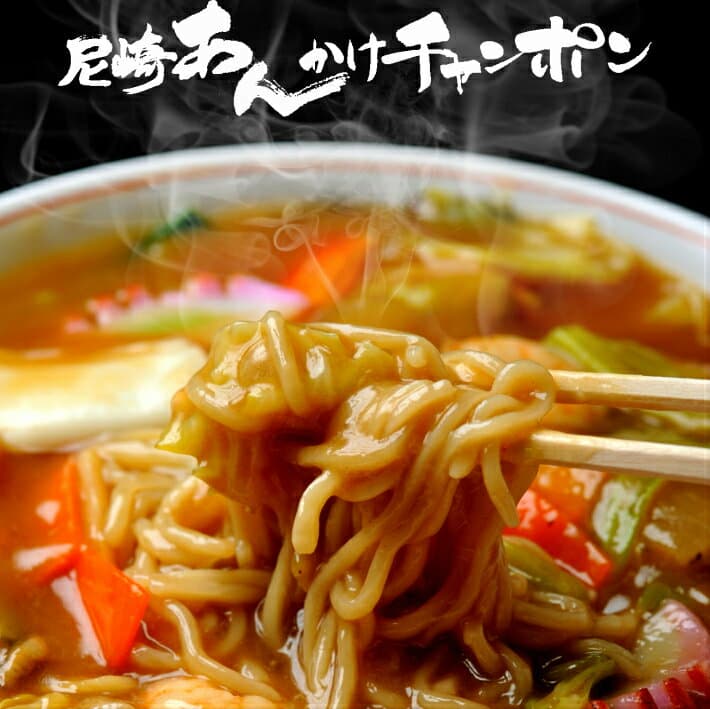
あんかけチャンポン1人前 大貫本店 創業大正元年(1912) 唯一無二 100年熟成追い足し醤油ダレ 四代続く伝統製法の足踏たまご麺 尼崎 チャンポン ラーメン お取り寄せ あんかけ ギフト ストレートスープ お歳暮 お中元 ご当地グルメ 尼崎あんかけチャンポン 母の日 父の日
1 serving大貫本店 楽天市場店
5.0 / 33 reviews
Japanese name尼崎あんかけチャンポン
In Amagasaki, Hyogo, champon took a local form through poured ankake sauce.
Information last updated 119 days ago
3 imagesあんかけチャンポン1人前 大貫本店 創業大正元年(1912) 唯一無二 100年熟成追い足し醤油ダレ 四代続く伝統製法の足踏たまご麺 尼崎 チャンポン ラーメン お取り寄せ あんかけ ギフト ストレートスープ お歳暮 お中元 ご当地グルメ 尼崎あんかけチャンポン 母の日 父の日
1 serving大貫本店 楽天市場店
5.0 / 33 reviews
First time buying on Rakuten? How residents in Japan order →
Amagasaki Ankake Champon is rooted in Amagasaki City, Hyogo, and is known by one concrete cue: ankake sauce poured over champon. The bowl does not settle into a single recipe. Broth, noodles, vegetables, seafood, ginger and serving size shift from shop to shop, while the local account of its beginning points to Kyushu workers, Showa-era growth and the appetite of people working in factories.
The shared cue is direct: champon comes with ankake. That thick sauce gives the Amagasaki bowl its common outline, while flavor and ingredients remain open to each shop. A visitor may meet soy-based broth, salt ankake soup, vegetables, seafood or egg noodles under the same city name, so the family is better understood through its poured sauce than through a fixed ingredient list.
The local account begins in the Showa high-growth years, when many workers came from Kyushu to Amagasaki through group employment. In that setting, shops are said to have adapted champon for factory appetites by adding ankake and generous ingredients. The detail that matters is physical: a bowl made thicker and more filling for people whose workday asked for substance.
Ankake is a technique with a visible result. Once the thick sauce is poured over noodles, broth and toppings, it gathers the bowl into a denser texture and supports the filling quality described in the Amagasaki account. Some shop examples bring ginger forward, some use salt ankake soup, and others lean on vegetable volume, showing how one technique can carry warmth, body and quantity in different ways.
Across Amagasaki, the variations stay concrete. The cooperating shop examples include soy-based bowls, seafood versions, homemade egg noodles, large shrimp with steamed pork, horumon, and even breakfast settings. These details keep the noodle from becoming a single standardized dish; the city name holds a set of local interpretations that still return to ankake.
From April 2020 to February 2021, Mukogawa Women’s University and the Amagasaki Chamber of Commerce used the name’s regional collective trademark status in a city activity around the dish. Students made Instagram posts, a business plan and a PR video, and the work received excellence, Instagram and PR video awards in a regional brand competition. The practical result was local as well: the activity became a communication hub for regional businesses and a chance to reconsider what the bowl meant inside Amagasaki.
Amagasaki Ankake Champon remains easiest to understand from the bowl outward: poured ankake, generous ingredients, and shop-by-shop choices in Amagasaki. The Kyushu worker account gives the noodle a workday setting; the city’s shops give it texture, ginger, seafood, egg noodles and morning versions; the student and chamber activity shows how one thick-sauce bowl can gather local businesses around a shared name.
Compiled from public records and official sources; see the recognition links below. Details may change over time.
Where this product is officially registered, designated, or recognized in Japan.
Regional collective trademark
Registered as a Regional Collective Trademark with the Japan Patent Office.
Sources1
It is written as 尼崎あんかけチャンポン in Japanese. Search Rakuten and other Japanese sites with that spelling — the English name will not bring up the listings.
Amagasaki ankake champon is a local noodle dish born in Amagasaki City, Hyogo, marked by ankake sauce poured over champon. A local account connects it to Kyushu workers who came to Amagasaki in the Showa high-growth period, with shops using thick sauce and generous ingredients to make a filling factory-worker meal. City examples include soy-based bowls, salt ankake soup, ginger, vegetables, seafood, homemade egg noodles, horumon and breakfast settings. In 2020-2021, Mukogawa Women’s University and the Amagasaki Chamber of Commerce built a city activity around the name.
Its shared feature is champon served with ankake, while flavors and ingredients vary by shop. A local account links the dish to Showa high-growth years, when many workers came from Kyushu to Amagasaki through group employment. The ankake sauce and generous ingredients are described as making the bowl more filling for factory workers. Shop examples include soy-based bowls, salt ankake soup, ginger, vegetable-heavy servings, seafood, homemade egg noodles, horumon and breakfast versions.
The origin account links the bowl to Kyushu workers in Amagasaki during the Showa high-growth period and says sauce plus abundant ingredients helped satisfy factory workers' appetites. The common feature is ankake, but flavor and ingredients vary by store, so a tasting route can compare local interpretations across Amagasaki eateries. Cooperating-shop examples include ramen-like, udon, seafood, horumon and breakfast versions, so the name can appear in several local menu forms while retaining the ankake cue.
Storage varies by product — shelf-stable, refrigerated, or frozen — and is stated on the packaging and the Rakuten listing. Shelf-stable processed foods usually need refrigerating once opened and eating within a few days; chilled and frozen items go straight into storage on arrival. Treat the best-before date on the physical packaging as authoritative.
Most options are shelf-stable, boxed, and travel well, so they suit gifting or bringing home. Confirm the final storage and delivery terms on the Rakuten listing.
On Rakuten: the shops listed here right now are 大貫本店 楽天市場店. We don't sell directly; purchase, payment, stock, and delivery are all handled on the Rakuten product page.