 2 images
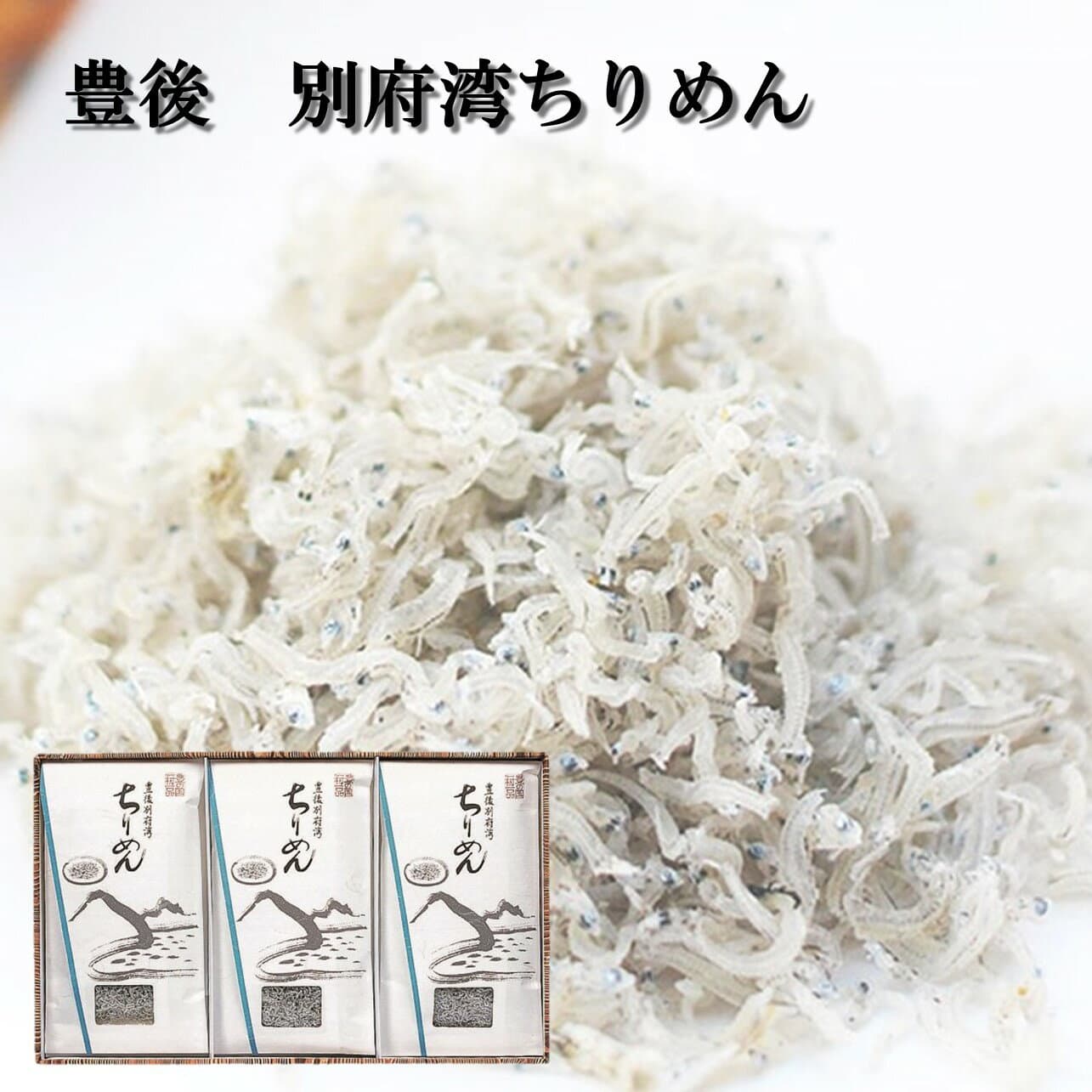
Bungo Beppu Bay Chirimen Dried Whitebait
豊後 別府湾ちりめん 70gx3
70g x 3グルメアドベンチャー 楽天市場店
Japanese name豊後別府湾ちりめん
In central Oita, juvenile anchovy from Beppu Bay are boiled while fresh and dried in the sun, with processing tied to Kitsuki, Hiji and Beppu.
Information last updated 119 days ago
2 images豊後 別府湾ちりめん 70gx3
70g x 3グルメアドベンチャー 楽天市場店
First time buying on Rakuten? How residents in Japan order →
Beppu Bay lies in central Oita between the Kunisaki Peninsula and the Saganoseki Peninsula. Bungo Beppu Bay chirimen begins with juvenile katakuchi iwashi caught in that bay, then boiled while fresh and dried under the sun into fine chirimenjako. Its place boundary is narrow: the catch comes from Beppu Bay, and the processing is tied to Kitsuki City, Hiji Town and Beppu City.
Beppu Bay sits between the Kunisaki Peninsula, where Oita Airport is located, and the Saganoseki Peninsula. From the hills above Beppu, the view takes in hot-spring steam and calm water; for Bungo Beppu Bay chirimen, that water is the fishing ground for juvenile anchovy.
The processing map is just as specific. Kitsuki City, Hiji Town and Beppu City form the named processing area, so the small fish move through a short coastal chain: bay, landing place, boiling kettle and drying space. The food’s character depends on that short distance as much as on the fish itself.
In Beppu Bay and Saiki Bay, shirasu fishing targets juvenile katakuchi iwashi and similar small fish. Shirasu is usually boiled and dried; after drying, the smaller fish are called chirimen, slightly larger ones chika and kaeri, and larger ones iriko.
Bungo Beppu Bay chirimen uses juvenile katakuchi iwashi from Beppu Bay. These size names are useful because one small-fish catch becomes different foods: fine chirimen for sprinkling and mixing, larger iriko for a stronger bite or broth-like use.
The work is built around speed. Juvenile anchovy from Beppu Bay are kept fresh, boiled, and then dried in the sun; the route from landing to finished chirimenjako is described as short, which helps explain the emphasis on taste and aroma.
Hiji Suisan gives a close view of one producer’s rhythm. Its shirasu fishing uses a four-boat fleet to find schools of fish, bring the catch quickly to port, boil it right away, and sun-dry the half-dried fish for two to three hours. Those details belong to that producer, and they make the time pressure of chirimen work easy to picture.
The processing is restrained. One regional description presents the product as salt-only, additive-free, unbleached, and necessarily sun-dried. The Hiji Suisan profile also notes a process without synthetic antioxidants or hydrogen peroxide, producing pale chirimen from freshly landed shirasu.
Sun drying changes the small fish in a concrete way. After boiling, moisture leaves the fish, umami tightens, and aroma becomes easier to notice in rice, salads and warm dishes. The result is a lightly handled seafood whose shape and flavor still point back to Beppu Bay shirasu.
Chirimen was a standard breakfast item at Beppu hotels and ryokan. The same small fish also appears in everyday cooking ideas from the Hiji producer context: fried rice, potato salad, avocado, cheese toast, peppers, pasta, eggplant and salads.
Those uses keep the food close to daily meals. A spoonful can sit beside rice, fold into vegetables, or add a small marine note to toast or pasta. Bungo Beppu Bay chirimen carries the bay into breakfast and home cooking without needing a special occasion.
A Hiji Suisan producer observed that the peak catch season, once usually around August to November, has in recent years seemed to move toward November to February. Some years also bring fishing around Golden Week, making conditions harder to predict.
That observation keeps the coastal work in the present tense. Boats, port, kettles and drying racks all depend on what Beppu Bay offers on a given day, and the timing of the fish now asks producers in Hiji to watch the water with extra care.
Bungo Beppu Bay chirimen is defined by a small set of concrete things: juvenile anchovy from Beppu Bay, processing in Kitsuki, Hiji and Beppu, boiling while fresh, and sun drying with a restrained hand. In each pale handful, the geography of central Oita, the speed of the fishing work and the warmth of the drying sun remain close together.
Compiled from public records and official sources; see the recognition links below. Details may change over time.
Where this product is officially registered, designated, or recognized in Japan.
Regional collective trademark
Registered as a Regional Collective Trademark with the Japan Patent Office.
Sources1
It is written as 豊後別府湾ちりめん in Japanese. Search Rakuten and other Japanese sites with that spelling — the English name will not bring up the listings.
Bungo Beppu Bay chirimen is chirimenjako made from juvenile katakuchi iwashi caught in Oita Prefecture's Beppu Bay and processed in Kitsuki City, Hiji Town and Beppu City. The core process is boiling the fish shortly after catching and drying them in the sun. This dried small fish is part of the wider seafood culture of the Beppu Bay and Saiki Bay area.
Oita Prefecture Fisheries Cooperative describes active shirasu boat-seine fishing in Beppu Bay and Saiki Bay for juvenile katakuchi iwashi and similar small fish. After boiling and drying, the fish are named by size, from chirimen through chika and kaeri to iriko. A regional description states that salt is the only addition and the product is unbleached, while the Hiji Suisan profile notes it is processed without synthetic antioxidants or hydrogen peroxide. The Hiji Suisan profile describes a four-boat fleet, immediate boiling after landing, and two to three hours of sun drying while half-dried.
Chirimen had been a standard breakfast item at Beppu hotels and ryokan before reduced lodging demand affected consumption during the COVID period. It is used in home cooking with dishes such as fried rice, potato salad, avocado, cheese toast, peppers, pasta, eggplant preparations and salads.
Storage varies by product — shelf-stable, refrigerated, or frozen — and is stated on the packaging and the Rakuten listing. Shelf-stable processed foods usually need refrigerating once opened and eating within a few days; chilled and frozen items go straight into storage on arrival. Treat the best-before date on the physical packaging as authoritative.
Most options are shelf-stable, boxed, and travel well, so they suit gifting or bringing home. Confirm the final storage and delivery terms on the Rakuten listing.
On Rakuten: the shops listed here right now are グルメアドベンチャー 楽天市場店. We don't sell directly; purchase, payment, stock, and delivery are all handled on the Rakuten product page.