 3 images
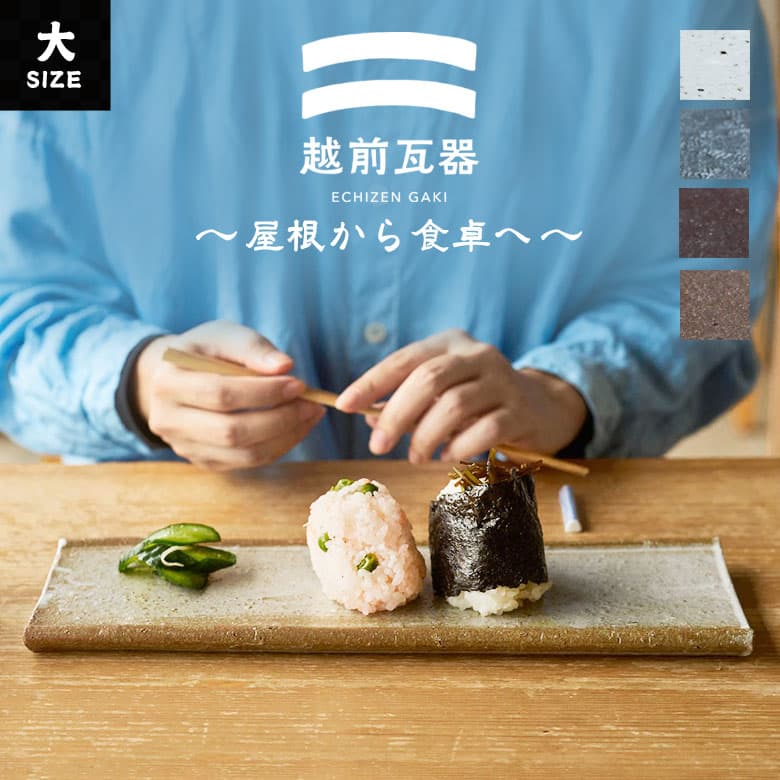
Echizen Gaki Large 318 Ceramic Square Plate
越前瓦器 大 318 角皿 スクエア 陶器 皿 小皿 四角 豆皿 お皿 お通し 箸休め おしゃれ 和食器 おつまみ皿 漬物皿 おしゃれ かわいい 白 ホワイト オフホワイト 黒 ブラック 茶色 ブラウン モダン
Large 318想いを繋ぐ百貨店 【TSUNAGU】
Japanese name越前瓦
Japanese-style tiles, Western roof lines, ceramic building materials, tile-breaking sessions, and miniature onigawara show how Echizen kawara moves between architecture and hands-on clay work in Fukui.
Information last updated 119 days ago
3 images越前瓦器 大 318 角皿 スクエア 陶器 皿 小皿 四角 豆皿 お皿 お通し 箸休め おしゃれ 和食器 おつまみ皿 漬物皿 おしゃれ かわいい 白 ホワイト オフホワイト 黒 ブラック 茶色 ブラウン モダン
Large 318想いを繋ぐ百貨店 【TSUNAGU】
 3 images
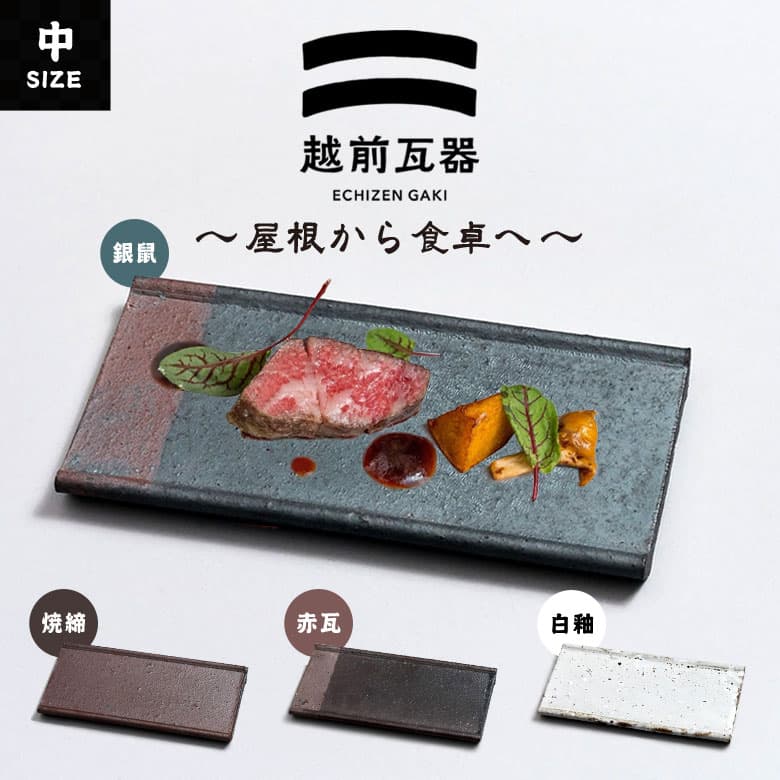
越前瓦器 中 212 角皿 スクエア 陶器 皿 小皿 四角 豆皿 お皿 お通し 箸休め おしゃれ 和食器 おつまみ皿 漬物皿 おしゃれ かわいい 白 ホワイト オフホワイト 黒 ブラック 茶色 ブラウン モダン
Medium 212, W212 x D106 x H15 mm想いを繋ぐ百貨店 【TSUNAGU】
 3 images
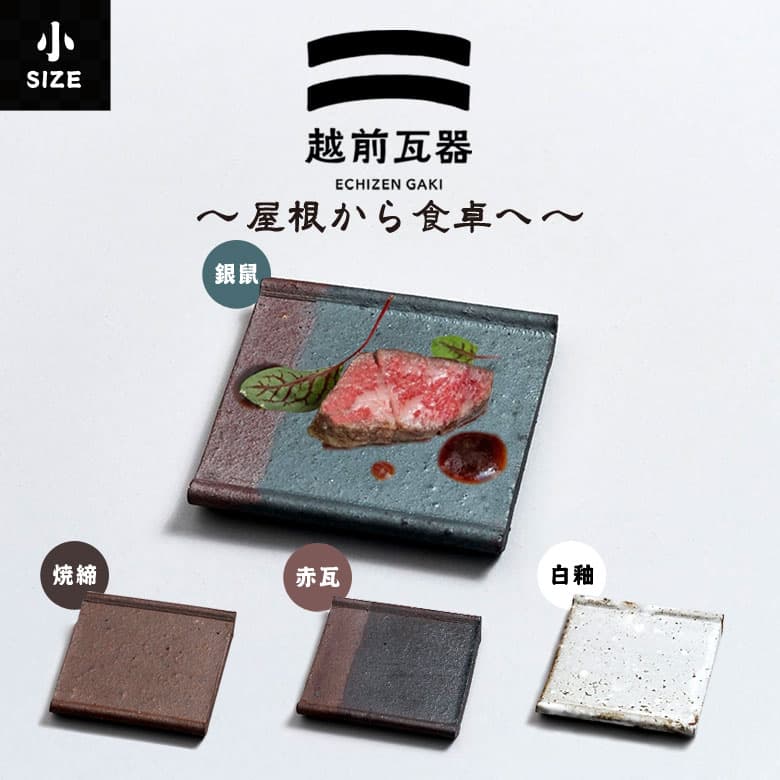
越前瓦器 小 106 角皿 スクエア 陶器 皿 小皿 四角 正方形 豆皿 お皿 お通し 箸休め おしゃれ 和食器 おつまみ皿 漬物皿 おしゃれ かわいい 白 ホワイト オフホワイト 黒 ブラック 茶色 ブラウン モダン
Small 106想いを繋ぐ百貨店 【TSUNAGU】
First time buying on Rakuten? How residents in Japan order →
In Fukui, Echizen kawara begins as a ceramic material for roofs used in new construction, remodeling, renovation, and repair. The prefectural roof-construction cooperative brings together 34 member businesses, and its roof work places high-quality ceramic tiles beside guideline-based installation. The tile industry cooperative groups Japanese-style Echizen tiles, Western-style Echizen tiles, European Echizen, and Echizen ceramic building materials within the same product family. In Ikenokami, Echizen City, Echizen Ceramica carries tile-making techniques into factory visits, tile-breaking, miniature onigawara making, and Echizen Kawaraki tableware.
Echizen kawara appears in the practical roof work of Fukui: new construction, remodeling, renovation, tile work, roof repair, and rain-leak response. The 34 member businesses of the roof-construction cooperative frame a tile roof as a pairing of ceramic tile quality and installation method. Since January 1, 2022, fastening methods for tile roofs have also been strengthened, putting the tile and the way it is fixed into the same conversation.
The Fukui tile industry cooperative presents Echizen kawara through visible product lines: Japanese-style Echizen tiles, Western-style Echizen tiles, European Echizen, and Echizen ceramic building materials. Those names place the family across roof silhouettes and ceramic building products, with performance, construction examples, and manufacturing process also attached to the material.
At Echizen Ceramica, located at 5-12 Ikenokami-cho in Echizen City, the roof tile becomes something visitors can handle. The company manufactures Echizen tiles, carries forward Echizen tile-making techniques, and offers factory visits, tile-breaking sessions, and miniature onigawara making. The miniature onigawara program shifts a roof-tile form into a hand-scale object, making the process easier to feel through a single visit.
Echizen Ceramica also applies Echizen tile-making techniques to a tableware line called Echizen Kawaraki. The name connects a roof material with an object used on the table, so forming clay, firing, and contemporary use meet in a smaller ceramic form.
The material question reaches beneath the roof surface. Clay used for Echizen tiles has been running short, and Echizen Ceramica has tested coal ash, glass wool, and silica-stone sludge as substitute raw materials. The work makes sintered bodies, evaluates physical properties, and changes mixing ratios because different ratios change how the material behaves for ceramic building products and tiles.
Within the Japan Heritage Six Ancient Kilns context, Echizen kawara is connected with Fukui Prefecture, including Echizen Town and nearby areas. Brought back to concrete objects, that wider context still points to ceramic roof tiles, manufacturing processes, Ikenokami workshop programs, and ceramic building materials whose raw-material mixes are being reconsidered.
Echizen kawara takes shape through roof fastening and installation in Fukui, Japanese-style and Western roof tiles, Echizen ceramic building materials, tile-breaking and miniature onigawara in Ikenokami, and tests with coal ash, glass wool, and silica-stone sludge. The family stays close to architecture, clay, and handwork: a tile can cover a roof, and the same manufacturing line can reach a table or a workshop bench.
Compiled from public records and official sources; see the recognition links below. Details may change over time.
Where this product is officially registered, designated, or recognized in Japan.
Regional collective trademark
Registered as a Regional Collective Trademark with the Japan Patent Office.
Sources1
It is written as 越前瓦 in Japanese. Search Rakuten and other Japanese sites with that spelling — the English name will not bring up the listings.
Echizen kawara is a Fukui roof-tile and ceramic building-material family that includes Japanese-style Echizen tiles, Western-style Echizen tiles, European Echizen, and Echizen ceramic building materials. Fukui roof work links high-quality ceramic tiles with guideline-based installation, while Echizen Ceramica in Ikenokami, Echizen City extends tile-making techniques into factory visits, tile breaking, miniature onigawara, and Echizen Kawaraki tableware. Clay depletion has led to work with coal ash, glass wool, and silica-stone sludge as substitute raw materials.
The Fukui roof-construction cooperative has 34 member businesses connected with new construction, remodeling, renovation, tile work, roof repair, and rain-leak response. Tile-roof fastening methods were strengthened from January 1, 2022, alongside guideline-based installation of high-quality ceramic tiles. Echizen Ceramica is located at 5-12 Ikenokami-cho, Echizen City, Fukui Prefecture, and manufactures Echizen tiles while carrying forward Echizen tile-making techniques. Echizen Ceramica offers factory visits, tile-breaking experiences, and miniature onigawara making.
Keep wood, bamboo, and lacquer out of prolonged soaking, dishwashers, and direct sun — wipe dry after use and let them air out in the shade. For metal and fabric goods, follow the care notes on the listing.
Most options are shelf-stable, boxed, and travel well, so they suit gifting or bringing home. Confirm the final storage and delivery terms on the Rakuten listing.
On Rakuten: the shops listed here right now are 想いを繋ぐ百貨店 【TSUNAGU】. We don't sell directly; purchase, payment, stock, and delivery are all handled on the Rakuten product page.