 3 images
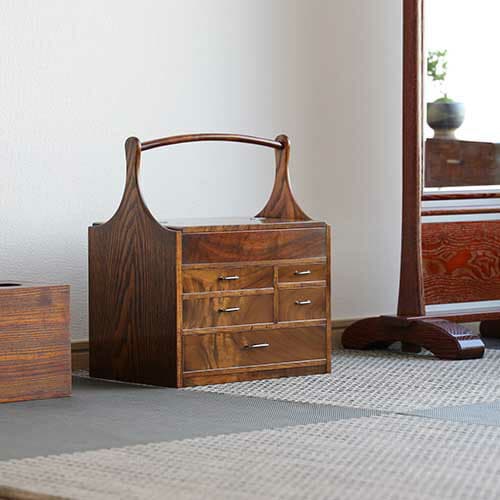
Edo Sashimono Portable Sewing Box
江戸指物 手提針箱 伝統工芸品 小物入れ アッシュ
ashMUKU工房(家具&クラフト)
Japanese name江戸指物
Across Taito, Arakawa, Koto, and nearby districts, Edo Sashimono joins mulberry, zelkova, paulownia, cedar, and natural lacquer into furniture and household objects with hidden wooden joints.
Information last updated 22 days ago
3 images江戸指物 手提針箱 伝統工芸品 小物入れ アッシュ
ashMUKU工房(家具&クラフト)
 3 images
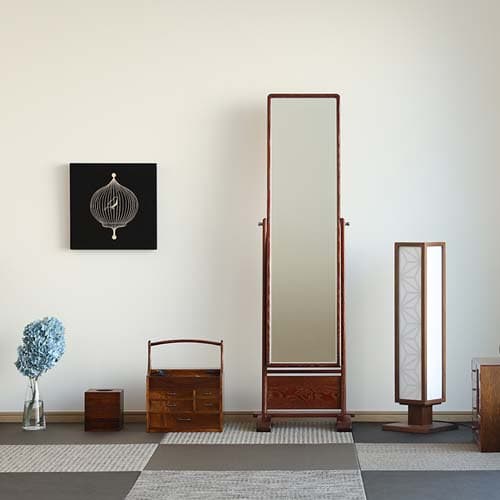
江戸指物 姿見 伝統工芸品 ミラー アッシュ
AshMUKU工房(家具&クラフト)
 3 images
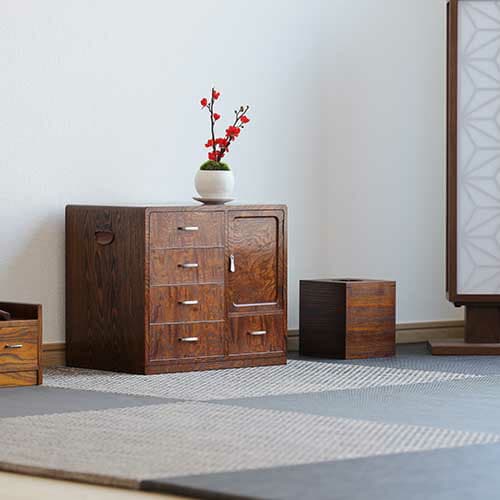
江戸指物 手許箪笥 伝統工芸品 小物入れ
MUKU工房(家具&クラフト)
First time buying on Rakuten? How residents in Japan order →
Edo Sashimono often begins with what the eye can read on the surface: the grain of mulberry, zelkova, paulownia, or cedar. This Tokyo woodworking family is associated with Taito, Arakawa, Koto, and nearby districts, and it is defined by furniture and household objects assembled through worked wooden joints instead of metal nails; in Taito, craftspeople still make tansu chests, desks, chairs, tea shelves, boxes, and tobacco trays.
The word sashimono is linked both to fitting pieces of wood together and to measuring boards with a ruler, but the essential act is joinery. Edo Sashimono uses board and frame joints such as hagi-tsugi, hashibame joints, kumite joints, tome joints, aikaki joints, and hozo joints, while keeping the joints unobtrusive from the outside and avoiding metal nails. The calm surface of a drawer, lidded box, or tea shelf depends on precise work hidden inside the wood.
The main production areas for Edo Sashimono include Taito, Arakawa, Koto, and surrounding districts, with Taito described as especially active. That setting is tied to the urban history of Asakusa and Ueno: temple districts around Sensoji and Kaneiji drew activity, and the movement of Yoshiwara, kabuki, and puppet theater toward Asakusa increased the flow of people and goods, creating more occasions where skilled craft work was needed for furniture, fittings, and performance-related objects.
Traditional materials include mulberry, zelkova, paulownia, cedar, equivalent woods, and natural lacquer. Edo Sashimono emphasizes the grain of the wood and keeps metal fittings to a minimum; finishes include fuki-urushi, roiro-nuri, nuritate, and mehajiki-nuri, with maki-e or raden used when decoration is added. Its restraint is carried by concrete surfaces: a desk top, a box front, or a drawer face where grain, hardware, and lacquer treatment remain carefully balanced.
During the Edo period, Edo Sashimono developed alongside the economic and urban life of the 17th to 19th centuries, serving warrior households, merchants, and kabuki actors. Taito’s account connects it with the shogun’s household, daimyo houses, merchant use after the mid-Tokugawa period, and rien sashimono for kabuki actors; Tokyo’s account names dressing-room mirror stands for kabuki actors. These settings broaden the craft beyond one furniture type: tansu for clothing, boxes for writing tools and small objects, and mirror stands behind the stage all required stable wooden construction.
In Taito today, craftspeople continue to make tansu chests, desks, chairs, tea shelves, nozoki-bako, suzuri-bako, and tobacco trays. These objects carry forward material selection, tool use, and assembly methods, while makers respond to requested sizes and uses; Tokyo’s account also describes craftspeople judging warping and deterioration caused by humidity so pieces can serve household life for decades. The cooperative’s phrase about hundred-year household goods passed between parent and child grounds continuity in actual cabinets, desks, boxes, and daily use.
At the Edo Taito Traditional Crafts Center in Asakusa, Edo Sashimono is displayed alongside Edo Sudare, Tokyo Kiri Tansu, and other fields in a permanent collection of about 50 craft categories and more than 250 objects. The center presents materials, real tools, and production processes, and also hosts craft demonstrations; the Edo Sashimono cooperative’s activity notes include exhibitions, chopstick-making activities, and production demonstrations. For readers who first notice only a smooth wooden surface, Asakusa offers a public way to see joints, tools, and handwork more closely.
Edo Sashimono rests in touchable details: the woodworking areas of Taito, Arakawa, Koto, and nearby Tokyo districts; mulberry, zelkova, paulownia, cedar, and natural lacquer; nail-free joints and hidden hozo; and objects such as tansu, tea shelves, boxes, and tobacco trays that sit inside a room. It carries the needs of Edo urban life into present-day questions of size, use, grain, lacquer, and long service.
Compiled from public records and official sources; see the recognition links below. Details may change over time.
Where this product is officially registered, designated, or recognized in Japan.
It is written as 江戸指物 in Japanese. Search Rakuten and other Japanese sites with that spelling — the English name will not bring up the listings.
Edo sashimono joinery is a Tokyo woodworking family associated with Taito, Arakawa, Koto, and nearby districts. Furniture and household objects are assembled through worked wooden joints rather than metal nails. It served warrior households, merchants, and kabuki actors in the Edo period and continues today.
Traditional materials include mulberry, zelkova, paulownia, cedar, equivalent woods, and natural lacquer. Board and frame joinery includes hagi-tsugi, hashibame joints, kumite joints, tome joints, aikaki joints, and hozo joints. In Taito today, craftspeople make tansu, desks, chairs, tea shelves, boxes, and tobacco trays as Edo sashimono objects. The Edo Taito Traditional Crafts Center in Asakusa displays Edo sashimono and presents materials, tools, processes, and demonstrations.
It is used as furniture and room fittings, and as boxes and small household objects. Makers respond to size and use requests, judge warping and deterioration from humidity, and aim for objects used for decades, including hundred-year household goods that move between parent and child. It has also been used for kabuki-related furnishings, including dressing-room mirror stands.
Keep craft pieces out of direct sunlight, damp, and sharp temperature swings, and store them where they won't knock against anything. Wood, bamboo, lacquer, and paper don't tolerate water — wipe any moisture off immediately. Specific care notes are on the listing.
Most options are shelf-stable, boxed, and travel well, so they suit gifting or bringing home. Confirm the final storage and delivery terms on the Rakuten listing.
On Rakuten: the shops listed here right now are MUKU工房(家具&クラフト). We don't sell directly; purchase, payment, stock, and delivery are all handled on the Rakuten product page.