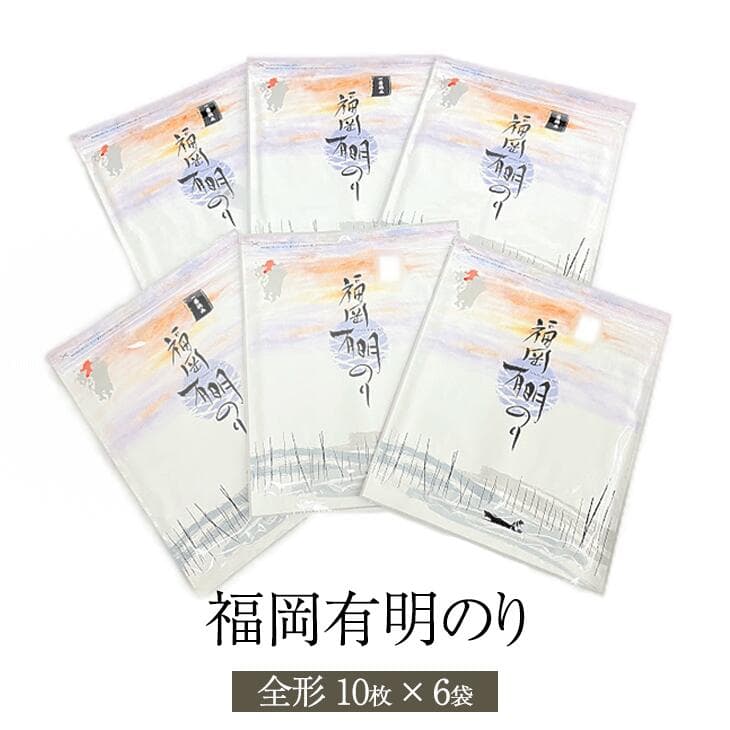
Fukuoka Ariake First-Harvest Roasted Nori
福岡有明のり 全形 10枚 6袋 海苔 のり 焼海苔 焼きのり 有明海苔 有明のり 有明産 有明海産 一番摘み ご飯のお供 セット 送料無料 福岡有明海漁業協同組合連合会 タビグルメ
Full sheets, 10 sheets x 6 packsタビグルメ
5.0 / 1 reviews
Japanese name福岡有明のり
On the Ariake Sea coast of southern Fukuoka, river nutrients, support-pole nets, low-tide air drying, and winter picking shape nori with a soft mouthfeel, clear aroma, and spreading umami.
Information last updated 119 days ago
福岡有明のり 全形 10枚 6袋 海苔 のり 焼海苔 焼きのり 有明海苔 有明のり 有明産 有明海産 一番摘み ご飯のお供 セット 送料無料 福岡有明海漁業協同組合連合会 タビグルメ
Full sheets, 10 sheets x 6 packsタビグルメ
5.0 / 1 reviews
 3 images
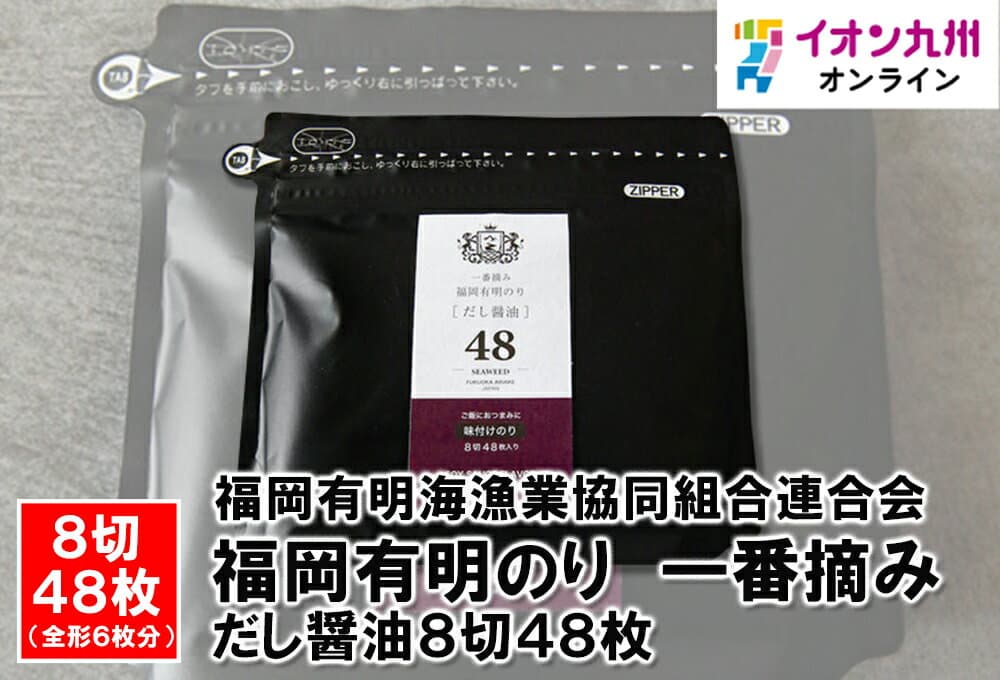
福岡有明のり 一番摘み だし醤油8切48枚
8-cut 48 sheetsイオン九州オンライン
First time buying on Rakuten? How residents in Japan order →
Fukuoka Ariake nori begins on the Ariake Sea coast in southern Fukuoka Prefecture. The Chikugo, Yabe, and other rivers carry nutrients into wide tidal flats, while the tide can rise and fall by as much as six meters. At low tide, nori nets fixed to poles emerge from the water and meet the sea wind. From around November to around March, fishers pick the nori repeatedly through winter, then process it into dried sheets. The glossy black sheet on a rice ball carries a chain of place-based details: rivers, mudflats, wind, timing, and the hands that adjust each stage.
The Ariake Sea is enclosed by Fukuoka, Saga, Nagasaki, and Kumamoto prefectures, and the Fukuoka side receives nutrient-rich water from rivers including the Chikugo and Yabe. Fukuoka Ariake nori is produced in the Ariake Sea area of southern Fukuoka, where broad tidal flats form part of the fishing ground. Local fishers work with a sea known for nori cultivation and other living resources, so the sheet on the table is tied first to river mouths, tidal flats, and divided sea plots along this coast.
Fukuoka Ariake nori is grown by the support-pole method. Poles divide the fishing ground into small plots, and seeded nori nets are stretched across them; the tidal flats are marked by about 1.2 million poles. The Ariake Sea's tidal difference can reach six meters, and low tide exposes the nori to wind in a process called kanshutsu. That air exposure makes the sheet tender and helps amino-acid umami dissolve more readily. Producers adjust the timing by watching tide level, water temperature, and wind speed, so the nori moves between seawater and air at the right moment.
Picking begins around November and continues until around March. During one winter, nori is harvested several times and taken to processing facilities to become dried nori. First-harvest Fukuoka Ariake nori is associated with rich aroma, a good melt-in-the-mouth texture, and umami that fills the tongue. Akitoshi Uchida describes roasted nori as spreading flavor quickly from the first bite, a detail that connects the winter picking season with the final dried sheet.
The sensory center of Fukuoka Ariake nori is aroma, soft mouthfeel, and umami that spreads across the tongue. Its glossy black color stands out against a white rice ball, while the tender bite reflects the low-tide drying and nutrient-rich Ariake Sea environment. First-harvest sheets can be tasted on their own, yet they also make sense around plain rice, where fragrance, texture, and savor arrive in a small, direct form.
Rice balls are one of the clearest everyday uses for Fukuoka Ariake nori, and the sheets also appear in home cooking and sushi restaurants. They enter hands-on food events through decorative rolled sushi classes and long sushi-roll making. From February 1 to February 28, 2026, thirty participating food businesses in Omuta, Yanagawa, and Miyama used Fukuoka Ariake nori in ramen, ika-taru bento, mayoi-yaki, and other special dishes. Those uses carry the nori beyond white rice into hot broth, boxed meals, and regional prepared foods.
Community events bring the sea work onto land. On February 11, 2026, the Fukuoka Ariake nori appreciation event at Yanagawa Civic Cultural Center suito included seaweed-sheet making, parent-child decorative sushi, a taste-comparison quiz, and long sushi-roll making; a March 23, 2025 event at Aeon Mall Omuta Ariake Court offered similar activities. When children form sheets, families roll sushi, and visitors compare flavors, the tidal flats, support poles, and winter harvest become something people can touch and taste.
Fukuoka Ariake nori gathers southern Fukuoka's rivers, the Ariake Sea's six-meter tidal swing, low-tide drying, winter picking, and local fishers' timing into one thin sheet. After harvest and drying, it appears on rice balls, in rolled sushi, in ramen, and at regional food events. Its aroma and umami are inseparable from the support poles on the tidal flats, the wind at low tide, and the coastal community that keeps working with the sea.
Compiled from public records and official sources; see the recognition links below. Details may change over time.
Where this product is officially registered, designated, or recognized in Japan.
Regional collective trademark
Registered as a Regional Collective Trademark with the Japan Patent Office.
Sources1
It is written as 福岡有明のり in Japanese. Search Rakuten and other Japanese sites with that spelling — the English name will not bring up the listings.
Fukuoka Ariake nori is produced on the Ariake Sea coast of southern Fukuoka Prefecture. Nutrients arrive through rivers such as the Chikugo and Yabe, and a tidal difference of up to six meters lets support-pole nets emerge at low tide for kanshutsu, which makes the nori tender and helps amino-acid umami spread. Harvest runs roughly from November to March; first-harvest sheets are known for aroma, soft mouthfeel, and lingering savor.
The support-pole method divides the fishing ground into small plots and stretches seeded nori nets across poles. The Ariake Sea's tidal difference can reach six meters, allowing nori to emerge from the water at low tide. Kanshutsu air exposure makes nori tender and helps amino-acid umami dissolve more readily. Harvest begins around November and continues until around March, and harvested nori is processed into dried sheets.
It is used in rice balls, sushi rolls, ramen, ika-taru bento, mayoi-yaki, and regional event menus. Fukuoka Prefecture describes the black, glossy nori and its aroma as pairing appetizingly with white onigiri. First-harvest sheets are recommended for gifts and hospitality dishes; roasted nori is also eaten as-is.
Storage varies by product — shelf-stable, refrigerated, or frozen — and is stated on the packaging and the Rakuten listing. Shelf-stable processed foods usually need refrigerating once opened and eating within a few days; chilled and frozen items go straight into storage on arrival. Treat the best-before date on the physical packaging as authoritative.
Most options are shelf-stable, boxed, and travel well, so they suit gifting or bringing home. Confirm the final storage and delivery terms on the Rakuten listing.
On Rakuten: the shops listed here right now are タビグルメ, イオン九州オンライン. We don't sell directly; purchase, payment, stock, and delivery are all handled on the Rakuten product page.