 3 images
Hiroshima Lemon Setouchi 100% Fresh-Squeezed Lemon Juice
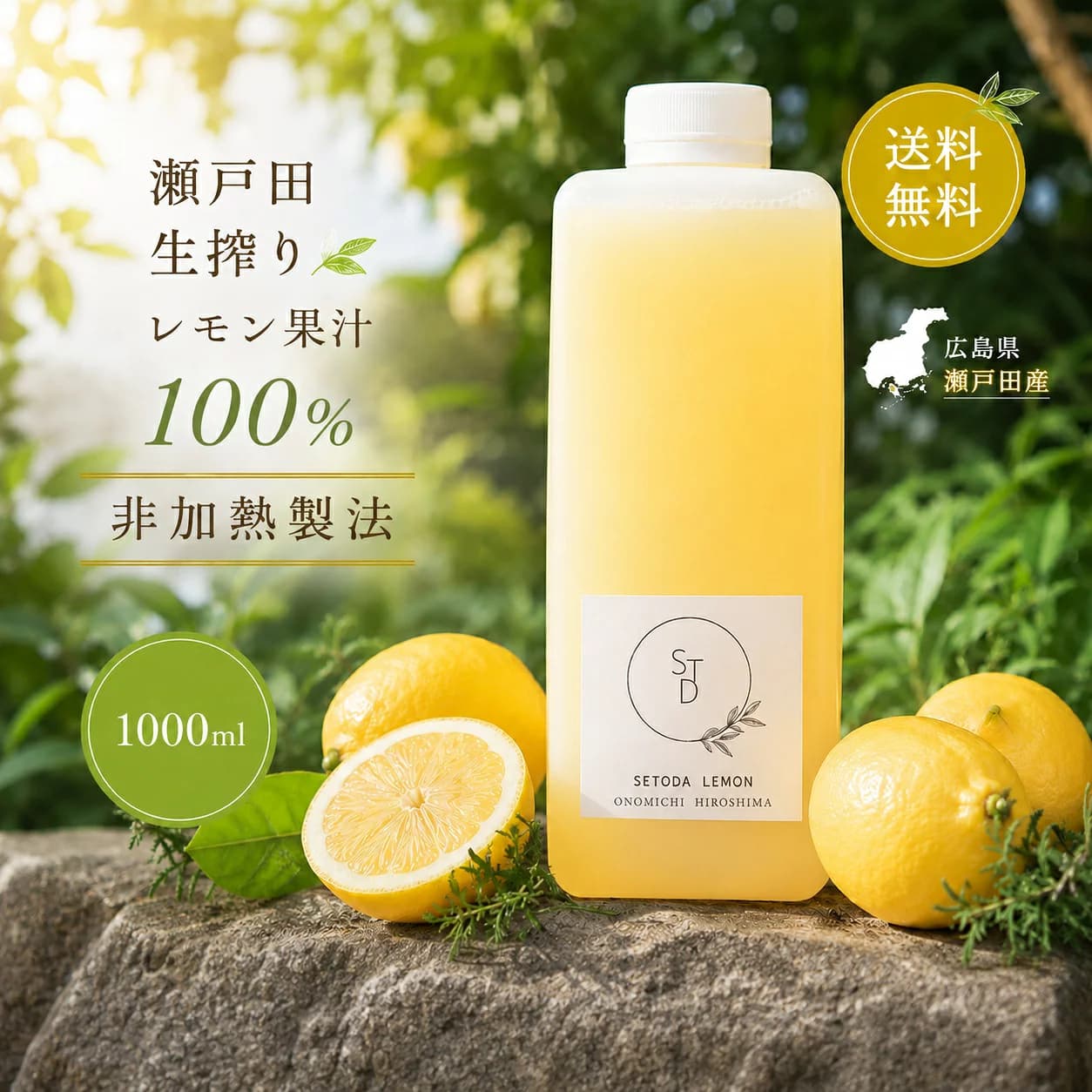
3980円→3480円【無添加 生搾り 瀬戸内 レモン 果汁 100% 1000ml 】オーガニック 農薬残りなし 水無し 賞味期限未開封24ヶ月 ストレート レモン果汁 瀬戸内 国産 しまなみ 広島レモン 国産レモン 瀬戸田レモン ノーワックス 防腐剤不使用 尾道 瀬戸内レモン
1000 ml瀬戸内かんきつ
4.8 / 564 reviews
Japanese name広島レモン
From three saplings in Ocho to green fruit, yellow fruit, and peel-friendly cooking, Hiroshima Lemon is shaped by Setouchi weather, island production areas, and careful storage work.
Information last updated yesterday
3 images3980円→3480円【無添加 生搾り 瀬戸内 レモン 果汁 100% 1000ml 】オーガニック 農薬残りなし 水無し 賞味期限未開封24ヶ月 ストレート レモン果汁 瀬戸内 国産 しまなみ 広島レモン 国産レモン 瀬戸田レモン ノーワックス 防腐剤不使用 尾道 瀬戸内レモン
1000 ml瀬戸内かんきつ
4.8 / 564 reviews
First time buying on Rakuten? How residents in Japan order →
Hiroshima Lemon begins with island and coastal fields facing the Seto Inland Sea. In 1898, Ocho village, now Toyomachi Ocho in Kure City, trial-planted three lemon saplings that had arrived mixed with navel orange stock from Wakayama. The crop then spread from Ocho toward Setoda, helped by Setouchi conditions: mild weather, relatively little rain, and fewer typhoon strikes.
The starting point is concrete: Ocho village in 1898, three lemon saplings, and navel orange stock brought from Wakayama. The variety is thought to have belonged to the Lisbon line, and that small trial planting became the first marked point in Hiroshima’s lemon-growing chronology.
Cultivation expanded around Ocho and later grew in Setoda. By 1914, the planted area had reached 11 hectares. By 1953, Hiroshima had become one of Japan’s leading lemon-producing prefectures, with 18 hectares under cultivation at a time when the national total was 25 hectares. Import liberalization in 1964 and severe cold waves in 1976 and 1981 damaged production, before domestic demand helped the crop recover gradually.
Lemons are vulnerable to cold and canker, and strong wind and rain can make disease pressure worse. The Seto Inland Sea coast and islands give Hiroshima Lemon its growing ground through mild temperatures, relatively low rainfall, and fewer typhoon strikes.
That place character is practical: island and coastal fields, cold-injury management, canker risk, wind, rain, and fruit quality. Ocho, Setoda, Kure, Onomichi, and Osakikamijima belong to this Setouchi production pattern.
The present geography of Hiroshima Lemon is tied to named production areas, especially Kure, Onomichi, and Osakikamijima. Kure includes Toyomachi Ocho, the village linked to the 1898 trial planting; Onomichi includes the Setoda area that expanded early; Osakikamijima shows the continuing importance of island citrus districts.
This makes Hiroshima Lemon a family of fruit rooted in several coastal and island communities. The shared frame is made from place, climate, cultivation, and shipment practice across those Setouchi areas, rather than from one farm or one processor.
The shipping calendar gives Hiroshima Lemon a visible rhythm. House-grown lemons appear in July, green lemons in October and November, yellow lemons from around year-end through May, and stored individually wrapped fruit fills June through August.
That year-round rhythm depends on farm and postharvest work. Greenhouse management brings earlier harvests and higher yields; long-term storage is used to reduce rot loss; individual wrapping helps carry fruit through the early-summer months. The calendar is built from specific months and techniques.
One of the clearest cooking traits is the edible peel. Hiroshima Lemon can be used beyond juice, with peel, slices, or whole-fruit preparations adding aroma to dishes; a local use context also pairs the lemon with gyoza.
Processed foods widen that kitchen path. Documented categories include sweets, seasonings, beverage bases, jams, noodles, and other foods, so the lemon’s acidity and peel aroma move into cakes, waffles, ponzu-style seasonings, hot-pot bases, drinks, and preserved fruit preparations.
The quieter work behind Hiroshima Lemon sits in controlled growing, storage, wrapping, and pest and disease management. These practices support stable supply by connecting greenhouse fruit, autumn green fruit, winter-to-spring yellow fruit, and stored summer fruit.
The same work answers the fruit’s weaknesses. Cold can damage trees, wind and rain can worsen canker, and rot loss after harvest can reduce what reaches the June-to-August window. Setouchi weather gives the crop a base; storage and packaging extend that base across the calendar.
Hiroshima Lemon is best understood through a chain of concrete details: three saplings in Ocho, mild and relatively dry Setouchi islands, production areas such as Kure, Onomichi, and Osakikamijima, and a shipping cycle that moves from July greenhouse fruit to stored summer lemons. When the peel enters cooking and the acidity moves into sweets, seasonings, drinks, and jams, the fruit carries island agriculture into everyday food.
Compiled from public records and official sources; see the recognition links below. Details may change over time.
Where this product is officially registered, designated, or recognized in Japan.
Regional collective trademark
Registered as a Regional Collective Trademark with the Japan Patent Office.
Sources1
It is written as 広島レモン in Japanese. Search Rakuten and other Japanese sites with that spelling — the English name will not bring up the listings.
Hiroshima lemons are a regional lemon family grown in Hiroshima’s Seto Inland Sea coastal and island areas. Cultivation is traced to three saplings trial-planted in Ocho village in 1898, then expanded around Ocho and Setoda, and is now linked with Kure, Onomichi, and Osakikamijima. The calendar includes house-grown lemons in July, green lemons in October and November, yellow lemons from around year-end to May, and stored individually wrapped fruit in June through August.
Cultivation expanded around Ocho and Setoda, reaching 11 hectares by 1914. Mild, relatively low-rainfall Setouchi island and coastal conditions with fewer typhoon strikes support lemon cultivation while reducing cold and disease pressures. The edible peel supports cooking uses, and related products include sweets, seasonings, beverage bases, jams, noodles, and other foods. A non-commercial research report notes a 2008 Hiroshima Lemon regional collective trademark, used here only as name-boundary context.
The shipment cycle gives cooks distinct forms through the year: house-grown fruit in July, green fruit in autumn, yellow fruit from winter through spring, and stored individually wrapped fruit in early summer. The fruit is described as edible up to the peel, including a local pairing with gyoza. Lemon-related products extend beyond fresh fruit into sweets, seasonings, fruit juice, beverages, jams, noodles, and other food categories.
Storage varies by product — shelf-stable, refrigerated, or frozen — and is stated on the packaging and the Rakuten listing. Shelf-stable processed foods usually need refrigerating once opened and eating within a few days; chilled and frozen items go straight into storage on arrival. Treat the best-before date on the physical packaging as authoritative.
Most options are shelf-stable, boxed, and travel well, so they suit gifting or bringing home. Confirm the final storage and delivery terms on the Rakuten listing.
On Rakuten: the shops listed here right now are 瀬戸内かんきつ. We don't sell directly; purchase, payment, stock, and delivery are all handled on the Rakuten product page.