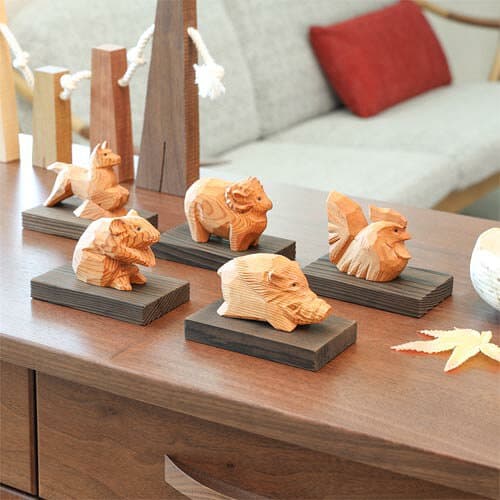
 3 images
Ichii Ittobori Suzuki Chokoku Wooden Zodiac Figurine
一位一刀彫 鈴木彫刻 干支 伝統工芸品 木製 オブジェ
MUKU工房(家具&クラフト)
5.0 / 1 reviews
Japanese name一位一刀彫
In Takayama, Hida, and Gero, Ichii Ittobori begins with Japanese yew and ends without added color; grain, pale shirota, reddish akata, and chisel marks carry the surface of tea utensils, ornaments, and masks.
Information last updated 119 days ago
3 images一位一刀彫 鈴木彫刻 干支 伝統工芸品 木製 オブジェ
MUKU工房(家具&クラフト)
5.0 / 1 reviews
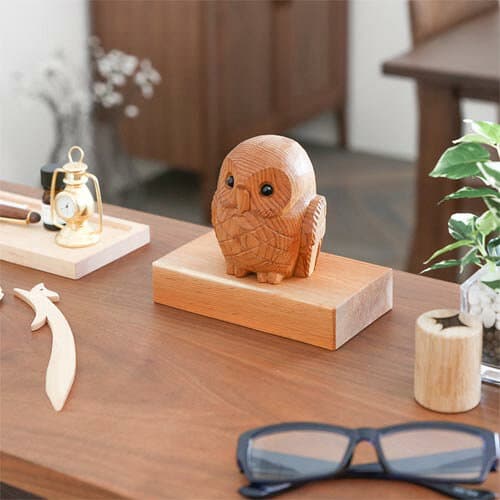 3 images
一位一刀彫 鈴木彫刻 ふくろう 伝統工芸品 木製 オブジェ
MUKU工房(家具&クラフト)
4.0 / 1 reviews
First time buying on Rakuten? How residents in Japan order →
Ichii Ittobori begins in the Hida area of Gifu Prefecture, especially around Takayama, Hida, and Gero. A maker reads a piece of ichii, or Japanese yew, before cutting: the grain, the pale outer shirota, and the reddish inner akata all have to work with the object’s future face. The finished surface is left uncolored, so the blade marks and the wood’s slow move toward glossy tea-brown remain part of the work.
Takayama, Hida, and Gero form the main production area for this carving family. Takayama connects the skill to Hida artisans who worked on temple and shrine construction in Nara and Kyoto, and to carving still visible on Takayama Festival floats. Those place anchors matter: the craft is tied to mountain wood, festival carving, and the compact carved objects that passed through Takayama hands.
The raw material is ichii, the Japanese yew that is also Gifu Prefecture’s tree. Its surface gives the maker more than a uniform block: shirota appears near the outside of the trunk, while akata sits closer to the center. During layout and rough cutting, the grain flow and these two tones are matched to the future shape, so a face, robe, wing, or rounded body can carry the natural color difference.
Logs are collectively purchased, distributed to craftspeople, and naturally dried in individual storage spaces. The work moves from layout and rough preparation with saws, hatchets, and tsukinomi chisels into rough carving, middle carving, and finishing cuts made with chisels of different sizes. The last wax finish does not add color; it draws the wood’s oils and tannins toward the surface, where chisel marks and the later deepening of color remain visible.
In the late Edo period, netsuke carved from Hida mountain ichii helped the craft grow. These small objects used the wood grain without added color, turning a practical carved form into a place where material and hand skill could be seen at close range. Takayama names Hirata Ryōchō and Matsuda Ryōchō, two netsuke carvers from the city, in that development.
The family’s main forms include tea utensils, ornaments, and masks. Some pieces take the shape of small animals or Buddhist figures, where fine chisel handling creates facial details and compact bodies. In the work associated with maker Washizuka Mokujin, named motifs include Hannya masks, the Seven Lucky Gods, zodiac figures, owls, turtles, and Daruma; those examples show how the material can move from a mask’s ridges to a small figure’s rounded body.
Ichii grows slowly, and the craft depends almost entirely on natural ichii. Suitable material is described as straight, knot-free wood with annual rings of about one millimeter or less and a diameter of at least thirty centimeters; that condition can require a felling timeline of about 150 years or more. A finished carving may fit in one hand, but its pale and red grain carries a much longer forest interval.
Ichii Ittobori holds together a precise set of things: Hida place names, Japanese yew, red and pale wood tones, chisel work, late-Edo netsuke, and a forest timeline measured in more than a century. Whether the form is a tea utensil, a mask, or a small ornament, the surface keeps changing as the wood darkens, leaving the viewer with grain, blade, and time on the same quiet face.
Compiled from public records and official sources; see the recognition links below. Details may change over time.
Where this product is officially registered, designated, or recognized in Japan.
Traditional craft
Designated a Traditional Craft (dentō kōgeihin) by Japan's Ministry of Economy, Trade and Industry.
Sources1
It is written as 一位一刀彫 in Japanese. Search Rakuten and other Japanese sites with that spelling — the English name will not bring up the listings.
Ichii ittobori carving is a woodcarving family from the Hida area of Gifu Prefecture. It uses Japanese yew and leaves the surface uncolored, so grain, pale shirota, reddish akata, and chisel marks remain visible. Current forms include tea utensils, ornaments, and masks.
Suitable ichii material is straight, knot-free wood with annual rings of about one millimeter or less and at least thirty centimeters in diameter, requiring about 150 years or more before felling. Ichii ittobori's main production areas are Takayama, Hida, and Gero in Gifu Prefecture. Late-Edo netsuke made from Hida mountain ichii helped Ichii ittobori develop. Takayama names Hirata Ryōchō and Matsuda Ryōchō as late-Edo netsuke carvers connected with the craft's growth.
It is used for tea utensils, ornaments, and masks, and also as netsuke and small carved objects. Carved subjects also include zodiac figures, Daruma, owls, turtles, and the Seven Lucky Gods. Ichii gradually turns glossy tea-brown or deeper in color with age, and wax finishing draws out the wood's oil and tannin.
Keep craft pieces out of direct sunlight, damp, and sharp temperature swings, and store them where they won't knock against anything. Wood, bamboo, lacquer, and paper don't tolerate water — wipe any moisture off immediately. Specific care notes are on the listing.
Most options are shelf-stable, boxed, and travel well, so they suit gifting or bringing home. Confirm the final storage and delivery terms on the Rakuten listing.
On Rakuten: the shops listed here right now are MUKU工房(家具&クラフト). We don't sell directly; purchase, payment, stock, and delivery are all handled on the Rakuten product page.