 3 images
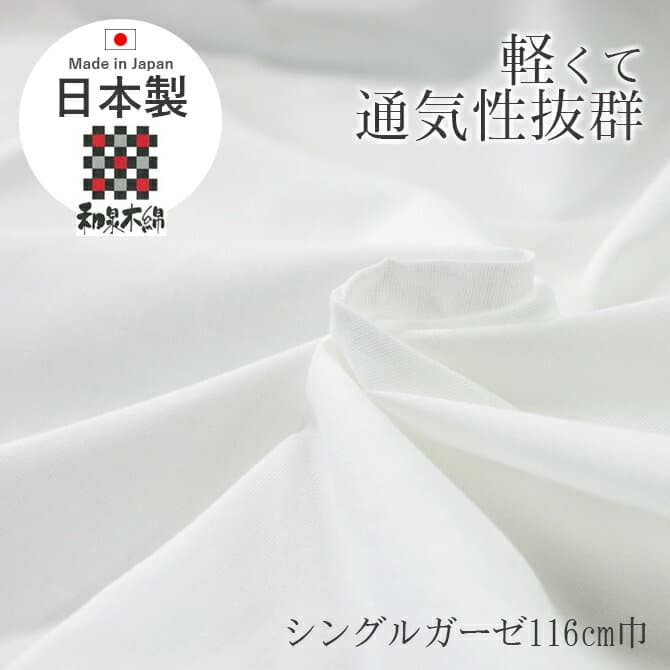
Izumi Momen White Single Gauze Fabric
シングルガーゼ ホワイト 50cm単位 日本製 和泉木綿 無地 白 一重ガーゼ ホワイト ガーゼ さらし 晒し マスク 綿 コットン 国産 生地 シングルガーゼ スタイ ハンカチ ハンドメイド 手作りマスク 布 ベビー 赤ちゃん
50cm unit生地通販フライハイト
4.9 / 76 reviews
Japanese name和泉木綿
In the former Izumi region of western Osaka, Izumi Momen connects long-fiber cotton, fine yarn, bleached cloth, tenugui, yukata fabric, and chusen dyeing.
Information last updated 119 days ago
3 imagesシングルガーゼ ホワイト 50cm単位 日本製 和泉木綿 無地 白 一重ガーゼ ホワイト ガーゼ さらし 晒し マスク 綿 コットン 国産 生地 シングルガーゼ スタイ ハンカチ ハンドメイド 手作りマスク 布 ベビー 赤ちゃん
50cm unit生地通販フライハイト
4.9 / 76 reviews
First time buying on Rakuten? How residents in Japan order →
Izumi Momen begins as a place name before it becomes a cloth name. Its home is Osaka’s Senshu textile area, the former Izumi region. More than 600 years ago, people in this area grew cotton, spun it by hand, and wove it by hand. The material trail is equally tangible: long-fiber Izumi cotton, fine yarn, thin bleached cloth for dyeing, tenugui, yukata fabric, and red lining cloth.
Western Osaka gives the cloth its first anchor. Senshu, once known as Izumi, is the area tied to cotton cultivation, spinning, and weaving; another historical line places the spread of cotton cultivation into Izumi and Kawachi as cotton became common in the Kinai region. The cultural meaning of the name stays concrete here: fields, cotton fiber, thread, and woven cloth in a defined Osaka production area.
Izumi cotton is described through a specific material trait: long fibers of good quality that could be spun into fine yarn. Cloth woven from that yarn was suited to thin bleached cotton for dyeing, which points to a light and usable fabric rather than an ornamental label. Tenugui, yukata fabric, and red lining cloth all show how fine thread became objects held, worn, or placed inside a kimono.
The remembered uses of Izumi Momen are everyday objects with clear shapes. Tenugui places the cloth near the hand, yukata fabric places it on the body, and red lining cloth places safflower-dyed cotton inside a kimono. When the word tradition appears here, it means those named objects, the cotton yarn behind them, and the repeated making of cloth in Senshu.
The production path runs from sizing cotton yarn to crossing warp and weft, weaving the cloth, dyeing it, and sewing it. Yukata-related Izumi Momen also keeps a link with Japanese bleaching and chusen dyeing. In chusen, stacked cloth is dyed through a stencil, and twenty to thirty pieces can be dyed at once; the depth and sheen associated with the finished cloth come from that way of moving dye through fabric.
Commercial cotton cloth grew strongly from the Genroku to Horeki years, and Senshu’s annual cotton-cloth output reached about one million tan in 1810 and two million tan in 1861-1863. Imported cotton, spun yarn, and mechanized production later changed the old form, and Izumi Momen disappeared for a time in the late Meiji period. Local cotton businesses and cross-company groups later became the concrete people behind its renewed continuity.
The present Senshu textile area places Izumi Momen within a broad cloth range: apparel fabrics, industrial-material textiles, and bedding-related textiles. The same name also appears in a regional collective trademark context for textiles woven in Senshu, which helps explain the place boundary. The stronger hook remains visible in the material itself: Osaka Senshu, cotton yarn, weaving, bleaching, and chusen dyeing.
Izumi Momen is easiest to understand through concrete things: Osaka’s Senshu place name, long-fiber Izumi cotton, fine yarn, thin bleached cloth, tenugui, yukata fabric, and red lining cloth. From the one million tan recorded in 1810 to the late-Meiji interruption and the current range of apparel, bedding, and industrial cloth, the name continues through thread, process, and use.
Compiled from public records and official sources; see the recognition links below. Details may change over time.
Where this product is officially registered, designated, or recognized in Japan.
Regional collective trademark
Registered as a Regional Collective Trademark with the Japan Patent Office.
Sources1
It is written as 和泉木綿 in Japanese. Search Rakuten and other Japanese sites with that spelling — the English name will not bring up the listings.
Izumi cotton (Izumi Momen) is a cotton textile linked to Osaka's Senshu textile area, the former Izumi region. The area's origins include cotton growing, hand spinning, and hand weaving more than 600 years ago. Long-fiber Izumi cotton could be spun into fine yarn, then woven into thin bleached cloth used for dyeing, tenugui, and yukata fabric. Output later grew sharply before imported cotton and machine production reshaped the industry.
Cloth woven from fine Izumi cotton yarn was also used for red lining cloth, besides thin bleached cotton for dyeing. Senshu cotton-cloth output reached about one million tan in 1810 and about two million tan between 1861 and 1863. Imported cotton, spun yarn, and mechanized production changed the older form of Izumi Momen, which disappeared for a time in the late Meiji period. Chusen dyeing uses a stencil and can dye twenty to thirty pieces of cloth at once.
Fine-yarn cloth from Izumi cotton was woven into tenugui and yukata fabric, based on thin bleached cotton meant for dyeing. Today the Senshu textile area's products include apparel fabrics, bedding-related textiles such as sheets, futon covers, pillow covers, blankets, towels, curtains, and table coverings, and industrial-material textiles.
Naturally dyed textiles shed some colour on first wash. Hand-wash separately with a neutral detergent, avoid long soaking and bleach, and dry in the shade to prevent fading. Silk, ramie, and traditionally dyed pieces often need professional cleaning — the care label on the listing takes precedence.
Most options are shelf-stable, boxed, and travel well, so they suit gifting or bringing home. Confirm the final storage and delivery terms on the Rakuten listing.
On Rakuten: the shops listed here right now are 生地通販フライハイト. We don't sell directly; purchase, payment, stock, and delivery are all handled on the Rakuten product page.