 3 images
Kishu Minabe Nanko Ume Tomato Umeboshi
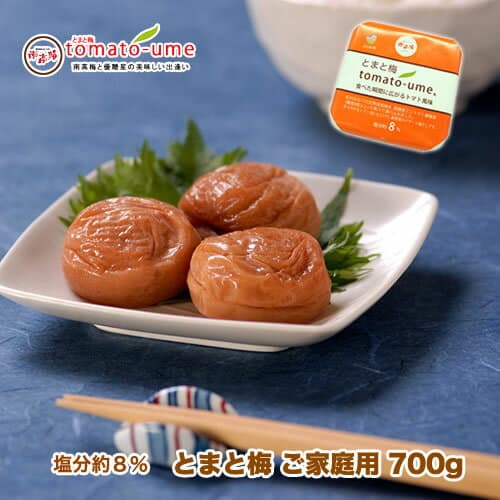
送料無料tomato-ume( とまと梅 トマト梅 )ご家庭用 700g 塩分約 8%【 紀州みなべの南高梅 】はちみつ風味 はちみつ梅干減塩 ミニトマト 優糖星お中元 お歳暮 敬老の日はちみつ梅 甘い梅
700g household pack南高梅の郷JA紀州地域本部
4.6 / 37 reviews
Japanese name紀州みなべの南高梅
In Minabe, Wakayama, Nanko plums move from February white blossoms and June fruit into umeboshi, juice, umeshu, and the hillside work of orchards, fuelwood forests, and bees.
Information last updated 120 days ago
3 images送料無料tomato-ume( とまと梅 トマト梅 )ご家庭用 700g 塩分約 8%【 紀州みなべの南高梅 】はちみつ風味 はちみつ梅干減塩 ミニトマト 優糖星お中元 お歳暮 敬老の日はちみつ梅 甘い梅
700g household pack南高梅の郷JA紀州地域本部
4.6 / 37 reviews
First time buying on Rakuten? How residents in Japan order →
Minabe sits on Wakayama’s Pacific side, where hills, forest, farmland, and coastline meet the warmth of the Kuroshio Current. Kishu Minabe Nanko Ume refers to Nanko plums grown in the Minabe area and umeboshi made mainly from those plums. The fruit is known for soft skin, thick flesh, and a red blush when ripe, and it is used for umeboshi, juice, umeshu, and sour drinks. The name begins with a fruit, then opens onto the sloping orchards, fuelwood forests, stored water, and honeybee pollination of the Minabe-Tanabe landscape.
Kishu Minabe Nanko Ume has a defined scope: Nanko plums from the Minabe area of Wakayama and umeboshi made mainly from those plums. That boundary links the name to visible traits, including white single blossoms from early to late February, soft skin, thick flesh, and vivid red color at proper ripeness.
Those traits also explain its everyday uses. Soft skin and generous flesh suit umeboshi, while ripe fruit can become ume juice, umeshu, and sour drinks. When the name appears, it points to Minabe-grown fruit, pickled-plum making, and the way acidity is carried into drinks and meals.
Minabe is near the center of Wakayama Prefecture, with Pacific coastline, the hills of the Minabegawa River basin, and mountain areas within the town. The Kuroshio Current brings warmth to this coastal setting, placing sea, forest, farmland, and plum orchards within one local landscape.
In the Minabegawa basin, plum groves spread across hills, while the mountain side holds forests and valleys and the coast faces the Kii Channel. Kishu Minabe Nanko Ume is grounded in a specific Pacific-side terrain, where warm current, slopes, fields, and woodland all shape the fruit’s place.
The cultivar line traces back to a plum tree planted by the Takada family in 1902, later known as Takada Ume. From 1950, local selection work evaluated plum varieties from the former Nanbu area, and Nambu High School took part in the research that became associated with the Nanko name.
This history gives the fruit a concrete human setting. Takada Ume supplied the mother-tree line, local growers and Nambu High School helped with selection, and the resulting Nanko Ume became valued for traits such as thick flesh, thin or soft skin, acidity, and usefulness in processing.
In the Minabe-Tanabe area, plum orchards are set on nutrient-poor, gravelly, erosion-prone slopes, while fuelwood forests are kept nearby. Those forests help hold water and soil, and Japanese honeybees move among the early plum blossoms for pollination. Here, agricultural tradition means a concrete working system: plum trees on slopes, woodland for fuelwood and charcoal, stored mountain water, and bees active in blossom season.
The system has continued for about 400 years and was named in 2015 as the Minabe-Tanabe Ume System within a world agricultural heritage program. For readers, that recognition points back to the place itself: hillside orchards, fuelwood forests, soil and water care, and long-running pollination work.
After February blossoms, June ripe fruit carries the orchards into processing and the table. Nanko Ume is used for umeboshi, ume juice, umeshu, and sour drinks, and Wakayama travel settings connect ripe June fruit with umeshu and syrup making.
In Minabe, JA Wakayama’s Kishu regional branch runs an experience using desalinated Nanko umeboshi to make honey-pickled umeboshi. This example should not stand in for every producer’s method, but it shows one hands-on path from fruit to umeboshi and then to a sweetened pickled-plum practice.
In Minabe, plum growing also enters school life. Local schools use plum fields for pruning, weeding, and harvesting activities, and Ume Day school meals include umeboshi rice balls.
Continuity here is practical: children meet branches, weeds, harvest fruit, and the sour taste of umeboshi at lunch. When Nanko Ume appears in classrooms and on trays, Minabe’s plum knowledge is renewed through seasonal work and a familiar meal.
Kishu Minabe Nanko Ume is clear because it joins place, fruit, and use. The Pacific climate of Minabe, the hills of the Minabegawa basin, fuelwood forests, and sloping orchards support February blossoms and June fruit. Takada Ume, local selection work, and Nambu High School give the cultivar a traced line. Umeboshi, juice, umeshu, sour drinks, and school meals return the soft-skinned, thick-fleshed plum to everyday acidity.
Compiled from public records and official sources; see the recognition links below. Details may change over time.
Where this product is officially registered, designated, or recognized in Japan.
Regional collective trademark
Registered as a Regional Collective Trademark with the Japan Patent Office.
Sources1
It is written as 紀州みなべの南高梅 in Japanese. Search Rakuten and other Japanese sites with that spelling — the English name will not bring up the listings.
Kishu Minabe Nanko plum refers to Nanko plums grown in the Minabe area of Wakayama and umeboshi made mainly from them. The fruit has soft skin, thick flesh, and a vivid red color when ripe, and is used for umeboshi, juice, umeshu, and sour drinks. Its cultivar line connects to Takada Ume planted in 1902, local selection work from 1950, and Nambu High School; its growing landscape connects Pacific hills, Kuroshio warmth, fuelwood forests, sloping orchards, water retention, and Japanese honeybee pollination.
Nanko Ume is described as having white single blossoms from early to late February, soft skin, thick flesh, and vivid red color at proper ripeness. Minabe is near central Wakayama and includes Pacific coastline, hills in the Minabegawa River basin, mountain forest, and farmland. The Nanko Ume line connects to Takada Ume planted by the Takada family in 1902 and to selection work from 1950 involving local actors and Nambu High School. In Minabe-Tanabe, plum orchards on fragile slopes are linked with fuelwood forests that help retain water and soil and support Japanese honeybee pollination.
Nanko Ume is used for umeboshi, ume juice, umeshu, and sour drinks. Minabe has a honey-pickled umeboshi experience that uses desalinated Nanko umeboshi. Umeboshi may be used as a filling, a side for fried dishes, and as part of seasoning, where acidity and umami shape the finish of the dish.
Storage varies by product — shelf-stable, refrigerated, or frozen — and is stated on the packaging and the Rakuten listing. Shelf-stable processed foods usually need refrigerating once opened and eating within a few days; chilled and frozen items go straight into storage on arrival. Treat the best-before date on the physical packaging as authoritative.
Most options are shelf-stable, boxed, and travel well, so they suit gifting or bringing home. Confirm the final storage and delivery terms on the Rakuten listing.
On Rakuten: the shops listed here right now are 南高梅の郷JA紀州地域本部. We don't sell directly; purchase, payment, stock, and delivery are all handled on the Rakuten product page.