 3 images
Mizutori hitete Black 6.5cm Heel Geta Sandals with Kokura-ori SHIMA-SHIMA Strap
・水鳥工業 みずとり 下駄 hitete 黒塗り6.5cmヒール [KCB-14 無彩/黒・ワイン(m2 小倉縞縞)] 小倉織のSHIMA-SHIMA×mizutori 21cm〜25.5cm レディース
KCB-14 Musai black/wineBOUTIQUE MIKI
4.4 / 7 reviews
Japanese name小倉織
From Buzen Kokura, now Kitakyushu in Fukuoka, Kokura-ori is a firm, smooth cotton cloth once woven for samurai hakama and obi. Dense warp threads give its vertical stripes depth, and the revival since 1984 now reaches handwoven obi, apparel textiles, and interiors.
Information last updated 120 days ago
3 images・水鳥工業 みずとり 下駄 hitete 黒塗り6.5cmヒール [KCB-14 無彩/黒・ワイン(m2 小倉縞縞)] 小倉織のSHIMA-SHIMA×mizutori 21cm〜25.5cm レディース
KCB-14 Musai black/wineBOUTIQUE MIKI
4.4 / 7 reviews
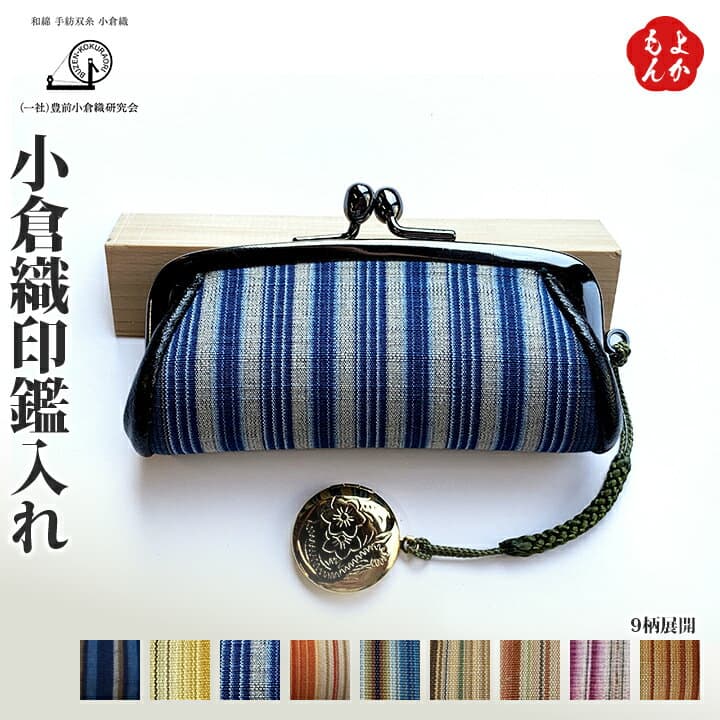 3 images
小倉織印鑑入れ【送料無料】豊前小倉織研究会 九州 福岡 お取り寄せ 福岡県よかもんショップ
50 x 90 mm福岡県よかもんショップ
5.0 / 1 reviews
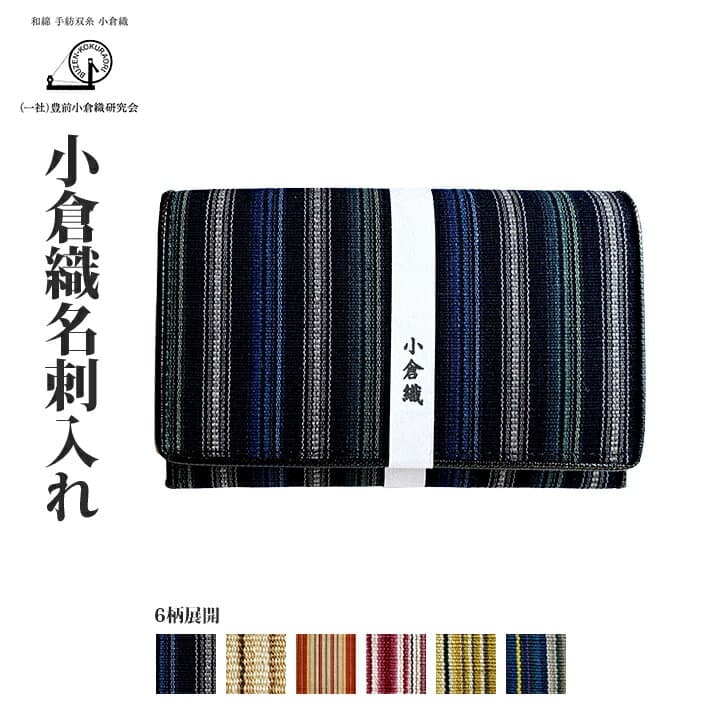 3 images
小倉織名刺入れ【送料無料】豊前小倉織研究会 九州 福岡 お取り寄せ 福岡県よかもんショップ
cow leather back福岡県よかもんショップ
First time buying on Rakuten? How residents in Japan order →
Kokura-ori begins with a place name: Buzen Kokura, today part of Kitakyushu in Fukuoka Prefecture. The cloth was woven for samurai hakama and obi, so its story starts close to the body, at the legs and waist, where thick cotton had to hold its shape. Its stripes are woven into the structure. In Kokura-ori, densely arranged warp threads dominate the cloth face, building narrow bands of color and a firm hand. Three preserved Kokura-ori stripe sample books in Kitakyushu show how these stripes circulated as product patterns, while the modern return is tied to dyer-weaver Noriko Tsuiki's 1984 restoration and to today's research groups, cooperative members, and wide machine-woven textiles.
The name Kokura-ori is tied to Buzen Kokura, the area of present-day Kitakyushu. From the Edo period, cotton cultivation, spinning, and weaving around Kokura supported a cloth used for samurai hakama and obi, giving the textile a practical beginning in garments that needed strength.
Kitakyushu preserves three Kokura-ori stripe sample books as collections of stripe arrangements. They make the family easier to picture through concrete parts: Kokura as place, cotton as material, hakama and obi as use, and vertical lines as the visible structure.
Kokura-ori's vertical stripes come from the warp. The warp density is roughly two to three times the weft, and one account gives about 2,300 warp threads across a 35-centimeter width. That density lets the lengthwise color lines control the surface.
The result is a cloth known as thick, durable, smooth, and close to leather in hand. Its depth is made by structure: tightly packed warp threads hold the face of the cloth while color gradations create the three-dimensional stripe effect.
The preserved stripe samples present Kokura-ori as a cotton textile that takes indigo well, withstands washing, and gains luster as it is washed. Those details place the cloth in use, where color, surface, and repeated handling matter as much as the first look.
As obi cloth, firmness was part of its purpose. Kokura-ori's strong cotton and stable face helped an obi hold without loosening, which makes the dense warp and thick surface working parts of a waist cloth.
Kokura-ori widened its circulation in the Meiji period and was also used for student-uniform cloth. Imitation goods and industrial change later weakened production, and the craft stopped in the early Showa years; today's continuity has to include that interruption.
In 1984, dyer-weaver Noriko Tsuiki restored Kokura-ori and brought the dense cotton stripe back into active making. Later handwoven work, machine-woven development, and brand activity grew from that turning point, giving the modern cloth a documented place after the break.
The Buzen Kokura-ori Research Association, founded in 1995, keeps attention on the hand process. Its members cultivate Japanese cotton around Kitakyushu, spin it on spinning wheels, combine two strands into two-ply yarn, dye with indigo or plant dyes, and weave on handlooms.
After weaving, handspun two-ply Kokura-ori is finished with kinuta beating to make obi cloth smoother and more substantial. Here, continuity is carried by Japanese cotton, spinning wheels, two-ply yarn, dye vats, handlooms, and the finishing beat that changes the cloth surface.
Kokura-ori also moved into wide machine-woven cloth. In 2007, Kokura Shima Shima developed machine-woven Kokura-ori for a new era, and 140-centimeter-wide fabric opened the stripe to apparel materials, products, and interiors.
The width changes the setting while the dense vertical stripe remains the visible and tactile core. The cloth can spread beyond narrow obi into garments, furoshiki, wall applications, and other designed surfaces.
Kokura-ori today is held by several organizations and makers. The Kokura-ori Cooperative was formed in 2018 by businesses involved in making, sales, and public outreach, with member activity connected to Kitakyushu and Onga Town; the General Incorporated Association Kokura-ori, founded in 2015, also runs workshops for elementary schools and other groups in Kitakyushu.
The cooperative member list includes the Buzen Kokura-ori Research Association, Kokura Shima Shima, and Kokura Orimono Manufacturing, established in 2018 in central Kokura to handle production. The present-day textile is a network of hand research, wide machine weaving, workshops, and local manufacturing.
Kokura-ori is clearest through concrete things: Kitakyushu's Kokura name, thick cotton, hakama and obi, dense warp threads, and vertical color. Its early Showa interruption and 1984 restoration give today's handwoven obi, wide apparel cloth, and interior textiles a careful connection to a stripe that had to be remade before it could continue.
Compiled from public records and official sources; see the recognition links below. Details may change over time.
Where this product is officially registered, designated, or recognized in Japan.
Regional collective trademark
Registered as a Regional Collective Trademark with the Japan Patent Office.
Sources1
It is written as 小倉織 in Japanese. Search Rakuten and other Japanese sites with that spelling — the English name will not bring up the listings.
Kokura textiles (Kokura-ori) are thick, durable, smooth cotton textiles historically linked to Buzen Kokura, now Kitakyushu in Fukuoka Prefecture. The cloth was once woven for samurai hakama and obi, with vertical stripes formed by densely packed warp threads. Production stopped in the early Showa years and was restored in 1984 by dyer-weaver Noriko Tsuiki. Today, a research association, a cooperative, individual weavers, and machine-woven wide-cloth producers continue Kokura-ori for obi, apparel textiles, products, and interior materials.
Kokura-ori's vertical stripes come from dense warp threads, said to be two to three times as dense as the weft. One example describes about 2,300 warp threads across a 35-centimeter width to illustrate this density. Three surviving Kokura-ori stripe sample books record traditional stripe patterns and describe a cloth that takes indigo well, withstands washing, and gains luster over time. The cloth was said to be firm enough that an obi woven from it did not loosen even when a sword was worn.
Kokura-ori has traditionally been woven into obi and hakama. The cloth takes indigo dye well, withstands washing, and gains luster as it is washed. Contemporary wide cloth is used for apparel, products, and interior surfaces such as wall panels.
Naturally dyed textiles shed some colour on first wash. Hand-wash separately with a neutral detergent, avoid long soaking and bleach, and dry in the shade to prevent fading. Silk, ramie, and traditionally dyed pieces often need professional cleaning — the care label on the listing takes precedence.
Most options are shelf-stable, boxed, and travel well, so they suit gifting or bringing home. Confirm the final storage and delivery terms on the Rakuten listing.
On Rakuten: the shops listed here right now are BOUTIQUE MIKI, 福岡県よかもんショップ. We don't sell directly; purchase, payment, stock, and delivery are all handled on the Rakuten product page.