 3 images
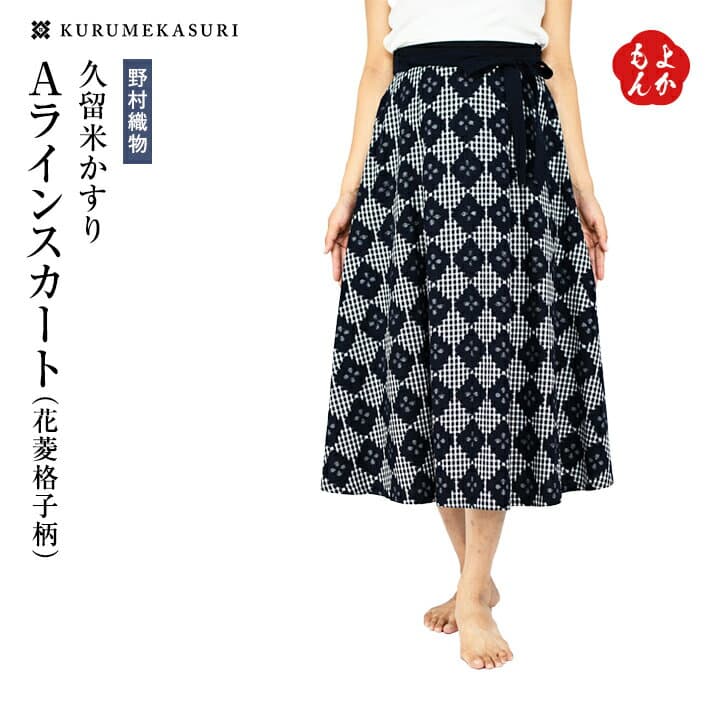
Nomura Orimono Kurume Kasuri A-Line Skirt
久留米かすりAラインスカート(花菱格子柄)【送料無料】野村織物 久留米絣 経済産業大臣指定伝統的工芸品 九州 福岡 お取り寄せグルメ 福岡県よかもんショップ basic
Hanabishi lattice pattern福岡県よかもんショップ
Japanese name久留米かすり
In southern Fukuoka, tied white cotton yarn is dyed in indigo, aligned on the loom, and woven into softened blue-and-white patterns used in kimono, everyday clothing, small goods, interiors, monpe, and haori.
Information last updated 119 days ago
3 images久留米かすりAラインスカート(花菱格子柄)【送料無料】野村織物 久留米絣 経済産業大臣指定伝統的工芸品 九州 福岡 お取り寄せグルメ 福岡県よかもんショップ basic
Hanabishi lattice pattern福岡県よかもんショップ
 3 images
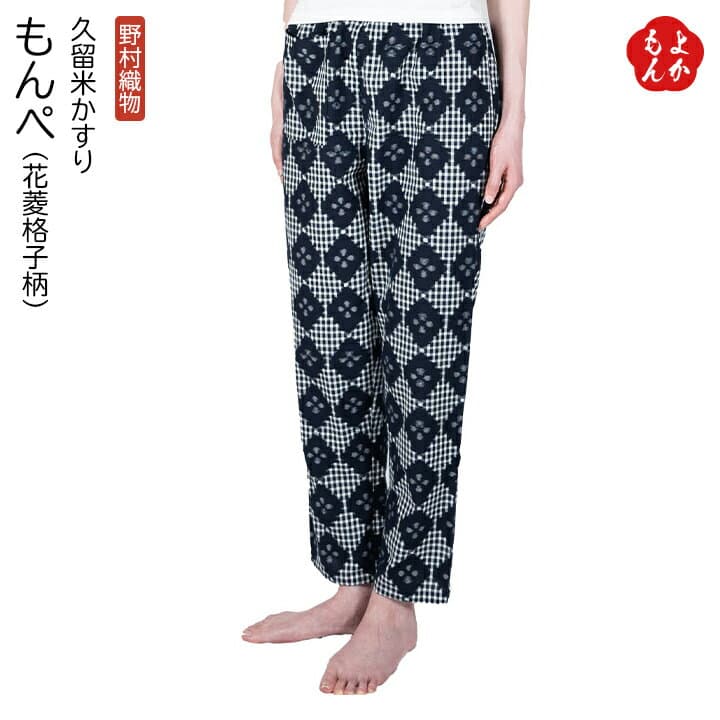
久留米かすりもんぺ(花菱格子柄)【送料無料】野村織物 久留米絣 綿100% 経済産業大臣指定伝統的工芸品 九州 福岡 お取り寄せ 福岡県よかもんショップ
flower-diamond lattice pattern福岡県よかもんショップ
 3 images
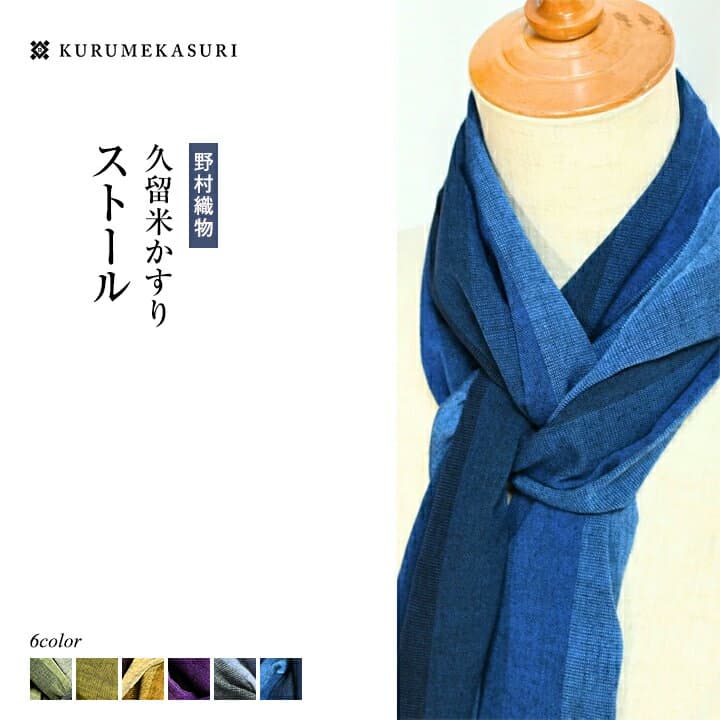
久留米かすりストール(濃藍/漆黒/古代紫/マロン/カナリア/うぐいす)【送料無料】野村織物 久留米絣 綿100% 経済産業大臣指定伝統的工芸品 九州 福岡 お取り寄せ 福岡県よかもんショップ
dark indigo / jet black / ancient purple / chestnut / canary / uguisu green福岡県よかもんショップ
 3 images
1,000円offクーポン配布中【久留米絣 パッチワークパンツ】茶黒グレー紺赤総ゴムモンペミセス楽々ゆったり40代50代60代70代レディース春夏秋冬水玉ホームウェアもんぺウエスト総ゴム綿100%
古布と藍染めこっとんコットン
4.7 / 19 reviews
 3 images
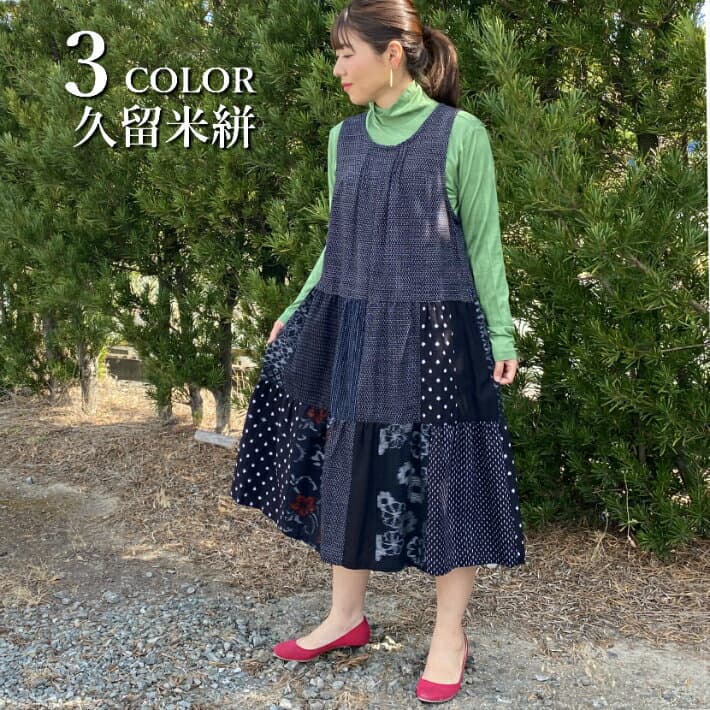
【久留米絣ティアードジャンパースカート】日本製パッチワーク藍染め絵絣前ファスナーおしゃれエレガントノースリーブワンピースミセス50代60代綿100%春夏秋冬大人上品ロング花柄ドット水玉可愛い
古布と藍染めこっとんコットン
5.0 / 7 reviews
First time buying on Rakuten? How residents in Japan order →
All 5 listings of this product on Rakuten, lowest price first.
| Listing | Price | Shop | Reviews | Open listing |
|---|---|---|---|---|
Nomura Orimono Kurume Kasuri Cotton Stole dark indigo / jet black / ancient purple / chestnut / canary / uguisu greenLowest price | ¥9,900 | 福岡県よかもんショップ | View on Rakuten → | |
Kurume Kasuri Elastic-Waist Patchwork Pants Most reviewed | ¥19,800 | 古布と藍染めこっとんコットン | 4.7 / 19 reviews | View on Rakuten → |
Nomura Orimono Kurume Kasuri Monpe Pants flower-diamond lattice pattern | ¥20,900 | 福岡県よかもんショップ | View on Rakuten → | |
Kurume Kasuri Indigo Patchwork Tiered Pinafore Dress | ¥29,480 | 古布と藍染めこっとんコットン | 5.0 / 7 reviews | View on Rakuten → |
Nomura Orimono Kurume Kasuri A-Line Skirt Hanabishi lattice pattern | ¥37,400 | 福岡県よかもんショップ | View on Rakuten → |
Japanese · new tab
Kurume kasuri (久留米絣) is a pre-dyed cotton textile made in the Chikugo area of southern Fukuoka, with production centered in Kurume, Hirokawa, Chikugo, and Yame. The cloth grew in the Chikugo River basin, where fertile land, water, and cotton cultivation supported textile work. Its patterns emerge when tied, dyed cotton yarns are aligned as warp and weft on the loom.
Kurume kasuri is spread across a cluster of towns in southern Fukuoka. Kurume City, Hirokawa Town, Chikugo City, and Yame City appear as principal production areas, and the Chikugo River basin gives the cloth a material setting: cotton, water, and fertile ground. In Kurume's local-industry center, the cooperative address and exhibitions place the textile back among local makers, blue-and-white cloth samples, and the wider industries of the Chikugo area.
Around 1800, in the castle town of the Kurume domain, thirteen-year-old Den Inoue noticed speckles where color had faded on a worn indigo kimono. She tied parts of white cotton yarn that she did not want dyed, dipped the yarn in indigo, and wove the mottled blue-and-white thread into Kazuri, the name later connected with Kurume kasuri. The founding image is small and concrete: an old garment, a young maker, tied cotton, and indigo dye.
Because Kurume kasuri is woven from pre-dyed yarn, the pattern begins before the cloth exists. White cotton threads are tied with hemp or thread to protect selected sections from dye, then indigo turns the exposed parts deep blue. On the loom, differently dyed warp and weft must meet in the right places; the softened kasuri outline comes from that alignment, and the blue-and-white contrast keeps the plain texture of cotton visible.
Designing, tying, dyeing, and weaving add up to more than 30 processes, often divided among skilled workers, and a piece may take several months to complete. The production area now holds several ways of making side by side: indigo dyeing, hand weaving, and hand tying appear together with shuttle power looms, chemical dyes, and machine tying. That range explains why the cloth can carry older blue-white motifs and newer colors or patterns while staying within its yarn-dyed structure.
Kurume kasuri became familiar as everyday clothing and workwear because the cotton cloth was breathable and durable. Its uses have widened into kimono, Western-style clothes, small goods, interiors, monpe, haori, and jackets, and craft activities have used the fabric for panels, pouches, hair elastics, and key holders. These uses keep the textile close to the body and the room: a garment to move in, a small object held in the hand, or a blue-and-white surface on a wall.
The production community is visible through cooperatives, preservation groups, weavers, wholesalers, exhibitions, and hands-on sessions. The Kurume Kasuri Cooperative sets examination standards and attaches certificates to accepted textiles, while its workshop listings show indigo dyeing, hand weaving, chemical dyes, machine weaving, and tour or experience options across makers. Regional events such as Ai Ai Deai Festival and the Kurume Kasuri Grand Exhibition bring weavers, wholesalers, process displays, fashion presentations, and small-object workshops into one place, so the cloth is met through making, wearing, and handling.
Kurume kasuri stays legible through concrete acts: the Chikugo River basin's water and cotton cultivation, tied white yarn, indigo dyeing, careful warp-and-weft alignment, and the shared work of makers around Kurume, Hirokawa, Chikugo, and Yame. When its blue and white edges blur inside the weave, the cloth carries both the place and the labor that shaped it.
Compiled from public records and official sources; see the recognition links below. Details may change over time.
Where this product is officially registered, designated, or recognized in Japan.
Regional collective trademark
Registered as a Regional Collective Trademark with the Japan Patent Office.
Sources1
It is written as 久留米かすり in Japanese. Search Rakuten and other Japanese sites with that spelling — the English name will not bring up the listings.
Kurume kasuri is a pre-dyed cotton textile from the Chikugo area of southern Fukuoka, mainly produced in Kurume, Hirokawa, Chikugo, and Yame. It developed along the Chikugo River, where fertile land, water, and cotton farming supported textile making. Around 1800, thirteen-year-old Den Inoue used speckles on a worn indigo kimono to create Kazuri. Patterns are formed by tying and dyeing yarn before weaving, and the cloth is now used for kimono, clothing, small goods, interiors, and everyday wear.
The Chikugo River basin's fertile land, water, and cotton cultivation supported the development of Kurume kasuri. Production involves more than 30 processes, including design, tying, dyeing, and weaving, often divided among workers and taking several months. The production area combines traditional methods, such as indigo dyeing, hand weaving, and hand tying, with shuttle power looms, chemical dyes, and machine tying. The Kurume Kasuri Cooperative uses examination standards and certificates to indicate accepted textiles.
Kurume kasuri is worn as clothing, used for both kimono and western-style garments. It is also tailored into everyday items such as monpe (もんぺ), haori (羽織), and jackets, with various colors and silhouettes. It is used for interior goods and accessories, including fabric panels, pouches, hair ties, and key holders, often made in workshops.
Naturally dyed textiles shed some colour on first wash. Hand-wash separately with a neutral detergent, avoid long soaking and bleach, and dry in the shade to prevent fading. Silk, ramie, and traditionally dyed pieces often need professional cleaning — the care label on the listing takes precedence.
Most options are shelf-stable, boxed, and travel well, so they suit gifting or bringing home. Confirm the final storage and delivery terms on the Rakuten listing.
On Rakuten: the shops listed here right now are 福岡県よかもんショップ, 古布と藍染めこっとんコットン. We don't sell directly; purchase, payment, stock, and delivery are all handled on the Rakuten product page.