 2 images
Nakaishi Foods Komatsu Udon 今昔綸子
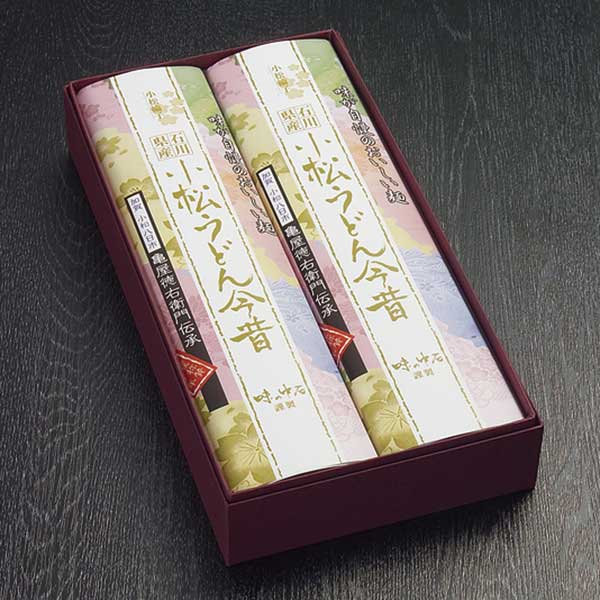
≪中石食品工業≫小松うどん 今昔綸子2本入【お歳暮 ギフト 石川県産】
2-pack発見!うまうま探検隊+
5.0 / 1 reviews
Japanese name小松うどん
In Komatsu City, Ishikawa, Komatsu udon is shaped by city-made noodles, water from the Hakusan system, and a pale broth built from urume, muroaji, saba flakes, and kombu, with shop lineages running from the station area to today's member network.
Information last updated 120 days ago
2 images≪中石食品工業≫小松うどん 今昔綸子2本入【お歳暮 ギフト 石川県産】
2-pack発見!うまうま探検隊+
5.0 / 1 reviews
 2 images
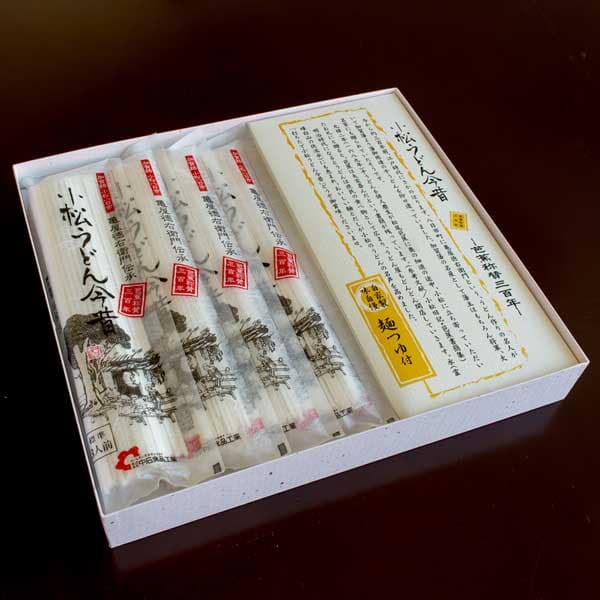
≪中石食品工業≫小松うどん 今昔 4袋つゆ付き【お歳暮 ギフト】
225g x 4 bags with soup発見!うまうま探検隊+
 3 images
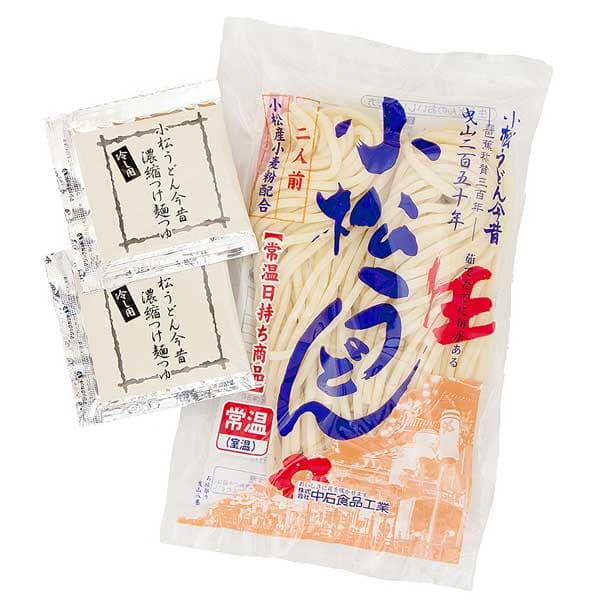
≪中石食品工業≫小松うどん 生(常温)【松尾芭蕉 白山 生うどん】
240g x 4 bags, 8 chilled dashi packets発見!うまうま探検隊+
First time buying on Rakuten? How residents in Japan order →
Komatsu udon begins with a precise place: udon noodles made within Komatsu City in Ishikawa. In the bowl, that place becomes thin noodles with a soft, moderate bite, water from the Hakusan system, and a mild broth drawn from fish flakes and kombu. Local accounts carry the noodle back more than 300 years and connect it to a dried-udon gift sent to Matsuo Basho during his Oku no Hosomichi journey. Later anchors are easy to place on a map: Katocho near present-day Komatsu Station in 1897, Nakasa in 1905, and the 2010 formation of Komatsu Udon Tsurutsuru Soken, which set eight common points for the bowl.
The name Komatsu udon points first to noodles made within Komatsu City. That boundary gives the food a concrete frame: local manufacture, water from the Hakusan system, and ingredients from the area where possible.
Komatsu's wider table includes rice, carrots, tomatoes, Kaga maruimo, seafood from Ataka fishing port, sake made with Hakusan spring water, wagashi, and kakinoha-zushi. Komatsu udon sits in that setting with its own fixed clues: city-made noodles and water associated with Hakusan.
Komatsu udon is thin, soft, and moderately firm. The appeal is tactile: the noodle moves smoothly, carries a light broth, and leaves an impression through balance rather than a heavy chew.
Many city shops prepare their own versions, while the recurring sensory line stays steady: thin noodles, smooth throat feel, and an easy-to-eat bowl supported by fish flakes and kombu.
The technical details are plain enough to taste. The eight local points place Hakusan-system water in the dough, with water added at at least 35 percent and under 52 percent of the flour weight and saltwater concentration set at 10 percent.
The broth is built mainly from fish flakes such as urume, muroaji, and saba, with plenty of kombu. Komatsu City descriptions also point to light soy sauce, giving the tsuyu a pale color and a mild finish.
Komatsu udon's long timeline is often stated as more than 300 years. The clearest scene in that timeline is the Oku no Hosomichi journey: when Matsuo Basho came to Komatsu, the Komatsu haiku poet Jinsei sent him two boxes of dried udon, and Basho replied with thanks for the unusual noodles.
This anecdote keeps the past concrete. It gives the udon a form that could travel in boxes, a named traveler, a named Komatsu poet, and a moment on the route through the city.
In 1897, Katocho opened near present-day Komatsu Station, giving the noodle a modern urban anchor. This station-area shop is tied to the spread of everyday udon eating in the city.
In 1905, Nakasa opened in Komatsu, later growing through branches such as the main shop, west shop, and middle shop. Cooks trained in that line opened independent shops with Naka in their names, including Nakaishi, Nakaoto, Nakasada, and Nakayoshi.
In 2010, Komatsu Udon Tsurutsuru Soken was formed and organized eight points for Komatsu udon. Those points gather the essentials into one bowl: noodles made in the city, handmade or handmade-style preparation, Hakusan-system water, fish-and-kombu broth, and local ingredients where possible.
About 70 member shops now carry their own versions. Their shared outline is specific: thin soft noodles, Hakusan-system water, light broth, and the Komatsu City name held together in everyday cooking.
Komatsu udon remains legible because its details are concrete: noodles made in Komatsu City, Hakusan-system water, fish-flake and kombu broth, and shop names that can be traced from Katocho and Nakasa to the present member network. Its calm character comes from those details working together in a bowl of thin noodles and pale tsuyu.
Compiled from public records and official sources; see the recognition links below. Details may change over time.
Where this product is officially registered, designated, or recognized in Japan.
Regional collective trademark
Registered as a Regional Collective Trademark with the Japan Patent Office.
Sources1
It is written as 小松うどん in Japanese. Search Rakuten and other Japanese sites with that spelling — the English name will not bring up the listings.
Komatsu udon is a regional udon family tied to Komatsu City, Ishikawa, with its name centered on noodles made within the city. It is known for thin, soft, moderately firm noodles, water from the Hakusan system, and a mild broth made with fish flakes such as urume, muroaji, and saba plus kombu. Its history spans more than 300 years, and about 70 member shops make their own versions today.
The eight local points specify water addition of at least 35% and under 52% of flour weight, plus a 10% saltwater concentration. Light soy sauce can be used to give the broth a pale color. The history is linked to an anecdote of dried udon given to Matsuo Basho during his Oku no Hosomichi journey. Katocho opened near what is now Komatsu Station in 1897, one of the earliest known shops.
Komatsu udon is eaten as an everyday meal by local residents, with many shops in the city serving their own version. Shops can be found near Komatsu Station and along the road from Komatsu Airport toward the station, making it accessible to visitors. The thin, smooth, moderately firm noodles paired with a light broth make for an easy-to-eat bowl.
Storage varies by product — shelf-stable, refrigerated, or frozen — and is stated on the packaging and the Rakuten listing. Shelf-stable processed foods usually need refrigerating once opened and eating within a few days; chilled and frozen items go straight into storage on arrival. Treat the best-before date on the physical packaging as authoritative.
Most options are shelf-stable, boxed, and travel well, so they suit gifting or bringing home. Confirm the final storage and delivery terms on the Rakuten listing.
On Rakuten: the shops listed here right now are 発見!うまうま探検隊+. We don't sell directly; purchase, payment, stock, and delivery are all handled on the Rakuten product page.