 3 images
Kumamoto Specialty Mustard Lotus Root by Takami Shoten
お中元 2026 父の日 熊本名産 からし蓮根 3本入り 高見商店 れんこん・レンコン ギフト のし対応可 夏ギフト 御中元
3 piecesベストセレクト専門店・本音生活
5.0 / 1 reviews
Japanese name熊本名産からし蓮根
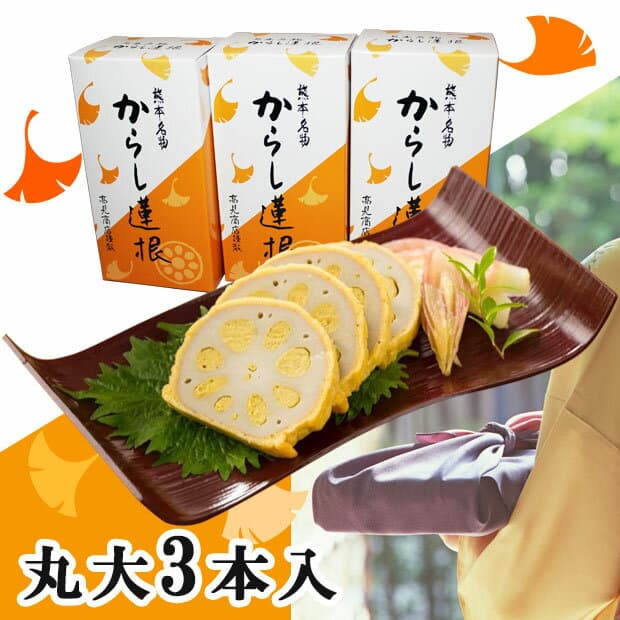
Lotus-root holes are filled with mustard miso, coated with flour and turmeric, and fried into a crisp Kumamoto food with a sharp aroma and a place in New Year osechi.
Information last updated 119 days ago
3 imagesお中元 2026 父の日 熊本名産 からし蓮根 3本入り 高見商店 れんこん・レンコン ギフト のし対応可 夏ギフト 御中元
3 piecesベストセレクト専門店・本音生活
5.0 / 1 reviews
First time buying on Rakuten? How residents in Japan order →
A slice of Kumamoto meisan karashi renkon starts with its cross-section: mustard miso packed into lotus-root holes, surrounded by a turmeric-yellow fried coating. The lotus root is prepared, filled with mustard, miso, and related seasonings, coated with flour and turmeric, and fried. The bite is crisp, and the mustard miso rises sharply through the nose. In that single slice, Kumamoto Prefecture, lotus root, mustard miso, and New Year osechi meet in a concrete form.
Compiled from public records and official sources; see the recognition links below. Details may change over time.
Where this product is officially registered, designated, or recognized in Japan.
Regional collective trademark
Registered as a Regional Collective Trademark with the Japan Patent Office.
Sources1
It is written as 熊本名産からし蓮根 in Japanese. Search Rakuten and other Japanese sites with that spelling — the English name will not bring up the listings.
Kumamoto meisan karashi renkon is a Kumamoto-made lotus-root food: the holes are filled with mustard miso, then coated with flour and turmeric and fried. It is known for crisp lotus root, a sharp mustard-miso aroma, and its use in New Year osechi. The origin handed down in Kumamoto traces it to around 1632 and Hosokawa Tadatoshi of Higo Hosokawa, and wider market production began after the Meiji period.
The Kumamoto Prefecture Karashi Renkon Cooperative has 11 members and avoids vacuum-packed products after a 1984 food-safety incident linked to vacuum packaging and long storage. The lotus-root cross-section is linked in the account to the Hosokawa family kuyo crest, and the method was described as once kept from outsiders. The association says karashi renkon is distributed mainly as a souvenir and prepared-food item, with some makers shipping beyond Kumamoto toward the Kanto region. One member company reports that its karashi renkon is sold at local department stores, the airport, service areas, hotels, and inns.
It is served as one item in New Year osechi, and one member shop also prepares it for Bon and December family gatherings, describing it as a hare-no-hi (special-occasion) food. One member profile suggests slicing it to taste, noting that about 5 to 8 millimeters balances the mustard and lotus root. The same profile says warming the slices lightly can bring out the aroma of the mustard miso.
Storage varies by product — shelf-stable, refrigerated, or frozen — and is stated on the packaging and the Rakuten listing. Shelf-stable processed foods usually need refrigerating once opened and eating within a few days; chilled and frozen items go straight into storage on arrival. Treat the best-before date on the physical packaging as authoritative.
Most options are shelf-stable, boxed, and travel well, so they suit gifting or bringing home. Confirm the final storage and delivery terms on the Rakuten listing.
On Rakuten: the shops listed here right now are ベストセレクト専門店・本音生活. We don't sell directly; purchase, payment, stock, and delivery are all handled on the Rakuten product page.