 3 images
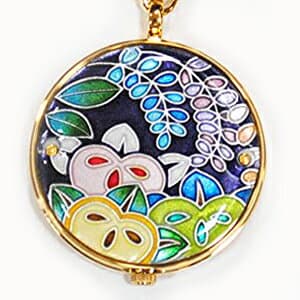
Kyo Shippo Cloisonne Pocket Watch, Tachibana
懐中時計 橘(紫) 着物に似合う存在感 京七宝 懐中時計 記念品・プレゼントにも【お取り寄せ商品】
Purpleきもの山喜
5.0 / 2 reviews
Japanese name京七宝
A mainly metal base, flat wire, enamel, firing near 800°C, and polishing connect Kyoto temple fittings, Katsura Imperial Villa pulls, vases, accessories, and tableware within one exacting craft.
Information last updated 120 days ago
3 images懐中時計 橘(紫) 着物に似合う存在感 京七宝 懐中時計 記念品・プレゼントにも【お取り寄せ商品】
Purpleきもの山喜
5.0 / 2 reviews
 3 images
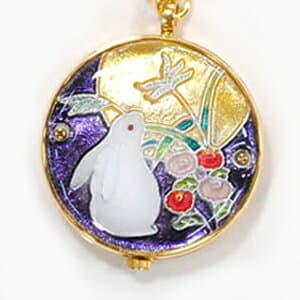
懐中時計 着物姿に気品ある和装時計を 京七宝 恋うさぎ懐中時計(月見うさぎ 紫) 【記念品・お祝い・ギフトに最適】【お取り寄せ商品】
Moon-viewing rabbit, purpleきもの山喜
5.0 / 2 reviews
 3 images
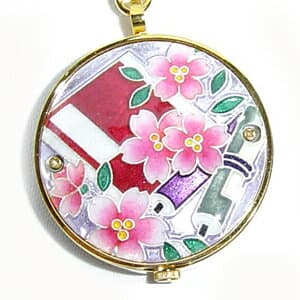
懐中時計 着物に似合う存在感 京七宝 源氏物語に恋する懐中時計 若紫(紫・赤) 記念品・プレゼントにも【お取り寄せ商品】
Wakamurasaki (purple/red)きもの山喜
5.0 / 1 reviews
First time buying on Rakuten? How residents in Japan order →
Kyo-shippo (京七宝) often asks to be noticed at the scale of a hand: a nail cover in a Kyoto temple, a sliding-door pull at Katsura Imperial Villa, a detail at Manshuin or Honganji Kuroshoin. The making begins with a mainly metal ground. Silver or other flat wire marks the pattern, enamel fills the spaces, the piece is fired at about 800°C, and the surface is polished. That sequence gives the craft its hard line and luminous color without detaching it from use. It can belong to architectural fittings, to a vase on a table, to an accessory, or to tableware. Its Kyoto history runs through Azuchi-Momoyama interiors, late Edo to Meiji glaze work at the Seimikyoku, and the Kyoto-centered work of Namikawa Yasuyuki.
Compiled from public records and official sources; see the recognition links below. Details may change over time.
Where this product is officially registered, designated, or recognized in Japan.
Regional collective trademark
Registered as a Regional Collective Trademark with the Japan Patent Office.
Sources1
It is written as 京七宝 in Japanese. Search Rakuten and other Japanese sites with that spelling — the English name will not bring up the listings.
Kyo cloisonne (Kyo-shippo) is a form of cloisonne enamelware associated with Kyoto, made using a mainly metal base, silver or other flat wire to outline patterns, enamel fill, firing near 800°C, and polishing. It appears historically in architectural fittings such as nail covers and sliding-door pulls at Kyoto temples, Katsura Imperial Villa, Manshuin, and Honganji Kuroshoin, and it continues today in vases, accessories, and tableware.
Kyo-shippo is connected with Kyoto craft networks, and Kyoto Prefecture places it among Kyoto craft products with the Kyo-shippo Cooperative as the related organization. The Azuchi-Momoyama period is described as an early flourishing phase for Kyo-shippo in Kyoto, with Jurakudai nail covers and shrine or temple decoration as examples. After coming to Japan in 1867, German chemist Gottfried Wagener was invited by Kyoto Prefecture to the Seimikyoku for ceramic and cloisonne enamel development. Namikawa Yasuyuki worked around Kyoto and is named as a major Meiji cloisonne artist; Meiji Kyoto had multiple cloisonne workshops and active export production.
Cloisonne nail covers and sliding-door pulls remain in place at Kyoto temples, villas, and historic residences as small architectural decoration. Vases, tableware, and accessories made in this technique are used in daily life today. Those interested in the craft can see historical pieces at Kyoto sites linked to Namikawa Yasuyuki and Kiyomizu Sannenzaka Museum.
Keep craft pieces out of direct sunlight, damp, and sharp temperature swings, and store them where they won't knock against anything. Wood, bamboo, lacquer, and paper don't tolerate water — wipe any moisture off immediately. Specific care notes are on the listing.
Most options are shelf-stable, boxed, and travel well, so they suit gifting or bringing home. Confirm the final storage and delivery terms on the Rakuten listing.
On Rakuten: the shops listed here right now are きもの山喜. We don't sell directly; purchase, payment, stock, and delivery are all handled on the Rakuten product page.