 3 images
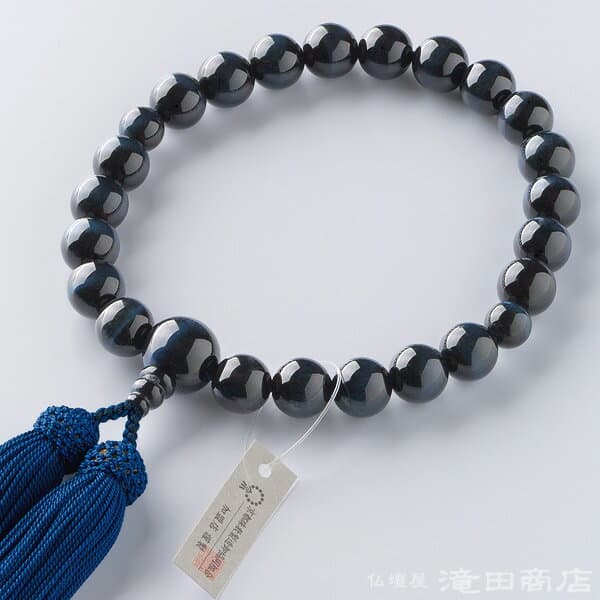
京念珠 Blue Tiger Eye Men's Prayer Beads
【数珠袋付き】 数珠 男性用 青虎目石 22玉 正絹頭付房 ブランド京念珠【送料無料】【お盆 メンズ 紳士用 男性用数珠 タイガーアイ 略式数珠 天然石 念誦 頭房 パワーストーン お数珠 じゅず ギフト 贈り物 贈答 法事 葬式 葬儀 法要】
12mm, 22 beads, silk tassel仏壇 盆提灯 数珠の仏壇屋滝田商店
4.8 / 868 reviews
Japanese name京念珠
In Kyoto City and its surrounding area, Kyo-nenju take shape through Kyoto-derived methods, silk thread, sect-specific forms, and a divided network of craft workers.
Information last updated 122 days ago
3 images【数珠袋付き】 数珠 男性用 青虎目石 22玉 正絹頭付房 ブランド京念珠【送料無料】【お盆 メンズ 紳士用 男性用数珠 タイガーアイ 略式数珠 天然石 念誦 頭房 パワーストーン お数珠 じゅず ギフト 贈り物 贈答 法事 葬式 葬儀 法要】
12mm, 22 beads, silk tassel仏壇 盆提灯 数珠の仏壇屋滝田商店
4.8 / 868 reviews
 3 images
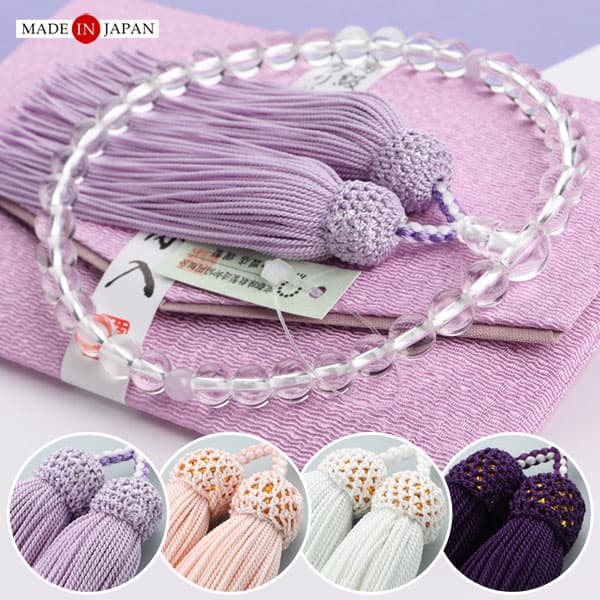
【日本製・京念珠】【選べる房色4種】数珠 女性用 約7ミリ 本水晶 2天 藤雲石 正絹房【略式数珠 京都 紫雲石 ラベンダーアメジスト 7mm ギフト 親子 姉妹 パープル 売れてます! JIM 102070011】【数珠袋付き】【ネコポス便送料無料】
about 7mm, 4 tassel colors京都の数珠販売専門店 はな花
4.7 / 2242 reviews
 3 images
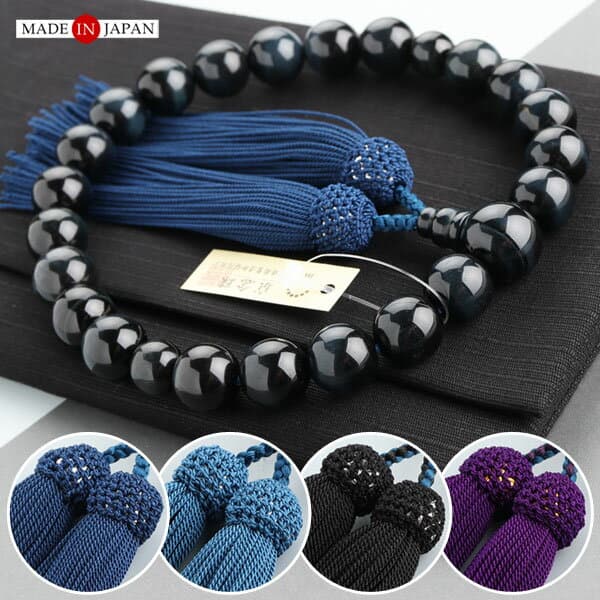
【日本製・京念珠】【選べる房色4種】数珠 男性用 22玉 青虎目石 共仕立 正絹房【略式数珠 京都 虎眼石 ホークスアイ ブルータイガーアイ 贈り物 ギフト 兄弟 親子 マイ数珠 売れてます! RD RM DIM 101220070】【数珠袋付き】【送料無料】
22 beads, 4 tassel colors京都の数珠販売専門店 はな花
4.8 / 1155 reviews
First time buying on Rakuten? How residents in Japan order →
Kyo-nenju are prayer beads made in Kyoto City and its surrounding area by methods derived from Kyoto. The setting matters: Kyoto has long been described as a center of Japanese Buddhism, with many head temples and worshippers traveling for temple visits. The craft also rests on material ground. From the early modern period onward, Kyoto’s silk textile production and distribution made silk thread easier to obtain for nenju making, linking beads, cords, tassels, sizes, and sect forms through one small but essential material.
The place boundary of Kyo-nenju is concrete: Kyoto City and the surrounding area, with production based on methods derived from Kyoto. The name does not point to one bead material or one Buddhist school. It points to a local making system in which craft knowledge, religious form, and regional production are tied together.
Kyoto gave that system a reason to develop. Across its long history, the city gathered many Buddhist head temples and welcomed worshippers visiting those temples from around Japan. In that environment, prayer beads needed makers who understood sect forms, dimensions, and use, not only makers who could assemble beads on a cord.
The material world of Kyo-nenju is wider than the beads themselves. Silk thread is named as a main material for nenju making, and Kyoto’s role as a silk textile production and distribution center made that thread easier to obtain. In a strand of prayer beads, thread is not a hidden extra; it joins beads and tassels and helps the intended form hold together.
This material setting also shows how the craft depends on more than a single workshop. Kyo-nenju require many materials and parts, and Kyoto’s textile and craft environment helped support divided work among people supplying materials, making parts, and completing the finished beads.
Nenju forms differ by Buddhist sect, and the sources name material, tassel shape, bead count, and size as points of variation. Kyo-nenju therefore cannot be reduced to one standard shape. They belong to a many-variety, small-lot production field in which each combination must be made accurately according to its prescribed form.
That accuracy turns a familiar hand-held object into a dense piece of craft work. Bead count is not only a number, and tassel shape is not only decoration. These details connect to sect form, use, and the feeling of holding the beads. Kyo-nenju keep their character through careful control of those small differences.
Kyo-nenju are supported by a divided craft network. Supplying materials, producing parts, and completing a strand are not described as one simple operation. The many combinations of sect, size, and material need craft workers who each understand a part of the work and bring those parts together in a finished object.
The Kyoto beads association also trains makers through a Kyo-nenju maker system, recognizing people who pass its examination. The point for readers is practical rather than administrative: Kyo-nenju depend on trained workers who understand Kyoto methods, component production, and the forms required by different Buddhist sects.
Prayer beads also have a place to go after use. Every November 23, the Kyoto beads association holds a bead memorial at Sekizan Zen-in in Shugakuin, where unused nenju and juzu sent from around Japan are offered in prayers.
That rite extends the life of the object beyond the workshop and the hand. A strand may be held, carried before a Buddhist altar, and later returned to a temple setting. Beads, thread, and tassels form the structure of the object; the association’s explanation also connects them with the thoughts of the person who held them and with human ties symbolized by the ring of beads.
Kyo-nenju are defined by Kyoto City and its surrounding area, Kyoto-derived methods, silk thread, sect-specific forms, and divided craft work. From a city of head temples and visiting worshippers to the November 23 bead memorial at Sekizan Zen-in, a strand is made, held, and eventually given a careful farewell after use.
Compiled from public records and official sources; see the recognition links below. Details may change over time.
Where this product is officially registered, designated, or recognized in Japan.
Regional collective trademark
Registered as a Regional Collective Trademark with the Japan Patent Office.
Sources1
It is written as 京念珠 in Japanese. Search Rakuten and other Japanese sites with that spelling — the English name will not bring up the listings.
Kyo-nenju are prayer beads made in Kyoto City and its surrounding area by methods derived from Kyoto. Kyoto’s long Buddhist setting, many head temples, and visiting worshippers helped the craft develop, while the city’s silk textile environment made silk thread, a main material for nenju making, easier to obtain. Kyo-nenju vary by sect, size, material, bead count, and tassel form, and are supported by small-lot, many-variety production and divided craft work.
Kyoto’s Buddhist head temples and visiting worshippers form an important local context for nenju making. Silk thread is named as a main material for nenju making, and Kyoto’s silk textile production and distribution made it easier to obtain. Nenju vary by Buddhist sect in material, tassel shape, bead count, and size, and must be made accurately to prescribed forms. Kyo-nenju production is described as many-variety, small-lot work supported by material supply, part production, and craft networks.
Nenju are Buddhist implements whose material, tassel shape, bead count, and size differ by sect and must be made accurately according to each prescribed form. The beads receive the thoughts of the person holding them, with the bead and ring interpreted as heart and human connection. Unused nenju and juzu sent from across Japan are offered in memorial rites at the association’s November 23 bead memorial at Sekizan Zen-in in Shugakuin.
Keep craft pieces out of direct sunlight, damp, and sharp temperature swings, and store them where they won't knock against anything. Wood, bamboo, lacquer, and paper don't tolerate water — wipe any moisture off immediately. Specific care notes are on the listing.
Most options are shelf-stable, boxed, and travel well, so they suit gifting or bringing home. Confirm the final storage and delivery terms on the Rakuten listing.
On Rakuten: the shops listed here right now are 仏壇 盆提灯 数珠の仏壇屋滝田商店, 京都の数珠販売専門店 はな花. We don't sell directly; purchase, payment, stock, and delivery are all handled on the Rakuten product page.