 3 images
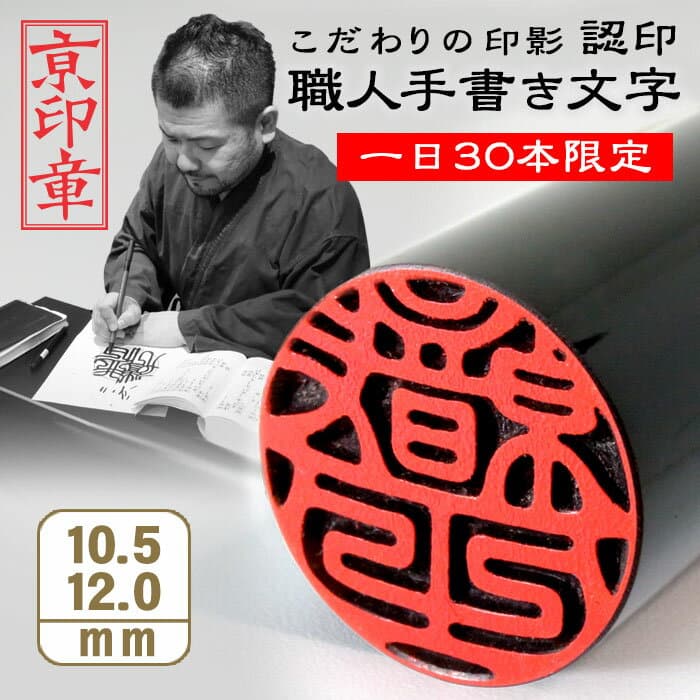
京印章 Core-Held Black Water Buffalo Personal Seal
【数量限定】【お試し価格】芯持ち黒水牛印鑑 10.5ミリ/12.0ミリ 実印 銀行印 認印 京印章 手書き印影 手仕上げ印鑑 個人印鑑 印鑑 作成 はんこ ハンコ いんかん 卒業 成人 就職 結婚 子供 お祝い ギフト 贈り物
10.5mm / 12.0mm京の手彫り仕上印鑑実印 西野工房
4.7 / 3216 reviews
Japanese name京印章
Made in Kyoto, Kyo-insho carry court-era seal use, tsuge and horn materials, the three disciplines of character, layout, and carving, and station-name impressions in the city subway.
Information last updated 120 days ago
3 images【数量限定】【お試し価格】芯持ち黒水牛印鑑 10.5ミリ/12.0ミリ 実印 銀行印 認印 京印章 手書き印影 手仕上げ印鑑 個人印鑑 印鑑 作成 はんこ ハンコ いんかん 卒業 成人 就職 結婚 子供 お祝い ギフト 贈り物
10.5mm / 12.0mm京の手彫り仕上印鑑実印 西野工房
4.7 / 3216 reviews
 3 images
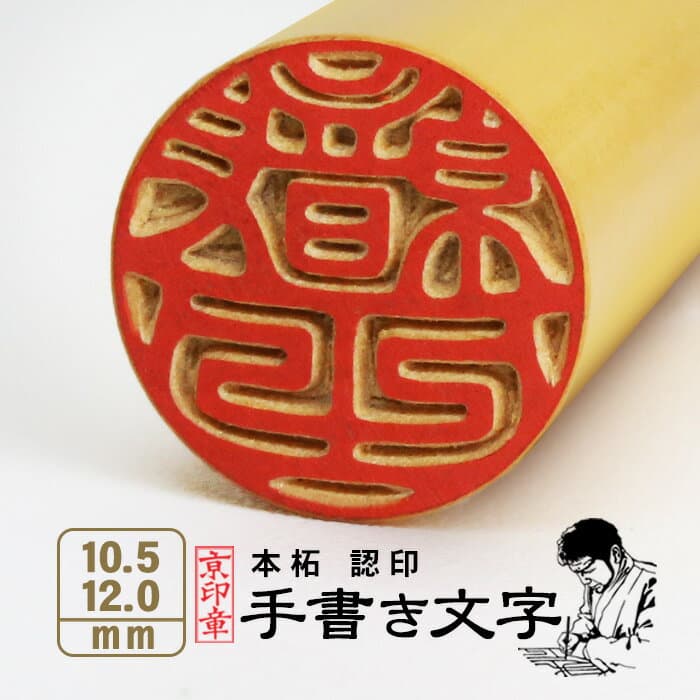
【お試し価格】薩摩本柘印鑑 10.5/12.0ミリ 認印 銀行印 京印章 手書き印影 手仕上げ印鑑 個人印鑑 印鑑 作成 はんこ ハンコ いんかん 卒業 成人 就職 結婚 お祝い ギフト 贈り物
10.5 mm or 12.0 mm京の手彫り仕上印鑑実印 西野工房
4.7 / 772 reviews
First time buying on Rakuten? How residents in Japan order →
Kyo-insho are seals made in Kyoto. Their local character is visible on the seal face: the maker checks the correct letterforms, arranges strokes within a small surface, and cuts the design so the stamped impression can still carry the meaning of the characters. Kyoto Prefecture treats Kyo-insho as a traditional craft product; in this case, tradition means Kyoto production, named materials such as tsuge and water buffalo horn, and the practical sequence of character selection, layout, and knife work.
A Kyo-insho is a Kyoto-made seal shaped by local seal-making skills. Its identity does not rest on outline alone. The work begins with characters, moves through the balance of the seal face, and ends with carving that turns a name, purpose, or place name into an impression. The Kyoto Prefectural Seal Industry Cooperative describes member-made Kyo-insho as carrying Kyoto seal history and technique into the present, while Kyoto Prefecture notes that more than sixty skill-certified workers are involved in seal carving in Kyoto.
Kyoto’s link with seals reaches back to Heian-kyo. After seals became part of state administration under the Taiho Code, imperial seals and government-office seals were made in the capital, and some temple and shrine seals preserved today are described as coming from that early setting. In later periods, the use of seals widened: the cooperative account places literary and painting seals among monks and writers, real-name seals among warriors and merchants, and wider commoner use after seals spread through society in the Edo and Meiji periods.
The craft vocabulary is precise. Jiho means checking whether the chosen characters and scripts, including seal, clerical, regular, and running scripts, are correct for the name, occupation, or use. Shoho arranges those characters on the seal face, balancing stroke weight, meaning, and placement through buji. Toho is the carving itself: the maker cuts with an into, watches the depth, and moves toward a finished impression through vermilion inking and pressing. The stamped mark is therefore a result of reading, arranging, and cutting, not only of decoration.
The named materials include tsuge, water buffalo horn, and ivory. Material alone does not define the seal; it receives the decisions made through character choice and layout, then carries the depth and line of the knife. Kyoto Prefecture connects these materials with the work of skilled seal carvers, and the cooperative description ties material handling to reverse writing on the seal face, depth control, inking, and pressing. Ivory appears here only as a named material; the available context does not address modern legal or ethical treatment around its trade.
One visual line associated with Kyoto seals is Kan-inten, a seal-script style linked to copper seals from China’s Han period. Kyoto Prefecture describes many Kyoto seals as having a weighty, graceful character through this influence. The same account also says newer designs with a contemporary feeling are made while preserving the meaning of the characters. That places the focus on legibility and character meaning: the line may change, but the character cannot be emptied of sense.
In 2025, Kyo-insho appeared inside Kyoto’s daily movement. Kyoto City and the Kyoto Prefectural Seal Industry Cooperative placed station-name stamps at all thirty-one municipal subway stations for a rally, and thirty-two Kyo-insho impressions were displayed in the considerate-area section of a Karasuma Line 20-series train. The rally used the same impressions shown in the train, so station names, carriage space, and stamped marks met along the city’s transit routes.
The present community around Kyo-insho includes the Kyoto Prefectural Seal Industry Cooperative and skill-certified workers who carve seals. The cooperative account traces its predecessor to the Kyoto Itamen Chokoku trade group founded in 1890, and Kyoto Prefecture notes more than sixty certified workers active in Kyoto seal carving. This makes continuity concrete: a cooperative, examinations, tools, materials, and the daily discipline of arranging and cutting characters on a seal face.
Kyo-insho gathers Kyoto history, character design, and hand work into a small surface. Heian-kyo court and office seals, wider Edo-period use, tsuge and horn materials, jiho and shoho layout, and the controlled depth of the knife all meet in the stamped impression. In the 2025 subway station-name stamps, the same craft language reached thirty-one stations and thirty-two displayed impressions, giving Kyoto residents and visitors a present-day encounter with carved characters.
Compiled from public records and official sources; see the recognition links below. Details may change over time.
Where this product is officially registered, designated, or recognized in Japan.
Regional collective trademark
Registered as a Regional Collective Trademark with the Japan Patent Office.
Sources1
It is written as 京印章 in Japanese. Search Rakuten and other Japanese sites with that spelling — the English name will not bring up the listings.
Kyo-insho are Kyoto-made seals defined by character selection, seal-face layout, and knife carving. Their context includes imperial and government seals in Heian-kyo, wider seal use among commoners in later periods, and present-day work by the Kyoto Prefectural Seal Industry Cooperative and skill-certified workers. Materials include tsuge, water buffalo horn, and ivory; in 2025, Kyoto's municipal subway used Kyo-insho station-name stamps across 31 stations and displayed 32 impressions on a Karasuma Line train.
Kyoto Prefecture notes more than sixty skill-certified workers involved in seal carving in Kyoto. The cooperative account traces the present organization to the Kyoto Itamen Chokoku trade group founded in 1890. The craft process is named jiho (character accuracy), shoho (seal-face layout), and toho (carving with an into knife). Seal use spread among commoners in the Edo period, and seal makers emerged in Kyoto amid rising demand.
Kyo-insho have been used for imperial seals, government-office seals, and temple and shrine seals; seals for painting and writing, such as rakkan-in and shomotsu-in, are said to have spread among monks and writers during exchange with Song China. Personal seal use spread from warriors to merchants during the Warring States period, and after Meiji-era permission for wider personal seal use, commoners began using registered seals. When making a Kyo-insho, the maker chooses a suitable typeface and characters for the owner's occupation and intended use, then arranges the design onto the seal face.
Keep wood, bamboo, and lacquer out of prolonged soaking, dishwashers, and direct sun — wipe dry after use and let them air out in the shade. For metal and fabric goods, follow the care notes on the listing.
Most options are shelf-stable, boxed, and travel well, so they suit gifting or bringing home. Confirm the final storage and delivery terms on the Rakuten listing.
On Rakuten: the shops listed here right now are 京の手彫り仕上印鑑実印 西野工房. We don't sell directly; purchase, payment, stock, and delivery are all handled on the Rakuten product page.