 3 images
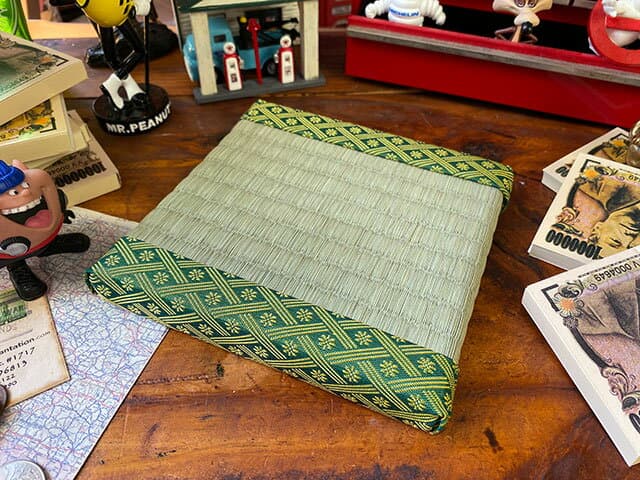
Kyo Tatami Mini Tatami Display Stand
「京たたみ」で作った飾り台 ミニ畳 (Sサイズ) アメリカン雑貨 アメリカ雑貨 グッズ
S sizeアメリカ雑貨通販キャンディタワー
5.0 / 2 reviews
Japanese name京たたみ
Kyo-tatami takes shape in Kyoto workshops as general tatami for homes and tea rooms, and yusoku tatami for shrine and temple settings. Straw core, woven rush facing, and edged corners carry the maker’s hand into the room.
Information last updated 125 days ago
3 images「京たたみ」で作った飾り台 ミニ畳 (Sサイズ) アメリカン雑貨 アメリカ雑貨 グッズ
S sizeアメリカ雑貨通販キャンディタワー
5.0 / 2 reviews
First time buying on Rakuten? How residents in Japan order →
Kyo-tatami is Kyoto’s hand-sewn tatami family. Its uses divide clearly: general tatami serves homes and tea rooms, while yusoku tatami belongs to shrines and temples, including thick tatami and haishiki that call for advanced skill. The work begins with straw core, woven rush facing, and tatami edging, then becomes visible in flat surfaces, firm thickness, matched corner patterns, and edges made for long use indoors.
Kyo-tatami refers to tatami made in Kyoto with traditional hand-sewing techniques, with the name tied to work made by members of the Kyoto Tatami Chamber of Commerce and Industry. Kyoto Prefecture describes two present-day categories: general tatami for homes and tea rooms, and yusoku tatami for shrines and temples. In 2006, Kyoto Prefecture placed Kyo-tatami within its traditional-craft framework; for readers, that matters because it links the Kyoto place boundary, the hand-sewn method, the maker community, and the named uses in one practical definition.
The Kyoto Tatami Chamber of Commerce and Industry traces its beginning to the Kyoto Tatami Craftsmen Association in 1895. Today it describes 68 member businesses and lists tatami shops across Kyoto city wards, Uji, Kumiyama, Joyo, Kyotanabe, Muko, and nearby areas. The same organization also presents the Kyoto Tatami Technical Academy, with new students, research-course enrollment, and instructors for classroom and hands-on training, so the craft continues through both working shops and places where hand-sewing is taught.
The structure of Kyo-tatami can be read through three parts: tatami-doko, tatami-omote, and tatami-beri. The core is made from layers of rice straw compressed and sewn together; the facing is woven from igusa rush with warp threads; the edging is sewn along the sides to finish the mat. Straw-core tatami is associated with humidity control, insulation, elasticity, sound absorption, scent, and a comfortable feel underfoot, which explains why the material belongs in rooms used for sitting, walking, tea practice, and daily living.
General tatami is made through steps such as board insertion, kagari stitching, flat stitching, return stitching, corner work, and kamachi stitching. Yusoku thick tatami adds corner-post and center-post setting as well as pattern matching, while yusoku haishiki uses kagari stitching, flat stitching, return stitching, and pattern matching. These steps are practical rather than ornamental: the kamachi board is sewn evenly with return stitches, underside corners are fastened with tasuki-style fixing, and warp-thread kagari work helps reduce wrinkles in the facing.
The edge corner of Kyo-tatami is finished by matching the pattern and folding the corner neatly. In the kamachi finish, straw is used to adjust thickness so the mat height aligns with the surrounding tatami-yose; return work also protects the cut edge while refining thickness. These details turn hand-sewing into something visible and tactile: a settled corner, a cleaner facing, and an edge that meets the room’s line without looseness.
Kyoto Prefecture connects tatami to aristocratic spaces in the Heian period, to palace rooms such as Shishinden, Seiryoden, and Otsunegoten, and later to the development of tea practice. It also points to Kyoto’s many shrines and temples as one reason tatami-making skill became highly developed there. The present division between general tatami and yusoku tatami keeps those room types visible: homes, tea rooms, shrine spaces, temple spaces, thick tatami, and haishiki each ask the mat to hold a different indoor role.
Kyo-tatami is best understood at floor level: straw compressed into a core, rush woven into a facing, edges sewn and folded, and thickness adjusted by hand. From household rooms and tea rooms to shrine and temple settings, Kyoto’s hand-sewn tatami carries its maker network, room uses, and small finishing decisions into the surface people sit, stand, and walk on.
Compiled from public records and official sources; see the recognition links below. Details may change over time.
Where this product is officially registered, designated, or recognized in Japan.
Regional collective trademark
Registered as a Regional Collective Trademark with the Japan Patent Office.
Sources1
It is written as 京たたみ in Japanese. Search Rakuten and other Japanese sites with that spelling — the English name will not bring up the listings.
Kyo tatami is hand-sewn tatami produced in Kyoto prefecture, covering general tatami for homes and tea rooms and yusoku tatami for shrines and temples, including thick tatami and haishiki. The craft combines a straw core, woven rush facing, and tatami edging, finished through several specialized stitching processes.
The Kyoto Tatami Chamber of Commerce and Industry traces its organization to the Kyoto Tatami Craftsmen Association founded in 1895 and currently lists 68 member businesses. Kyoto Prefecture states that yusoku tatami such as thick tatami and haishiki require advanced skill and are mostly produced in Kyoto. Production steps vary by tatami type and include board insertion, kagari stitching, flat stitching, return stitching, corner work, kamachi stitching, and pattern matching. Tatami structure includes a core, facing, and edging; the core can be sewn from compressed straw and the facing woven from igusa rush.
Kyoto Prefecture says hand-sewn straw-core tatami can last more than 100 years if sufficiently maintained, expressed as a durability claim rather than a guarantee.
Keep wood, bamboo, and lacquer out of prolonged soaking, dishwashers, and direct sun — wipe dry after use and let them air out in the shade. For metal and fabric goods, follow the care notes on the listing.
Most options are shelf-stable, boxed, and travel well, so they suit gifting or bringing home. Confirm the final storage and delivery terms on the Rakuten listing.
On Rakuten: the shops listed here right now are アメリカ雑貨通販キャンディタワー. We don't sell directly; purchase, payment, stock, and delivery are all handled on the Rakuten product page.