 2 images
Masaki Wakame Cut Dried Wakame from Taro, Miyako, Iwate
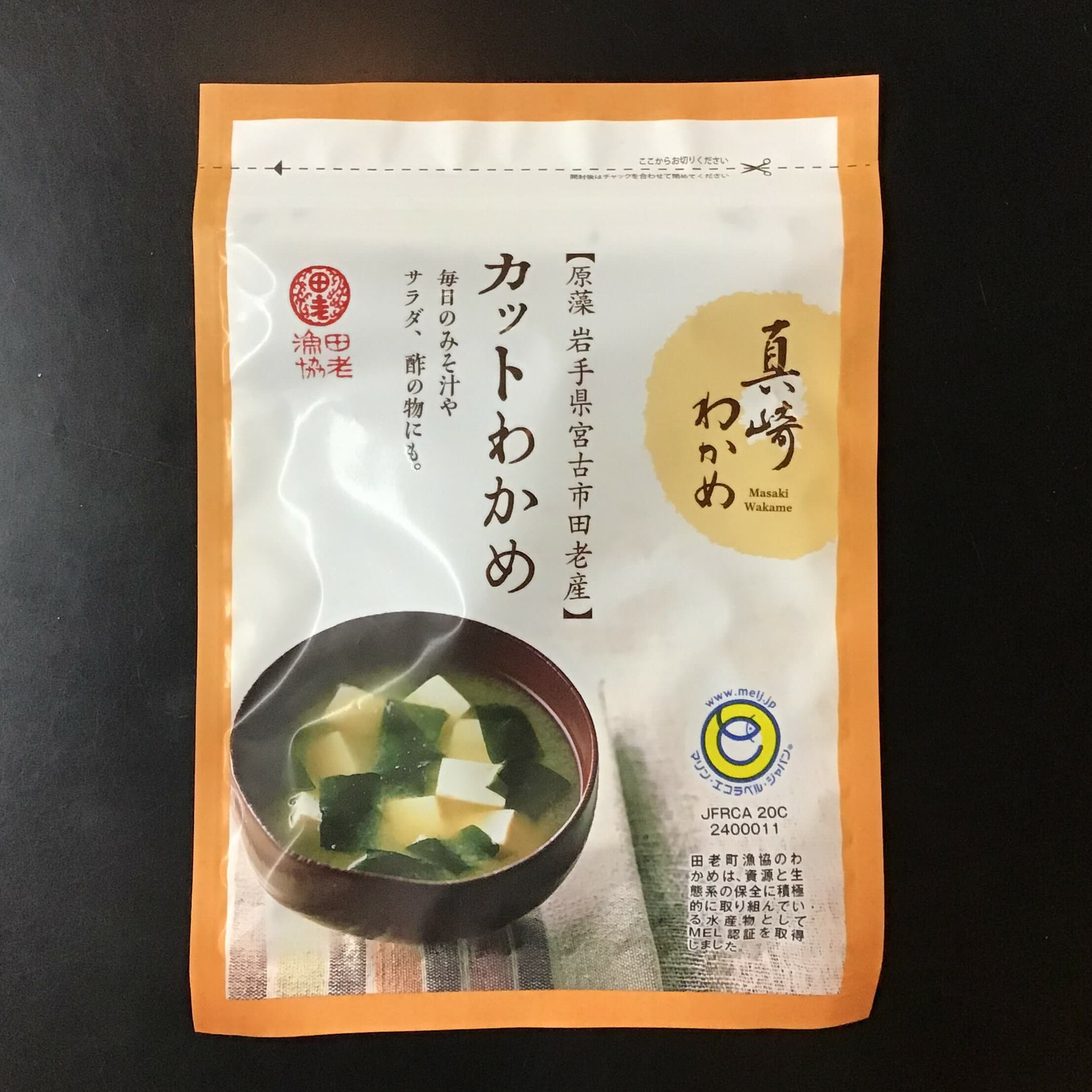
真崎わかめ【原藻 岩手県宮古市田老産】カットわかめ
20gお茶の小成園
5.0 / 3 reviews
Japanese name真崎わかめ
Off Taro in Miyako, Iwate, cold Oyashio waves, March-April night harvests, and a cooperative salting line shape Masaki wakame's dark-green fronds and firm bite.
Information last updated 121 days ago
2 images真崎わかめ【原藻 岩手県宮古市田老産】カットわかめ
20gお茶の小成園
5.0 / 3 reviews
 3 images
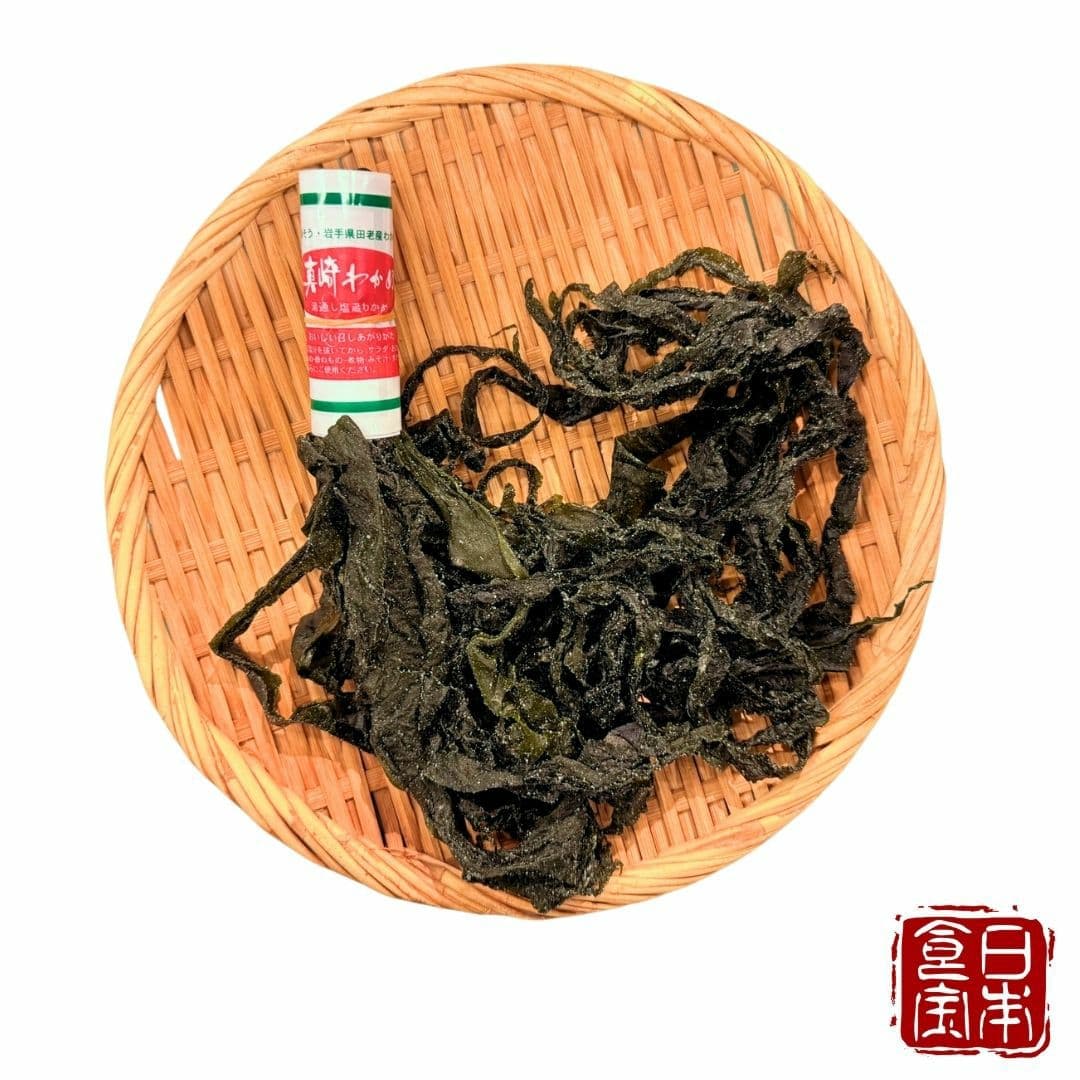
毎日のご飯を、少し贅沢に。|お買い物マラソン開催中【岩手県産】真崎わかめ (産地直送) ※着日指定不可
reduced-salt salted皆が知らない日本の食宝
First time buying on Rakuten? How residents in Japan order →
Masaki wakame belongs to a precise stretch of coast: it is harvested from the Masaki and nearby waters off Taro, Miyako City, Iwate, then processed in Taro as salted wakame. The area sits in northern Sanriku, where cold Oyashio waves are tied to thick, dark-green fronds with a firm bite and flavor. From raw frond intake through processing and shipment, the Taro Town Fisheries Cooperative gives the name a practical shape made of sea area, plant work, and producer handling.
Masaki wakame begins with two connected places: the Masaki and nearby waters off Taro, Miyako City, Iwate, and the Taro district where the harvest is processed into salted wakame. The name stays close to harvest water, shore-side plant work, and the handling of the Taro Town Fisheries Cooperative.
Taro sits in northern Sanriku, where wakame grows offshore in cold Oyashio waves. Its thick fronds, dark-green color, firm bite, and flavor are concrete traits linked to Taro's offshore grounds and to the salted-wakame process carried out on shore.
Parent stock for Masaki wakame is limited to natural wakame from Taro, and harvest is concentrated in March and April. The work is done at night so sunlight does not strike the wakame, giving the crop a specific season, time of day, and local parent stock.
The cold current and rough water stand behind descriptions of thick fronds, dark-green color, firm texture, and flavor. For Masaki wakame, place is concrete: Taro's offshore grounds, natural Taro parent stock, March-April harvests, and fronds brought in before daylight.
Once raw wakame reaches the plant, producers and cooperative staff select it before it goes into a kettle set at about 95°C for roughly 40 seconds. After blanching, the wakame is cooled with seawater, dehydrated by rollers, and mixed with salt in a cylindrical mixer. Heat, seawater, pressure, and salt begin the shift from sea plant to salted wakame.
The line continues through one day of tank curing and one day of dehydration, followed by measuring, cold storage, and stem removal in a second plant. Workers separate each wakame plant into leaf and stem, remove surface salt, grade by quality, color, and salt adhesion, then pack, inspect, and ship the finished product.
The Taro Town Fisheries Cooperative uses full purchase, full sale, and centralized processing, so harvested wakame moves through one cooperative route from raw material intake to shipment. The harvest location and processing location remain connected through daily intake, selection, salting, grading, and shipment.
Masaki wakame also sits within Japan's regional collective trademark system; in practical terms, that status points back to Taro sea area, processing in Taro, and cooperative handling from raw intake to shipment. The name is carried by fronds from Taro waters, a salting line on shore, and producers working within that boundary.
The cooperative has developed products from different parts of the wakame plant, and each part brings a different texture. Branch leaves are soft, stems are crunchy, and base leaves are crisp. The family has a more precise sensory map than one broad word like firm.
Salted wakame is prepared for eating after desalting, and refrigerated Masaki wakame has salt content of 25% or less. The cooperative explains that lower salt concentration affects the amount of edible wakame after desalting. Texture and use are grounded in parts of the plant and in salt handling.
After the 2011 Great East Japan Earthquake and tsunami, vessels and fisheries facilities in Taro were heavily damaged, and the wakame harvest scheduled for that year was lost before it began. Producers decided in April 2011 to restart with wakame because the July seeding season was approaching.
Wakame fishing resumed in Taro on March 16, 2012, and the year's landing reached 1,475 tons. Continuity here has work marks: an April decision, July seeding, a March 2012 restart, and a measured landing from that season.
Masaki wakame can be understood through concrete steps: Masaki waters off Taro, cold Oyashio waves, March-April night harvests, blanching at about 95°C for about 40 seconds, salting, curing, grading, inspection, and shipment. Its thick fronds, dark-green color, and firm bite belong to that chain of coast, plant work, and Taro producers who returned to wakame work in 2012.
Compiled from public records and official sources; see the recognition links below. Details may change over time.
Where this product is officially registered, designated, or recognized in Japan.
Regional collective trademark
Registered as a Regional Collective Trademark with the Japan Patent Office.
Sources1
It is written as 真崎わかめ in Japanese. Search Rakuten and other Japanese sites with that spelling — the English name will not bring up the listings.
Masaki wakame is salted wakame from Taro, Miyako City, Iwate, harvested in the Masaki and nearby waters and processed in Taro. It uses natural Taro wakame as parent stock. It is thick, dark green, firm-textured, and flavorful.
The Taro coast in northern Sanriku is associated with cold Oyashio waves and thick, dark-green wakame with a firm bite. Masaki wakame is harvested at night in March and April. Processing includes selection, blanching at about 95°C for about 40 seconds, seawater cooling, dehydration, salt mixing, curing, stem removal, desalting, grading, packing, inspection, and shipment. The Taro Town Fisheries Cooperative handles Masaki wakame through full purchase, full sale, and centralized processing from raw material intake to shipment.
It is eaten after desalting in soups, side dishes, and home cooking. Branch leaves are soft, stems are crunchy, and base leaves are crisp. Refrigerated Masaki wakame has a salt content of 25% or less, and lower salt concentration affects the amount of edible wakame after desalting.
Storage varies by product — shelf-stable, refrigerated, or frozen — and is stated on the packaging and the Rakuten listing. Shelf-stable processed foods usually need refrigerating once opened and eating within a few days; chilled and frozen items go straight into storage on arrival. Treat the best-before date on the physical packaging as authoritative.
Most options are shelf-stable, boxed, and travel well, so they suit gifting or bringing home. Confirm the final storage and delivery terms on the Rakuten listing.
On Rakuten: the shops listed here right now are お茶の小成園, 皆が知らない日本の食宝. We don't sell directly; purchase, payment, stock, and delivery are all handled on the Rakuten product page.