 3 images
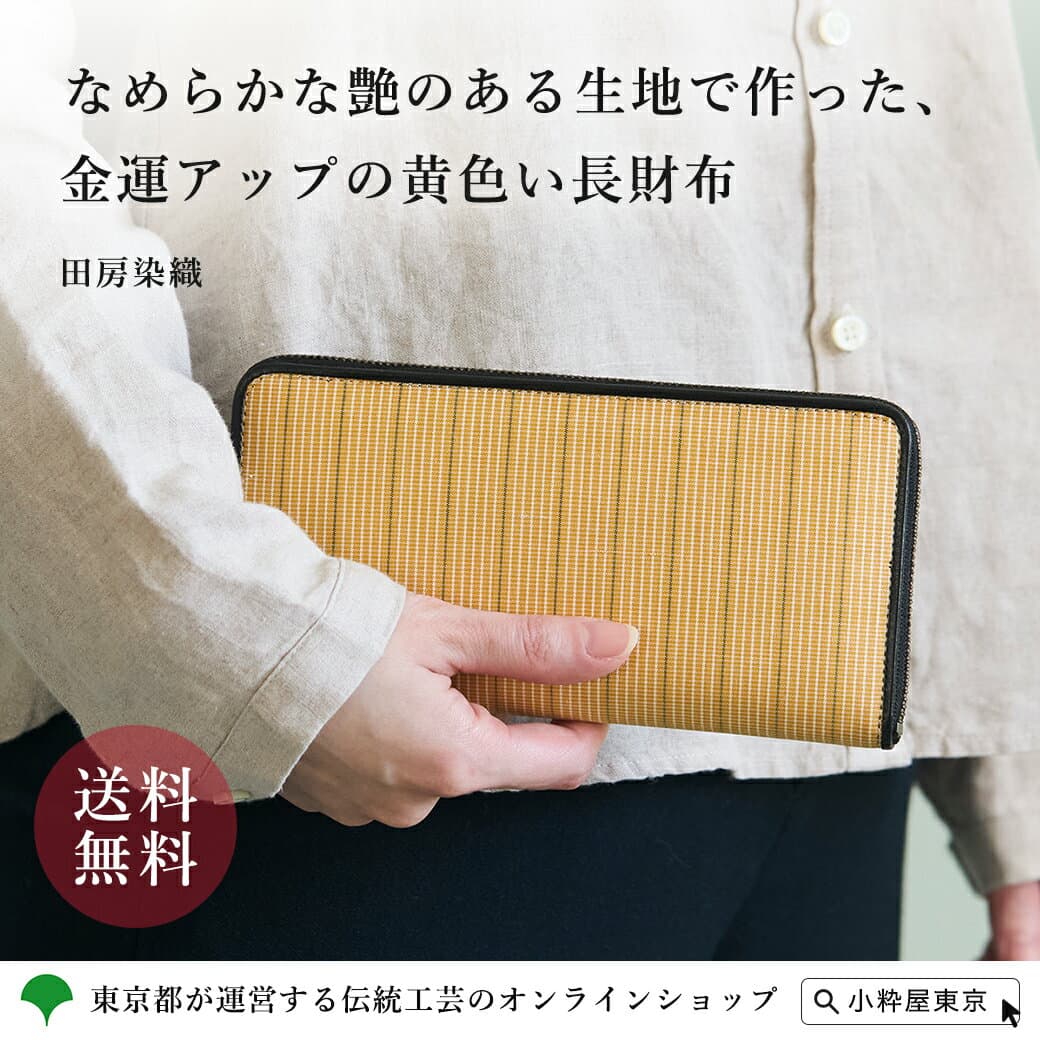
田房染織 Murayama Oshima Tsumugi Long Wallet
村山 大島紬 長財布 縞柄黄 手づくり 1点物 伝統工芸品 送料無料 日本製 田房染織
yellow striped pattern小粋屋東京
5.0 / 1 reviews
Japanese name村山大島紬
Around Musashimurayama, Mizuho, and Akishima, raw silk is dyed by board-clamp methods, then woven as warp-and-weft kasuri matched by hand. Murayama Oshima Tsumugi carries the area’s cotton indigo past into kimono cloth, ties, and small textile goods.
Information last updated 120 days ago
3 images村山 大島紬 長財布 縞柄黄 手づくり 1点物 伝統工芸品 送料無料 日本製 田房染織
yellow striped pattern小粋屋東京
5.0 / 1 reviews
 3 images
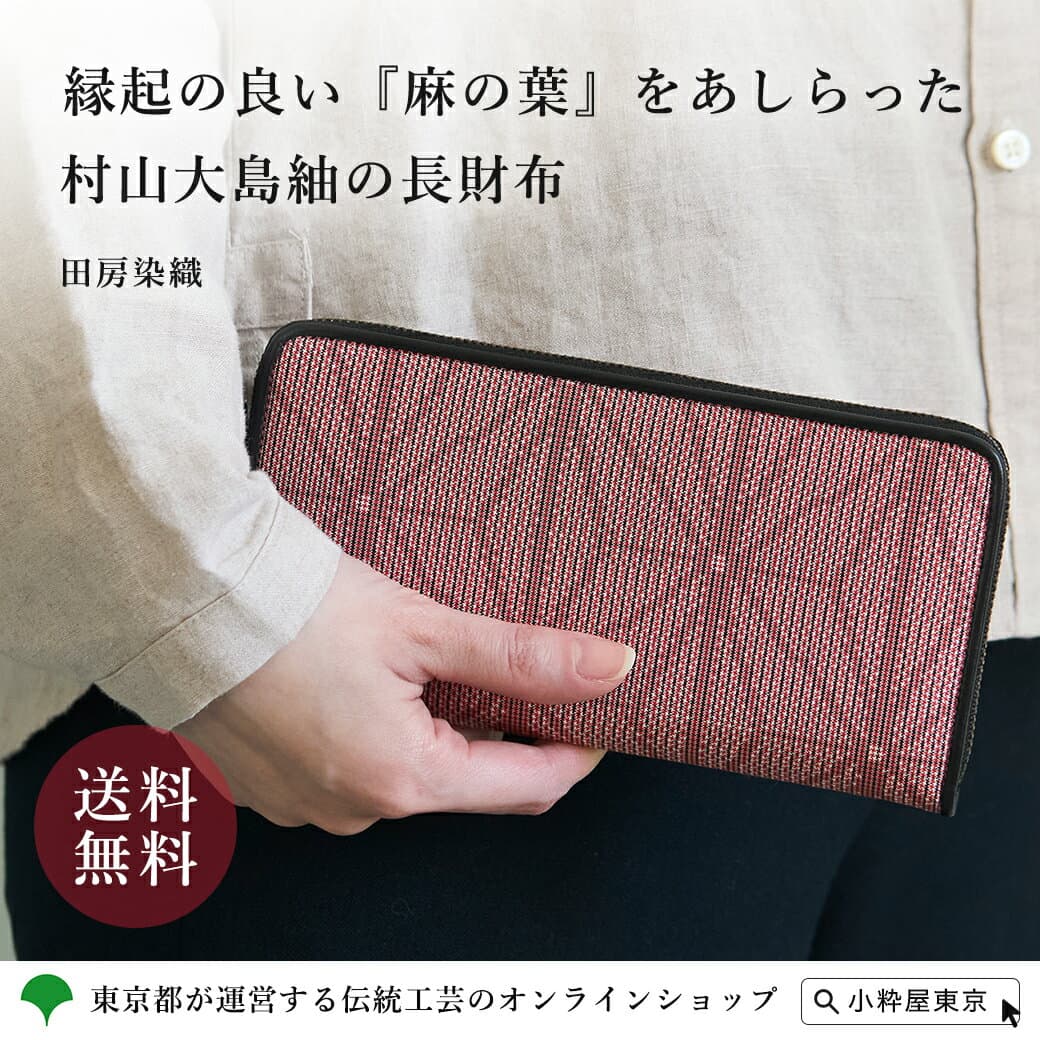
村山 大島紬 長財布 麻の葉赤 手づくり 1点物 伝統工芸品 送料無料 日本製 田房染織
Asanoha red小粋屋東京
5.0 / 1 reviews
 3 images
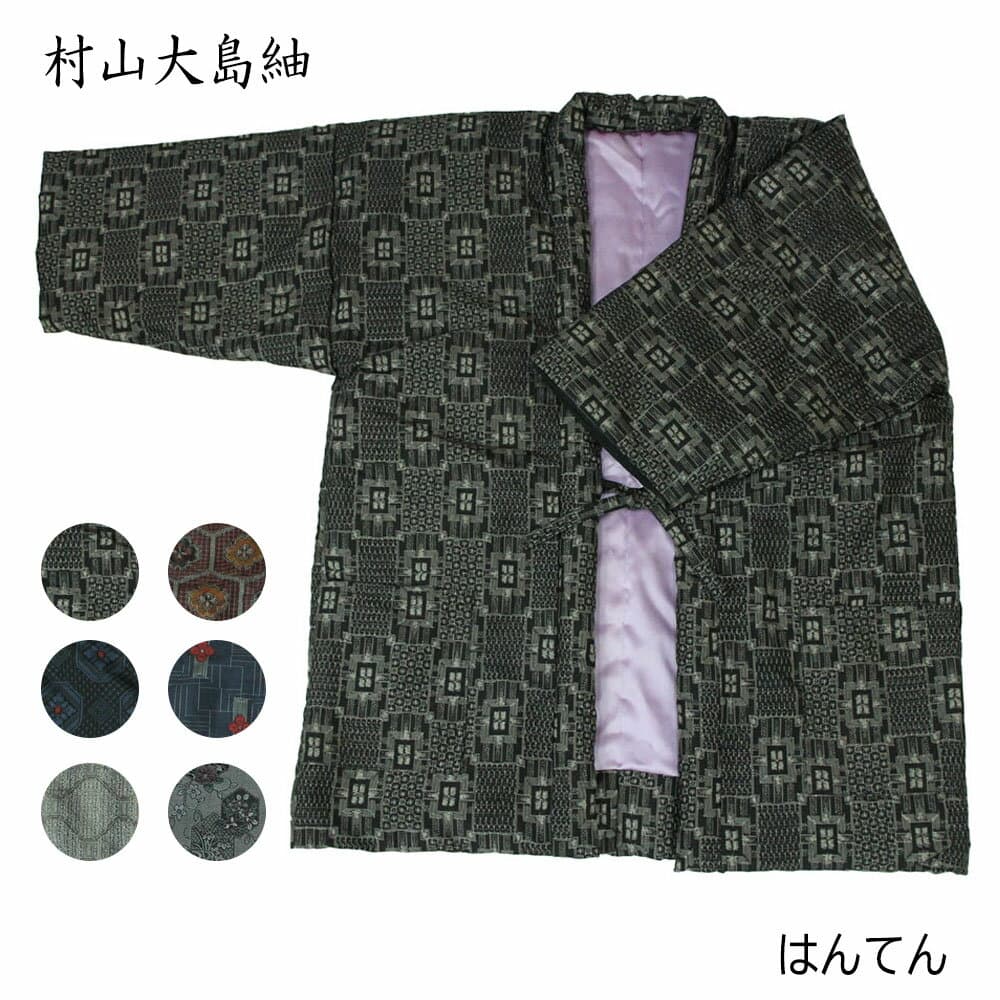
呉服屋 村山大島紬使用 正絹真綿 半纏 袢纏 女性用 男性用 半天 はんてん フリーサイズ プレゼント 贈り物に最適 レディース メンズ 半纏 伴天 半てん hannten 綿入れ 綿入り 和風カーディガン 半天 はんてん
free size浴衣 七五三 安売り天国とせん
5.0 / 1 reviews
First time buying on Rakuten? How residents in Japan order →
Murayama Oshima Tsumugi is tied to a precise geography: the Murayama area at the southern foot of the Sayama Hills, and present production around Musashimurayama, Mizuho, and Akishima. The cloth is raw silk, dyed before weaving, then made in plain weave while warp and weft kasuri yarns are matched by hand. Its character comes from concrete work at the yarn level. Board-clamp dyeing places the pattern before the loom; four thread roles are prepared; the two directions of kasuri are aligned as the cloth is woven. The result is a smooth, light textile long used for kimono and now also made into ties, pen cases, drawstring bags, and coin purses.
The first anchor for Murayama Oshima Tsumugi is the land itself. The Murayama area lies on the southern foot of the Sayama Hills, while today’s main manufacturing places are Musashimurayama, Mizuho, and Akishima; those names keep the textile within a specific part of western Tokyo.
A second anchor stands in Musashimurayama’s Honcho district. The Murayama Textile Cooperative office at Honcho 2-2-1, a wooden building from 1928, now holds displays of tools, process stages, cloth bolts, and local textile chronology. The building connects the cloth to loom houses, kasuri-board makers, and a producer community that worked around the same area.
Before silk tsumugi became the focus, the Murayama area was known from the Edo period for cotton indigo kasuri. Another layer of the area’s textile past reaches to Genroku-era striped cotton and late-Edo Murayama kasuri, giving the later silk cloth a local background in cotton weaving and patterned yarn.
From the Meiji period into the Taisho period, cotton kasuri was developed and production increased. Around 1919, board-clamp dyeing came from Isesaki in Gunma, and silk textiles became more common in the area; Murayama Oshima Tsumugi grew from that shift toward raw silk, pre-dyeing, and plain weave.
In Murayama Oshima Tsumugi, the pattern starts before the loom. Board-clamp dyeing uses patterned boards to dye kasuri yarn, so the yarn already carries positions for the design before weaving begins; its introduction from Isesaki around 1919 gave the area a practical way to make silk kasuri.
That dyed yarn is used in both warp and weft. Board-clamp dyeing therefore has to meet the later work of plain weaving and hand alignment: when the prepared raw-silk yarns cross on the loom, the pattern appears in the cloth rather than being added on top of it.
The thread structure is precise. The cloth has warp yarns running lengthwise and weft yarns passing across the width; each direction is divided again into plain ground yarn and board-clamp-dyed kasuri yarn. Even before weaving, four thread roles have to be prepared.
The work is described as handwork throughout, with the workflow often subdivided into about forty processes. Raw silk, ground yarn, kasuri yarn, dyeing boards, and loom preparation all sit in sequence before a bolt of plain-woven tsumugi can take shape.
At the loom, the maker aligns warp kasuri and weft kasuri by hand. The pattern depends on that meeting point: two dyed directions cross in plain weave, and the cloth surface gains its fine kasuri design through small adjustments in the yarns.
The finished cloth is known for a smooth touch that still lets the fiber be felt, and for a lightness that makes long wear less tiring. Men’s cloth often uses very fine kasuri that looks intricate up close and nearly plain from a distance, while women’s cloth emphasizes subdued patterns and colors suited to a range of ages.
The Murayama Textile Cooperative office in Honcho was built in 1928, when textile businesses in the area organized around their shared work. The Musashimurayama area and nearby districts had many loom houses and kasuri-board makers from the Taisho period, and that local network is still legible in the building.
Inside, visitors encounter tools, production stages, board-clamp injection dyeing, historical cloth bolts, chronology panels, and video material on the making process. These objects keep the craft at hand-sized scale: boards, yarn, loom, cloth, and moving images show how Murayama Oshima Tsumugi travels from thread to textile.
Murayama Oshima Tsumugi has long been connected with kimono, helped by its fine kasuri surface, smooth touch, and light feel during wear. Whether used in men’s fine-patterned cloth or women’s subdued designs, the cloth keeps the hand-matched warp and weft visible in small details.
The same textile is now also made into ties, pen cases, drawstring bags, and coin purses. In these smaller objects, the board-clamp-dyed yarn and warp-and-weft alignment remain visible on a reduced surface, bringing the Musashimurayama-area silk kasuri into daily use beyond a full kimono bolt.
Seen from the southern foot of the Sayama Hills, Murayama Oshima Tsumugi is built from a clear chain of place and work: cotton indigo kasuri in the Murayama area, board-clamp dyeing brought from Isesaki, raw silk prepared for pre-dyed plain weave, and hand alignment at the loom. A kimono bolt, a tie, or a drawstring bag can all carry that same line of boards, yarns, and woven kasuri from Musashimurayama, Mizuho, and Akishima.
Compiled from public records and official sources; see the recognition links below. Details may change over time.
Where this product is officially registered, designated, or recognized in Japan.
Traditional craft
Designated a Traditional Craft (dentō kōgeihin) by Japan's Ministry of Economy, Trade and Industry.
Sources1
It is written as 村山大島紬 in Japanese. Search Rakuten and other Japanese sites with that spelling — the English name will not bring up the listings.
Murayama Oshima tsumugi is a pre-dyed, plain-weave silk textile made mainly around Musashimurayama, Mizuho, and Akishima in Tokyo, with patterns formed by kasuri weaving. It developed from the area's earlier cotton indigo kasuri tradition and later shifted toward silk. The cloth is used mainly for kimono, and today it is also made into ties, pen cases, and other small goods.
The Murayama area lies at the southern foot of the Sayama Hills and was known for cotton indigo kasuri from the Edo period. Around 1919, board-clamp dyeing introduced from Isesaki in Gunma led to an increase in silk textiles in the Murayama area. Murayama Oshima Tsumugi uses raw silk in a pre-dyed plain weave, with kasuri yarn in both warp and weft. Its kasuri patterns are woven by hand-aligning the warp kasuri and weft kasuri.
Its smooth touch and light weight make it less tiring to wear over long periods. Men's kasuri patterns look intricate up close and almost plain from a distance. Visitors can learn about the production process at the Murayama Textile Cooperative, where tools, production stages, panels, and video materials are displayed, mainly in the textile reference room.
Naturally dyed textiles shed some colour on first wash. Hand-wash separately with a neutral detergent, avoid long soaking and bleach, and dry in the shade to prevent fading. Silk, ramie, and traditionally dyed pieces often need professional cleaning — the care label on the listing takes precedence.
Most options are shelf-stable, boxed, and travel well, so they suit gifting or bringing home. Confirm the final storage and delivery terms on the Rakuten listing.
On Rakuten: the shops listed here right now are 小粋屋東京, 浴衣 七五三 安売り天国とせん. We don't sell directly; purchase, payment, stock, and delivery are all handled on the Rakuten product page.