 3 images
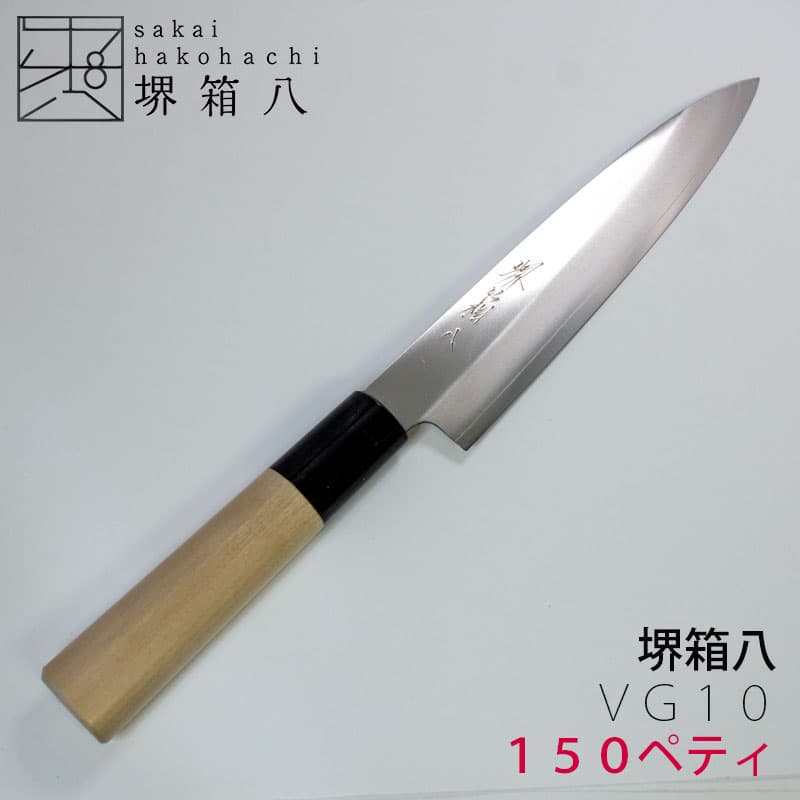
Sakai Hakohachi VG10 Japanese-Handle Petty Knife
(名入れ印字可)(プレゼント包装・のし無料)ペティナイフ 和ペティ 小包丁 フルーツナイフ 150mm VG10 V金10号 堺箱八 堺打刃物 日本製
150 mm blade無垢材家具と工芸 箱屋の八代目
4.8 / 6 reviews
Japanese name堺打刃物
Sakai cutlery brings knives and scissors together in an Osaka blade-making area shaped by tobacco knives, kitchen blades, shears, forging, sharpening, and handle fitting.
Information last updated 7 days ago
3 images(名入れ印字可)(プレゼント包装・のし無料)ペティナイフ 和ペティ 小包丁 フルーツナイフ 150mm VG10 V金10号 堺箱八 堺打刃物 日本製
150 mm blade無垢材家具と工芸 箱屋の八代目
4.8 / 6 reviews
 3 images
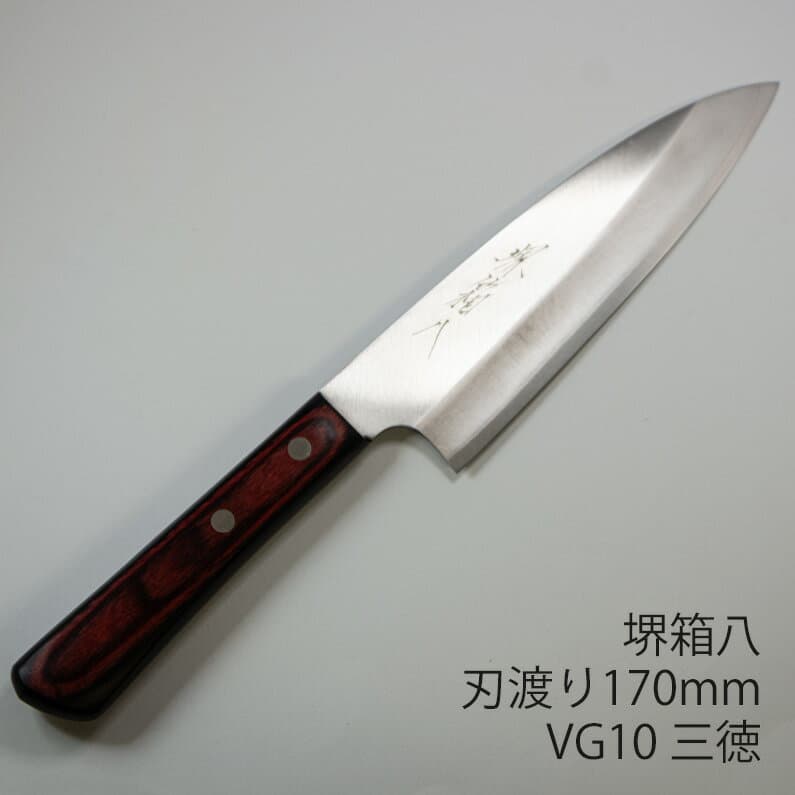
[名入れ印字可][プレゼント包装・のし無料]三徳包丁 万能包丁 文化包丁 堺箱八 刃渡り170mm ステンレス V金10号 VG10 堺打刃物 日本製
170mm blade無垢材家具と工芸 箱屋の八代目
4.7 / 47 reviews
 3 images
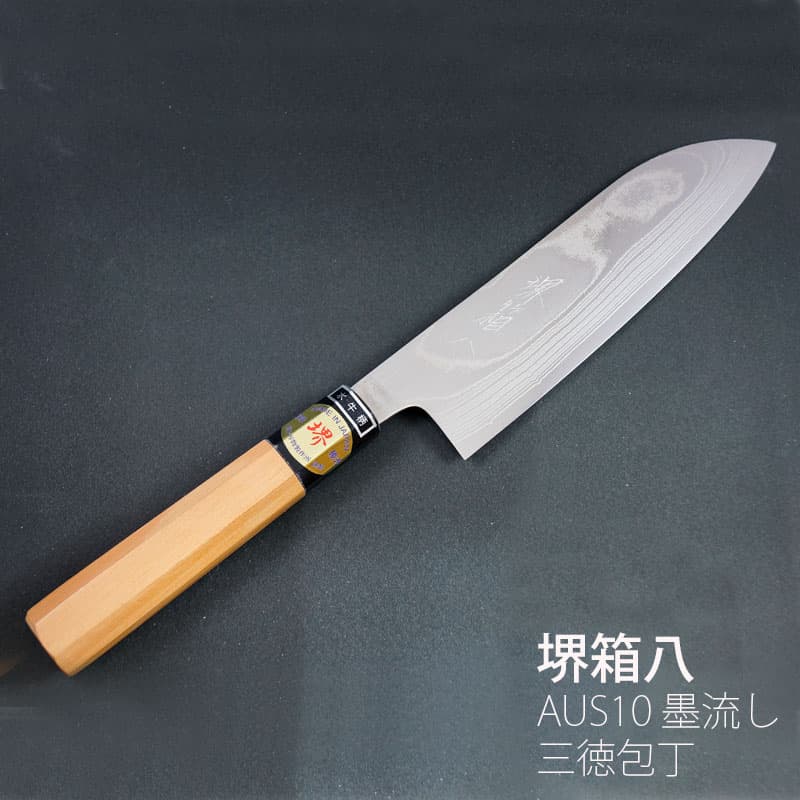
[名入れ印字可][プレゼント包装・のし無料]三徳包丁 文化包丁 万能包丁 ステンレス 堺箱八 AUS10 ニッケルダマスカス 8層 墨流し 刃渡り17.5cm 堺刃物 堺打刃物
17.5 cm blade, suminagashi finish無垢材家具と工芸 箱屋の八代目
4.7 / 56 reviews
 3 images
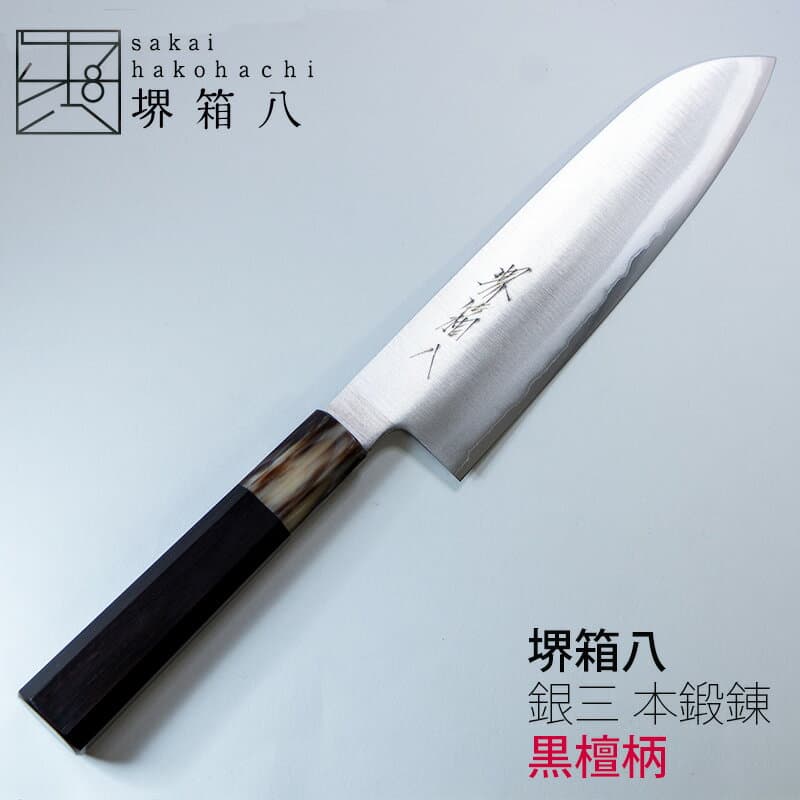
[名入れ印字可][プレゼント包装・のし無料]三徳包丁 文化包丁 万能包丁 ステンレス 170mm 堺箱八 銀三鋼 本鍛錬 銀紙3号 堺包丁 刃渡り17cm 堺刃物 堺打刃物
170mm Ginsan steel無垢材家具と工芸 箱屋の八代目
4.8 / 82 reviews
First time buying on Rakuten? How residents in Japan order →
All 4 listings of this product on Rakuten, lowest price first.
| Listing | Price | Shop | Reviews | Open listing |
|---|---|---|---|---|
Sakai Hakohachi VG10 Japanese-Handle Petty Knife 150 mm bladeLowest priceGift-ready | ¥12,320 | 無垢材家具と工芸 箱屋の八代目 | 4.8 / 6 reviews | View on Rakuten → |
Sakai Hakohachi VG10 Stainless Steel Santoku Knife 170mm bladeGift-ready | ¥14,300 | 無垢材家具と工芸 箱屋の八代目 | 4.7 / 47 reviews | View on Rakuten → |
Sakai Hakohachi AUS10 8-Layer Damascus Santoku Knife 17.5 cm blade, suminagashi finishGift-ready | ¥27,280 | 無垢材家具と工芸 箱屋の八代目 | 4.7 / 56 reviews | View on Rakuten → |
Sakai Hakohachi 170mm Ginsan Stainless Santoku Knife 170mm Ginsan steelMost reviewedGift-ready | ¥27,500 | 無垢材家具と工芸 箱屋の八代目 | 4.8 / 82 reviews | View on Rakuten → |
Japanese · new tab
Sakai cutlery belongs to the blade-making area around Sakai City and Osaka City, with knives and scissors as its main products. Its timeline begins with tobacco knives in Sakai during the Azuchi-Momoyama period, then moves through deba and cooking knives in the early Edo period and flower-arrangement and pruning shears in the late Edo period. The product family becomes easier to understand through practical steps: steel is heated, hammered, quenched, tempered, ground, corrected, sharpened, and fitted with a handle.
The production area for Sakai cutlery is tied to Osaka City and Sakai City, and its main products are knives and scissors. The regional federation is based at Sakai Denshokan in Zaimokucho-nishi, Sakai-ku, giving the craft a concrete address as well as a regional name.
Knives and scissors sit beside each other in this blade family. Deba knives and cooking knives connect it to kitchens, while flower-arrangement shears and pruning shears connect it to plants, branches, and handwork beyond the cutting board.
The timeline begins in the Azuchi-Momoyama period, when tobacco knives started to be made in Sakai. In the early Edo period, deba knives and cooking knives were made there and established a nationwide position; in the late Edo period, flower-arrangement and pruning shears also became part of the production area.
This continuity is a sequence of tools and specialists. Tobacco knives, deba knives, cooking knives, flower-arrangement shears, and pruning shears each point to a different cutting task and to the formation of a specialized blade area in Sakai.
The making process begins with cut steel and heat. In the listed workflow, steel is heated to around 900°C and shaped with hammer work; in the forging explanation for Japanese kitchen knives, soft iron and steel are joined, heated, hammered, stretched, and brought closer to the outline of a knife.
After shaping, the blade is annealed so heat can leave it gradually. One forging sequence places the formed knife in straw as it cools, making fire, hammering, and controlled cooling part of the concrete meaning behind fire forging.
Once a blade has taken shape, heat treatment gives it hardness and resilience. Before quenching, oil and dirt are removed and mud is applied to reduce uneven hardening; the blade is then heated to 750-800°C and plunged into water, raising the hardness of the steel edge.
Tempering is a separate step. The forging sequence describes reheating the cooled knife, with recent use of machines that can manage 160-180°C, while the Osaka workflow lists tempering at 180-200°C. The purpose is practical: the edge gains toughness and becomes less prone to chipping.
The sharpness associated with Sakai cutlery comes from finishing as much as forging. The workflow includes rough grinding, final grinding, distortion correction, back grinding, buffing, small-edge finishing, and handle fitting; the forging explanation also describes grinding the back to create a hollow that helps the blade move through what it cuts.
Those steps turn a heated and hammered piece of metal into a tool that can be held and used. The reputation for sharpness and ease of use is tied to this chain of adjustments: the edge, the back, the corrected blade body, and the handle all matter.
Workshop descriptions in Sakai make the work visible through concrete examples: fire forging, knife grinding, honbazuke edge finishing, handle fitting, inspection, and displays of different blades. These examples should not be stretched into claims about every maker, but they show how the craft can be seen as a sequence of tasks.
The objects shown across these examples are broad: household knives, deba, yanagiba, soba knives, large tuna-cutting knives, custom knives, and scissor-related blade work. Together they point back to the same product family, where different blade shapes demand different finishing and use habits.
The shape of Sakai cutlery comes from place, time, and work: Osaka City and Sakai City; tobacco knives, kitchen knives, and shears from the Azuchi-Momoyama and Edo periods; and a making sequence of steel, heat, hammering, water, stone, edge work, and handle fitting. Its sharpness and ease of use are best understood through those concrete steps rather than through a label alone.
Compiled from public records and official sources; see the recognition links below. Details may change over time.
Where this product is officially registered, designated, or recognized in Japan.
It is written as 堺打刃物 in Japanese. Search Rakuten and other Japanese sites with that spelling — the English name will not bring up the listings.
Sakai forged blades are a family of cutlery from the Osaka blade-making area around Sakai City and Osaka City, with knives and scissors as main products. Production traces from tobacco knives in the Azuchi-Momoyama period through deba and cooking knives in the early Edo period to flower-arrangement and pruning shears in the late Edo period. The process of fire forging, quenching, tempering, grinding, back grinding, edge finishing, and handle fitting shapes their sharpness and ease of use.
Deba knives and cooking knives made in Sakai during the early Edo period established a nationwide position. The forging process includes heating steel to around 900°C and hardening it at 750-800°C. The forging sequence can include joining soft iron and steel, hammering, back grinding, and mud coating before quenching. Tempering is used to give the blade edge added toughness.
Knives are used in professional and home kitchens, including santoku-style knives, deba knives, yanagiba knives, soba knives, and large tuna-cutting knives. Scissors are used for gardening, pruning, and flower arrangement. Maintenance includes sharpening and honbazuke edge finishing, which are also taught as workshop experiences.
Keep wood, bamboo, and lacquer out of prolonged soaking, dishwashers, and direct sun — wipe dry after use and let them air out in the shade. For metal and fabric goods, follow the care notes on the listing.
Most options are shelf-stable, boxed, and travel well, so they suit gifting or bringing home. Confirm the final storage and delivery terms on the Rakuten listing.
On Rakuten: the shops listed here right now are 無垢材家具と工芸 箱屋の八代目. We don't sell directly; purchase, payment, stock, and delivery are all handled on the Rakuten product page.