 3 images
Tokamachi Akashi Chijimi Inden-Dyed Silk Summer Tsumugi
夏物【送料込み】【フルオーダー手縫い単衣お仕立て付き♪】 正絹 十日町明石ちぢみ・印伝染(印傳)夏紬 薄い生成り地に観世水文【着物/和服/夏着物/夏の街着/ショッピング/夏物/盛夏/薄物】【裄丈68.5cmまで】
pale unbleached Kanze water patternさわらび〜ほりだし堂〜
Japanese name十日町明石ちぢみ
From Tokamachi City in Niigata, this summer kimono cloth gets its crisp hand from strongly twisted weft yarns, hot-water kneading, and fine shibo. Its making connects Echigo chijimi hemp techniques with yarn-dyed kasuri planning in a snow-country kimono town.
Information last updated 120 days ago
3 images夏物【送料込み】【フルオーダー手縫い単衣お仕立て付き♪】 正絹 十日町明石ちぢみ・印伝染(印傳)夏紬 薄い生成り地に観世水文【着物/和服/夏着物/夏の街着/ショッピング/夏物/盛夏/薄物】【裄丈68.5cmまで】
pale unbleached Kanze water patternさわらび〜ほりだし堂〜
 3 images
夏物【送料込み】【フルオーダー手縫い単衣お仕立て付き♪】 正絹 十日町明石ちぢみ・印伝染(印傳)夏紬 黒地に野菜(かぶ、大根)【着物/和服/夏着物/夏の街着/ショッピング/夏物/盛夏/薄物】【裄丈69cmまで】
made-to-order hand-sewn hitoe tailoring included, yuki length up to 69 cmさわらび〜ほりだし堂〜
 3 images
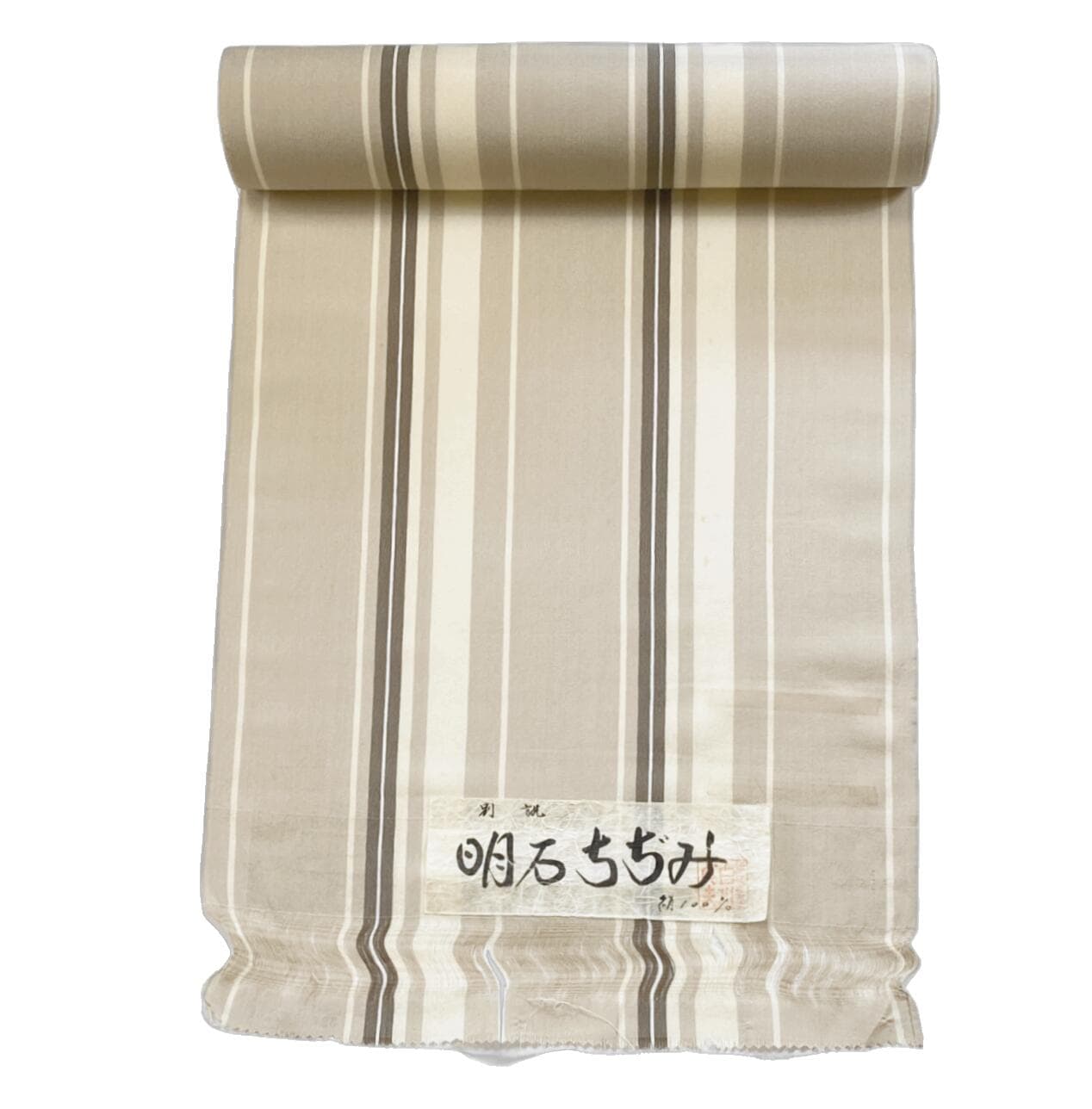
極上の逸品 特選品 【白新染織謹製】十日町明石縮 着尺 No.3277 経済産業大臣指定伝統的工芸品 十日町明石ちぢみ 盛夏のお出掛け着に如何 未仕立て お洒落 正絹 巾38cm長さ12.3m以上 夏の普段着着物 巻き始め数か所黄変有り
unsewn, 38cm x 12.3m or longer, yellowing at roll startキモノ 仙臺屋 本店
First time buying on Rakuten? How residents in Japan order →
In Tokamachi City, Niigata, Tokamachi Akashi chijimi begins as a summer silk kimono cloth and becomes recognizable through touch. The weft is strongly twisted, the woven cloth is kneaded in hot water, and fine shibo rises across the surface. That crisp, cool hand ties the fabric to Echigo chijimi techniques, yarn-dyed planning, snowmelt water for dyeing, and the workshops and kimono days that keep Tokamachi's textile work visible in town.
Tokamachi Akashi chijimi is centered on summer silk kimono bolt cloth. Its main manufacturing area is Tokamachi City, and the Tokamachi Textile Industrial Cooperative is part of that local production setting. The fabric is thin and crisp enough for summer kimono use, and its name stays tied to Tokamachi City rather than to a general silk category.
The roots reach the early nineteenth century, when techniques from Echigo chijimi, a hemp cloth, were applied to silk and led to sukiaori. Another thread runs through Banshu Akashi: silk-weaving techniques that spread through Kyoto Nishijin and other areas merged with Echigo chijimi in Tokamachi. The early fabric used silk and hemp in sukiaori before the work was completed as a silk textile.
The tactile center of Tokamachi Akashi chijimi is the weft. The weft yarn is given a strong twist, the woven cloth is kneaded in hot water, and shibo rises as a small textured surface. That texture gives the thin silk a cool, crisp hand, the shari feeling associated with summer kimono cloth.
Tokamachi Akashi chijimi also belongs to the yarn-dyed side of Tokamachi textiles. In sakizome work, threads are dyed before weaving so the pattern appears according to the plan on the loom; kasuri places the pattern on the yarn itself. Tokamachi kasuri and Tokamachi Akashi chijimi share that yarn-dyed and kasuri approach, while the chijimi cloth is separated by its twist method, strong-twisted weft, and hot-water kneading.
Tokamachi is a heavy-snow city, and its snowmelt provides abundant, good-quality water for dyeing. In the older rhythm of the area, field work filled spring through autumn, and the months under snow turned spinning and loom work into winter labor. The city later developed both yarn-dyed and piece-dyed kimono work, with Tokamachi kasuri and Tokamachi Akashi chijimi on the yarn-dyed side and furisode and homongi on the piece-dyed side.
Tokamachi keeps kimono work close to public life through seasonal events and hands-on settings. A spring kimono festival, workshop visits, making experiences, production-area tours, and dressing practice place the fabric beside looms, dyeing work, and the act of wearing a kimono. For Tokamachi Akashi chijimi, the cool surface of shibo can be understood alongside the town where the cloth is woven and worn.
Tokamachi Akashi chijimi is most clearly remembered through shibo raised by strong-twisted weft yarns and hot-water kneading. Follow that texture back, and the cloth leads to Echigo chijimi hemp techniques, silk-weaving routes from Banshu Akashi through Nishijin, Tokamachi's snowmelt water, and a kimono town that still opens workshops and dressing experiences to visitors.
Compiled from public records and official sources; see the recognition links below. Details may change over time.
Where this product is officially registered, designated, or recognized in Japan.
Traditional craft
Designated a Traditional Craft (dentō kōgeihin) by Japan's Ministry of Economy, Trade and Industry.
Sources1
It is written as 十日町明石ちぢみ in Japanese. Search Rakuten and other Japanese sites with that spelling — the English name will not bring up the listings.
Tokamachi Akashi chijimi is a summer silk kimono cloth from Tokamachi City, Niigata. Its roots reach back to early nineteenth-century sukiaori, when Echigo chijimi hemp-weaving techniques were applied to silk, while silk-weaving techniques from Banshu Akashi, later spread through Kyoto Nishijin, merged with Echigo chijimi in Tokamachi. Strongly twisted weft yarns are kneaded in hot water after weaving, raising shibo that gives the thin silk a cool, crisp hand.
Tokamachi City is the main production area, connected to the Tokamachi Textile Industrial Cooperative. Tokamachi Akashi chijimi and Tokamachi kasuri share yarn-dyed and kasuri techniques, differing mainly in the twist method. Tokamachi's snowmelt provides abundant, good-quality water for dyeing, and winter work historically included spinning and weaving. The cloth became popular as high-grade, fashionable summer wear due to its crisp, thin-silk feel.
Tokamachi holds seasonal kimono events, such as a kimono festival, to convey kimono culture. Visitors can join workshop visits, making experiences, production-area tours, and dressing practice to learn about the cloth's production.
Naturally dyed textiles shed some colour on first wash. Hand-wash separately with a neutral detergent, avoid long soaking and bleach, and dry in the shade to prevent fading. Silk, ramie, and traditionally dyed pieces often need professional cleaning — the care label on the listing takes precedence.
Most options are shelf-stable, boxed, and travel well, so they suit gifting or bringing home. Confirm the final storage and delivery terms on the Rakuten listing.
On Rakuten: the shops listed here right now are さわらび〜ほりだし堂〜, キモノ 仙臺屋 本店. We don't sell directly; purchase, payment, stock, and delivery are all handled on the Rakuten product page.