 3 images
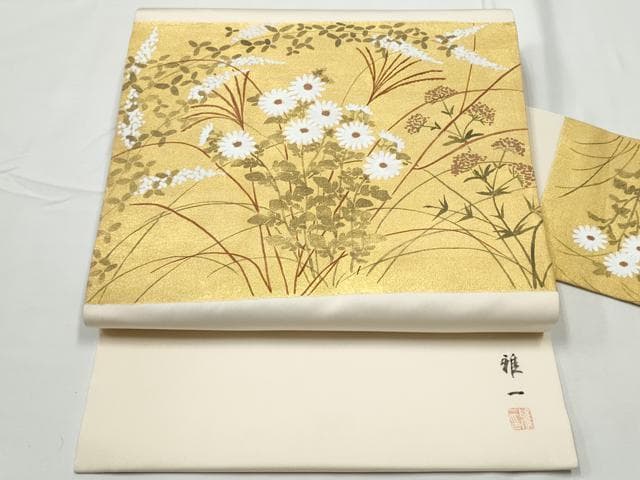
Tokyo Hand-Painted Yuzen Adachi Masakazu Pure Silk Shioze 9-sun Nagoya Obi with Chrysanthemums and Gold Accents
平和屋着物●東京手描友禅 安達雅一 塩瀬 九寸名古屋帯 菊 金彩 正絹 逸品 CABE4541hy
350 cm x approx. 30 cm平和屋
Japanese name東京手描友禅
Across Tokyo workshops, silk is drawn with washable aobana lines, protected with fine resist paste, colored by brush or hake, then steamed and washed into kimono cloth, haori and obi.
Information last updated 122 days ago
3 images平和屋着物●東京手描友禅 安達雅一 塩瀬 九寸名古屋帯 菊 金彩 正絹 逸品 CABE4541hy
350 cm x approx. 30 cm平和屋
 3 images
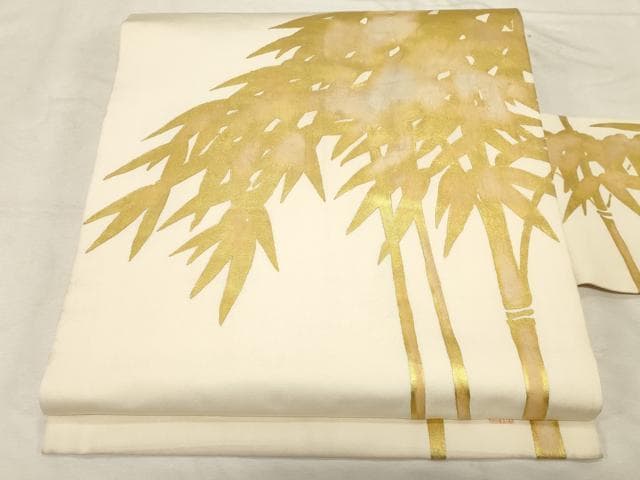
平和屋着物●東京手描友禅 安達雅一 塩瀬 九寸名古屋帯 笹竹文 金彩 正絹 逸品 CABD4224dy
approx. 360 cm x 30 cm平和屋
First time buying on Rakuten? How residents in Japan order →
Tokyo Tegaki Yuzen begins with Tokyo neighborhoods and silk: workshops in Shinjuku, Nerima, Nakano and other wards draw on white silk with washable aobana liquid before resist paste, brush color, ground dyeing, steam, washing and yunoshii finishing shape the cloth. Its Tokyo character sits in specific places and steps. Dyers once gathered along the Kanda River, a dyeing workshop connected to a major Edo draper stood near today’s Takadanobaba, and present-day Ochiai and Nakai keep dyeing visible through workshops, classes and public displays.
The working map of Tokyo Tegaki Yuzen includes Shinjuku, Nerima, Nakano and other parts of Tokyo’s wards. After Edo became a political center, dyers and painters connected with Kyoto moved into the city, bringing dyeing and textile techniques with them. Water mattered to dyeing work, so many dyers lived along the Kanda River. A dyeing workshop connected to the Echigoya draper, the predecessor of Nihonbashi Mitsukoshi, was later set upstream near today’s Takadanobaba in Shinjuku. That geography connects Edo consumers, river water and workshop labor. In the present city, Shinjuku remains a main production area, while Ochiai and Nakai appear through dyeing workshops, demonstrations and neighborhood events that present the district as a dyeing town.
A piece of Tokyo Tegaki Yuzen starts with concept and design. The maker considers the wearer, season, overall composition, pattern flow, colors and techniques, then sketches on washi while imagining the kimono as one continuous picture. The silk cloth is temporarily sewn into kimono form, and the underdrawing is made with a brush dipped in aobana liquid. Aobana comes from the juice of the Asiatic dayflower and washes away cleanly in water, so the blue drawing acts as a temporary structure for the resist lines and later color.
After the underdrawing, resist paste follows the outline of the motif. The maker uses a tube made from shibugami with a metal tip, squeezing yuzen paste made from glutinous rice flour, rice bran and salt onto the surface of the silk. This resist keeps neighboring dyes from mixing or bleeding into each other. Once the cloth is dyed and washed, the pasted outline remains as a fine white line. Color insertion and painted dyeing are done with brushes or hake, so leaves, flowers, seasonal scenery and small shifts in tone depend on the hand, the tool and the way silk receives moisture.
After color enters the cloth, the work moves through paste coverage, ground dyeing, steaming, washing, yunoshii and finishing. Paste coverage protects completed motifs while the ground color is brushed across wider areas. Steaming fixes the dye with heat; one described step uses steam at about 100 degrees Celsius for 20 to 25 minutes. Washing removes extra dye and paste, and yunoshii evens the cloth. Depending on the techniques and the piece, one work may take from one month to several months, a period in which silk, paste, dye, water and heat gradually settle into a finished surface.
Tokyo Tegaki Yuzen is often described through the integrated work of one maker, from concept and design through underdrawing, yuzen color insertion and finishing. That continuity lets the line, color balance and empty space of a kimono cloth stay connected from the first sketch to the final surface. When a crest is needed, it may be hand-drawn or applied by rubbing through a carved crest stencil; when embroidery is used, the boundary is hand embroidery. These choices keep design, dyeing and finishing in direct conversation on kimono cloth, haori and obi.
Tokyo Tegaki Yuzen is associated with Edo townspeople’s taste for iki, shibusa and dry wit; on cloth, those abstract words become subdued color, beauty held within a limited palette, and details that do not push every decoration to the surface. Seasonal scenery and plants can be turned into motifs, and contemporary work also uses brighter tones. Public activity keeps the craft visible in the city: the annual Sengeiten competition exhibition, yuzen experience courses, Ochiai and Nakai dyeing workshops, Tokyo craft exhibitions and Ginza craft events show forms such as kimono cloth, dyed obi, visiting wear, komon, half collars and obiage. One craftsperson profile also shows how Tokyo gardens such as Mukojima Hyakkaen, Koishikawa Korakuen, Rikugien and the Imperial Palace East Gardens can become sketching grounds for kimono design.
Tokyo Tegaki Yuzen places river memory, neighborhood workshops and silk technique on the same cloth: the Kanda River and Takadanobaba, Shinjuku and Nakai, washable aobana, white resist lines, steam and washing. When those steps become kimono cloth, haori or obi, the Tokyo restraint is carried by practical details rather than slogans: a blue line that disappears, a white line that remains, and a maker’s hand returning to the cloth over weeks or months.
Compiled from public records and official sources; see the recognition links below. Details may change over time.
Where this product is officially registered, designated, or recognized in Japan.
It is written as 東京手描友禅 in Japanese. Search Rakuten and other Japanese sites with that spelling — the English name will not bring up the listings.
Tokyo hand-painted yuzen (Tokyo Tegaki Yuzen) is a hand-dyed textile made in Tokyo wards such as Shinjuku, Nerima and Nakano, using silk fabric. Artisans sketch designs with aobana liquid, apply fine resist paste, add color by brush or hake, then ground-dye, steam, wash and finish the cloth into kimono fabric, haori and obi. The craft traces to dyers who settled along the Kanda River, and it is now shown through workshops and exhibitions around Ochiai and Nakai.
After Edo became a political center, dyers and painters from the Kyoto side moved into Edo, and many dyers settled along the Kanda River. Fine resist paste follows the motif outline to prevent dyes from mixing or bleeding, leaving a white line after washing. Aobana liquid comes from Asiatic dayflower juice and washes away completely during rinsing. Besides kimono cloth, haori and obi, forms include dyed obi, visiting wear, komon, half collars and obiage.
When a formal garment requires a family crest, a specialist adds it by hand-drawing or by a carved-stencil rubbing method, depending on the case. Some makers sketch places such as Mukojima Hyakkaen, Koishikawa Korakuen, Rikugien or the Imperial Palace East Gardens, then translate what moves them into kimono designs.
Naturally dyed textiles shed some colour on first wash. Hand-wash separately with a neutral detergent, avoid long soaking and bleach, and dry in the shade to prevent fading. Silk, ramie, and traditionally dyed pieces often need professional cleaning — the care label on the listing takes precedence.
Most options are shelf-stable, boxed, and travel well, so they suit gifting or bringing home. Confirm the final storage and delivery terms on the Rakuten listing.
On Rakuten: the shops listed here right now are 平和屋. We don't sell directly; purchase, payment, stock, and delivery are all handled on the Rakuten product page.