 3 images
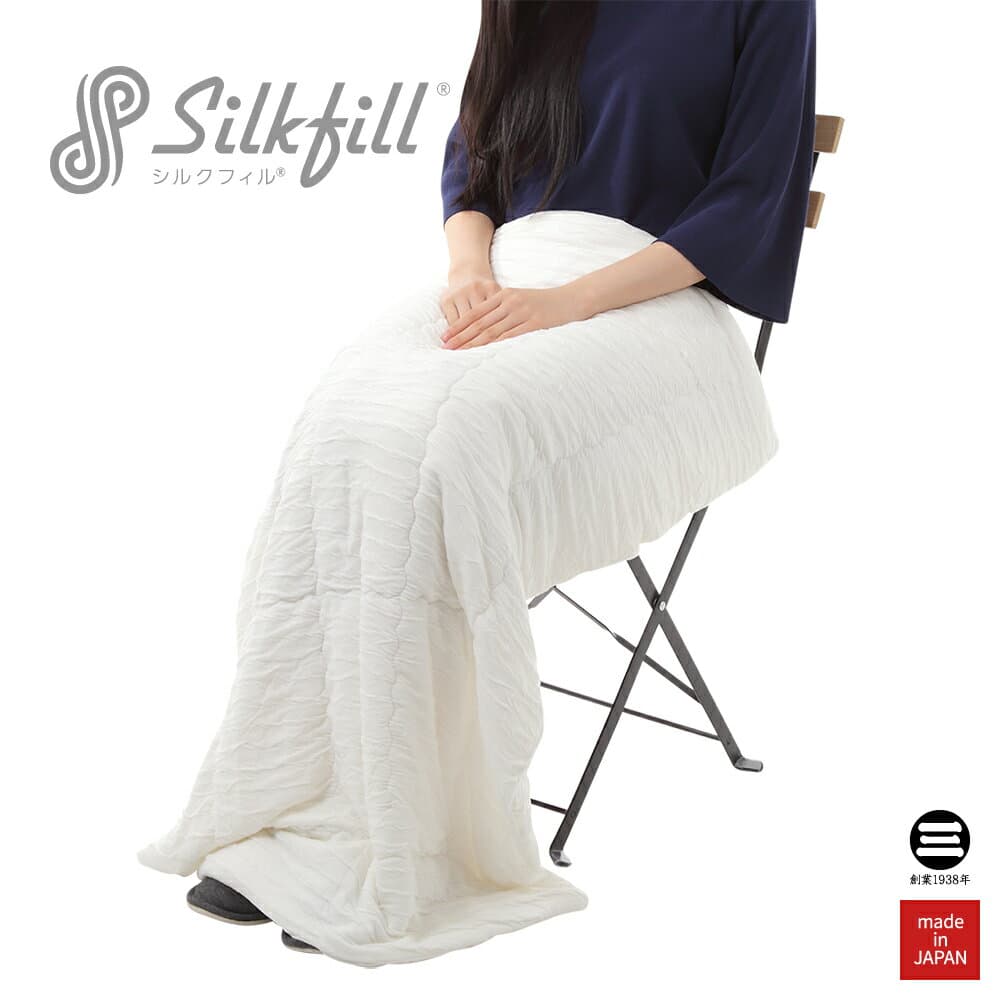
SilkFill Washable Tomioka Silk Lap Blanket
SilkFill 洗えるシルクひざ掛け 約100×70cm アイボリー 絹100%(富岡シルク(ぐんま200)) SRG051 [ シルク 絹 国産シルク シルクフィル 真綿 寝具 日本製 布団 丸三綿業 ]
Approx. 100 x 70 cm, ivory寝具のおみせ丸三綿業
4.8 / 38 reviews
Japanese name富岡シルク
Tomioka Silk begins with cocoons raised in Tomioka, then follows inspection, reeling in Annaka, and the people who keep the local silk chain connected.
Information last updated 119 days ago
3 imagesSilkFill 洗えるシルクひざ掛け 約100×70cm アイボリー 絹100%(富岡シルク(ぐんま200)) SRG051 [ シルク 絹 国産シルク シルクフィル 真綿 寝具 日本製 布団 丸三綿業 ]
Approx. 100 x 70 cm, ivory寝具のおみせ丸三綿業
4.8 / 38 reviews
 3 images
楽天スーパーSALE 10%OFF 雪繭 シルク製 口内専用ブラシ【取替用2本入り】おためし 舌ブラシ ゆきまゆ 舌ぬめり取り シルク絹糸100% 群馬県産 富岡シルク 繭 ゆきまゆ yukimayu【公式・正規販売店】 口腔内ブラシ 口腔ケア アンチエイジング
2 replacement brushesnakajapan
4.5 / 11 reviews
 3 images
シルク製 黄金洗顔ブラシ【ウェットタイプ】フェイスブラシ マッサージブラシ 群馬県産 ぐんま黄金繭 富岡シルク【シルク生糸100%】【日本製】【雪繭】ゆきまゆ 天然成分 セリシン [フジセイ] 和田勉【公式正規販売代理店】Silk golden face wash brush
wet typenakajapan
5.0 / 1 reviews
First time buying on Rakuten? How residents in Japan order →
Tomioka Silk is easiest to understand from the ground up. Tomioka in Gunma Prefecture, with Mount Asama in the distance and the rocky forms of Mount Myogi nearby, was long active in sericulture. In 1872, Tomioka Silk Mill was founded there as a model mechanized reeling factory using Western technology. Today, the Tomioka Silk product family still starts with cocoons produced in Tomioka, then moves through grower-by-grower checks and reeling at Usui Seishi in Annaka, Gunma.
The practical boundary of Tomioka Silk is material before pattern or finished form. The Tomioka Silk Promotion Organization grants its brand mark to silk products that use cocoons produced in Tomioka, with traceable manufacturing history and domestic production as the frame around the material.
That definition keeps the name tied to working sericulture. The product family is connected to farmers who raise silkworms, mulberry fields that support cocoon production, and the steps that carry cocoons into reeling and later processing.
Sericulture in Tomioka is described as five annual production seasons: spring, summer, early autumn, late autumn, and early winter. The rhythm gives Tomioka Silk an agricultural calendar before it has a textile surface; silkworms are raised, mulberry leaves sustain them, and each season’s cocoons move toward inspection and reeling.
The local language around the work is also concrete. The organization describes growers referring to silkworms respectfully as “o-kaiko-sama,” a practice grounded in daily care inside sericulture households.
Cocoons produced in Tomioka are gathered in one place and checked by producer. That step matters because the material does not disappear into an anonymous bulk pile before reeling; each grower’s cocoons remain visible within the quality process.
After inspection, the cocoons are reeled at Usui Seishi in Annaka, Gunma, using a high-rank 6A reeling machine. The route from Tomioka’s sericulture households to Annaka’s reeling equipment links farm work and modern silk production in one continuous process.
Tomioka Silk Mill was founded in 1872 as a model mechanized reeling factory that introduced advanced Western techniques. Its reeling hall once held 300 metal reeling basins introduced from France, giving physical scale to the work of turning cocoons into raw silk.
That mill context still helps readers picture Tomioka Silk today. The East Cocoon Warehouse, West Cocoon Warehouse, and reeling hall preserve the spaces of storage and reeling; in 2014, Tomioka Silk Mill and Related Sites were inscribed as a World Cultural Heritage site, placing the mill within a wider silk-industry landscape.
The East Cocoon Warehouse points back to cocoon storage, but it also houses the Tomioka Silk Gallery, where present-day Tomioka Silk products are shown in the mill setting. The encounter connects finished silk goods with Tomioka cocoons, grower checks, reeling, processing, and display in one place.
The West Cocoon Warehouse and reeling hall make the same chain easier to read. They are preserved and used as public spaces, so the local silk culture can be understood through buildings, galleries, exhibits, mulberry fields, and the continuing work of sericulture households.
The Tomioka Silk Promotion Organization took over the work of a council established in 2008 and was itself established in 2021 to protect and continue sericulture in the Tomioka region. Its network reaches from sericulture farmers to reeling businesses, silk processors, sellers, and retailers.
That chain is the clearest way to describe Tomioka Silk’s local identity. It is carried by Tomioka cocoons, the remaining sericulture households, reeling in Annaka, and the people who turn raw material into traceable domestic silk products.
Tomioka Silk is defined by a visible route: silkworms and mulberry fields in Tomioka, five cocoon seasons, grower-by-grower inspection, 6A machine reeling at Usui Seishi in Annaka, and the mill buildings that still show where cocoon storage and reeling took place. Its continuity rests in the repeated work of raising cocoons, checking them, reeling them, and carrying the material through a regional silk chain.
Compiled from public records and official sources; see the recognition links below. Details may change over time.
Where this product is officially registered, designated, or recognized in Japan.
Regional collective trademark
Registered as a Regional Collective Trademark with the Japan Patent Office.
Sources1
It is written as 富岡シルク in Japanese. Search Rakuten and other Japanese sites with that spelling — the English name will not bring up the listings.
Tomioka Silk is a family of silk products made from cocoons produced in Tomioka, Gunma. Local sericulture runs five times a year, in spring, summer, early autumn, late autumn, and early winter. Cocoons are gathered, inspected by producer, and reeled at Usui Seishi in Annaka, Gunma, using a 6A reeling machine. The 1872 Tomioka Silk Mill, with its cocoon warehouses and reeling hall, remains tied to this process today.
Tomioka is described as having about 10 sericulture households, and the area faces pressure from a shrinking number of producers. The Tomioka Silk Promotion Organization connects sericulture farmers, reelers, silk processors, sellers, and retailers. Tomioka Silk is defined by traceable manufacturing history and domestic (Japanese) production as its quality boundaries. The East Cocoon Warehouse, West Cocoon Warehouse, and reeling hall are preserved and used today for galleries, exhibitions, shops, and events.
Tomioka Silk products are displayed at the Tomioka Silk Gallery inside the East Cocoon Warehouse, linking the goods to the historic mill site.
Naturally dyed textiles shed some colour on first wash. Hand-wash separately with a neutral detergent, avoid long soaking and bleach, and dry in the shade to prevent fading. Silk, ramie, and traditionally dyed pieces often need professional cleaning — the care label on the listing takes precedence.
Most options are shelf-stable, boxed, and travel well, so they suit gifting or bringing home. Confirm the final storage and delivery terms on the Rakuten listing.
On Rakuten: the shops listed here right now are 寝具のおみせ丸三綿業, nakajapan. We don't sell directly; purchase, payment, stock, and delivery are all handled on the Rakuten product page.