 3 images
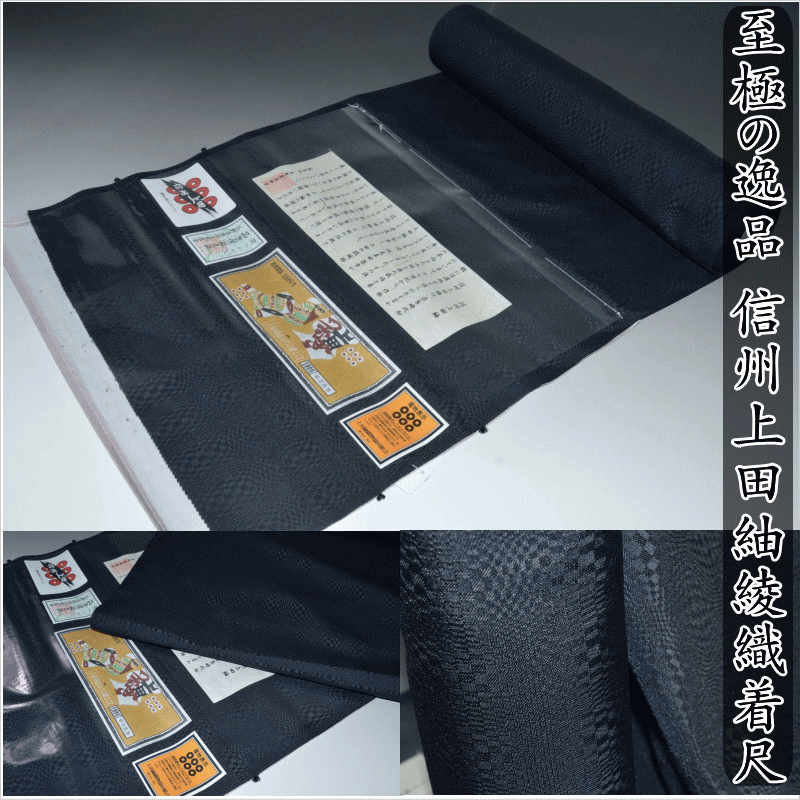
Shinshu Ueda Tsumugi Silk Kimono Bolt, Twill Weave
至極の逸品 信州上田紬着尺綾織 No.13307 黒色 長野県のつむぎ 男女兼用 未使用 紬 反物 原反 正絹 未仕立て39.5cm長さ12.3m 送料無料 日本製 お出かけ着きもの お買い得品 【送料無料】【日本製品】
No.13307 black, 39.5 cm x 12.3 mキモノ 仙臺屋 本店
Japanese name上田紬
In Nagano’s Ueda City, Ueda Tsumugi connects sericulture, silk warp, spun tsumugi weft, plant dyeing, and the slow work behind a thirteen-meter kimono bolt.
Information last updated 28 days ago
3 images至極の逸品 信州上田紬着尺綾織 No.13307 黒色 長野県のつむぎ 男女兼用 未使用 紬 反物 原反 正絹 未仕立て39.5cm長さ12.3m 送料無料 日本製 お出かけ着きもの お買い得品 【送料無料】【日本製品】
No.13307 black, 39.5 cm x 12.3 mキモノ 仙臺屋 本店
 3 images
小岩井カリナ 手縫いお仕立て付き 長野県産 上田紬 手織り 格子 灰色系【着物/和服/和装/カジュアル着/パーティ/ショッピング/食事/お出掛け着】【裄69.5cmまで】送料無料
gray check, yuki up to 69.5 cmさわらび〜ほりだし堂〜
 3 images
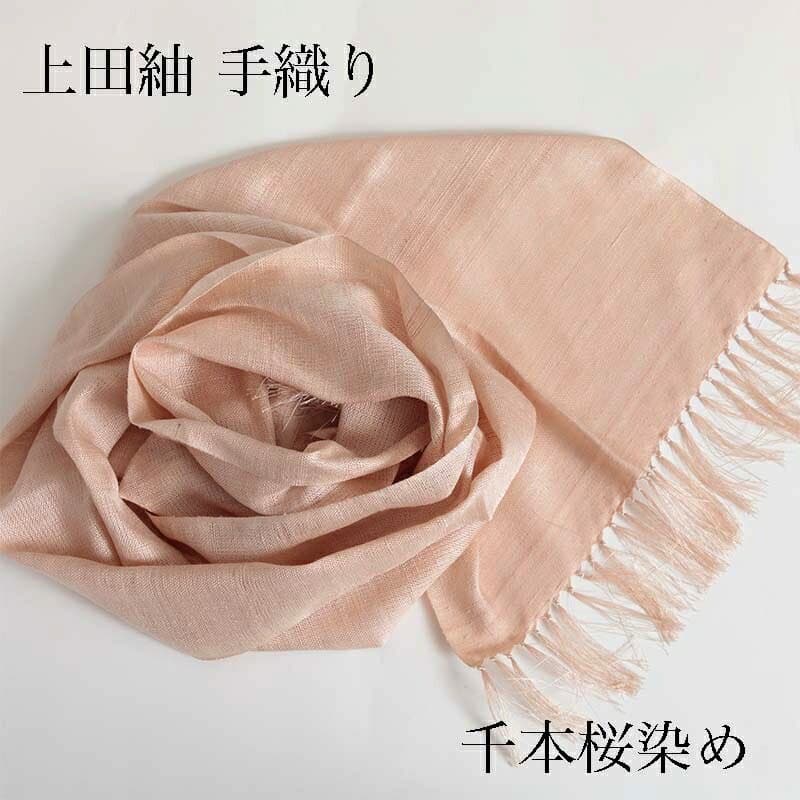
【上田紬 ストール 千本桜染め 小岩井紬工房】手織り 信州紬 紬 つむぎ tsumugi シルク 絹 上田城 さくら染め 桜染め 草木染め ショール マフラー スカーフ 送料無料
beige pink, approx. 33 x 164 cm趣味のきもの ゆたかや
First time buying on Rakuten? How residents in Japan order →
Ueda Tsumugi belongs to Ueda City in Nagano Prefecture, a place tied to sericulture, silkworm eggs, and cocoons. Along the old Hokkoku Kaido, Koiwai Tsumugi Studio continues work in dyeing, preparation, and weaving; the cloth is known for stripes or checks, a sturdy structure, and the soft unevenness of spun tsumugi yarn. At Isuikan in the Maruko area, the textile has appeared beside silk-industry interpretation, kimono dressing, and runway scenes, placing the fabric before people as something worn as well as woven.
The place name matters for Ueda Tsumugi. Ueda City’s background in sericulture, silkworm-egg production, and cocoon production is part of the textile’s setting, and Koiwai Tsumugi Studio describes its own family roots through silkworm eggs, sericulture, and later tsumugi weaving.
The studio works along the old Hokkoku Kaido in Shinshu Ueda. Its account says Ueda Tsumugi weaving has been passed down in Ueda for about four hundred years; in practical terms, that continuity appears in dyed yarn, preparation before weaving, handwoven stripes and checks, and the effort to keep the cloth strong enough for wear.
Ueda Tsumugi is a silk textile built from silk warp and tsumugi weft. Tsumugi yarn is spun from mawata, a silk-wadding material made with cocoons that cannot be reeled into smooth raw silk, so the yarn naturally carries uneven thickness.
That unevenness gives the cloth part of its hand. Compared with raw silk drawn directly from cocoons, tsumugi yarn leaves small slubs in the woven surface, creating a soft, warm feel; when the yarns cross in stripes and checks, the surface keeps a quiet irregularity instead of an industrial flatness.
At Koiwai Tsumugi Studio, the work is organized into three broad stages: dyeing, preparation, and weaving. One local dyeing practice uses apple bark from nearby farms to produce pale yellow yarn.
That apple-bark practice belongs specifically to Koiwai’s described work, not to every Ueda Tsumugi piece. Even with that boundary, it gives the textile a concrete local thread: bark from farms near the studio, color taken in the dyeing stage, and yarn later arranged into stripes or checks before the loom begins its work.
The stripes and checks of Ueda Tsumugi are not surface decoration added after weaving. In Koiwai’s preparation stage, the spacing of yarn, cloth width, length, and color arrangement are set before the yarn reaches the loom.
The weaving therefore carries an order already planned by hand. Warp, weft, width, length, and color density work together to form clean stripes or checks, while also protecting the sturdy character that Koiwai identifies as one of Ueda Tsumugi’s defining features.
One kimono bolt is about thirteen meters long. Koiwai Tsumugi Studio says weaving a bolt takes at least ten days and can sometimes take several months, because the weft must be beaten in densely and with steady pressure.
If the beat is too weak, the cloth loses strength; if it is too hard, the cloth can become stiff. Ueda Tsumugi’s durability rests in repeated hand movements that balance weight, density, and a supple feel against the body.
Ueda Tsumugi is carried by more than one workshop. The Ueda Tsumugi Textile Cooperative appears with makers and related participants such as Fujimoto, Oridokoro Marushige, Takazawa Orimono, Koiwai Tsumugi Studio, and Warakuza, with examples including handwoven kimono yardage, crepe stoles, and silk stoles.
Around 2013, the Kaikohime Project connected guidance from the Shinshu University Faculty of Textile Science and Technology farm, sericulture volunteers, and silk thread produced in Ueda. The continuity here is concrete: people raised silkworms, obtained thread, and the cooperative’s workshops used it for new kimono yardage and stole products.
Isuikan, in Ueda’s Maruko area, was built in 1918 and is tied to the modern silk industry. A Ueda City program there brought together an explanation of the building, a talk on Ueda Tsumugi, kimono dressing, and a kimono runway.
Koiwai Karina of Koiwai Tsumugi Studio spoke about Ueda Tsumugi in that setting; her work background includes dyeing, warping, and weaving. When the cloth is worn in the room, its stripes, sheen, and handwoven weight move through sleeves, waistlines, and steps instead of remaining only on a loom or folded bolt.
Ueda Tsumugi can be read through concrete things: Ueda City’s sericulture background, tsumugi weft spun from mawata, pale yellow yarn from apple bark at Koiwai, stripes and checks planned before weaving, and the hand pressure needed for a thirteen-meter bolt. Cooperative workshops, the Kaikohime Project, Ueda-grown silk thread, and wearing scenes at Isuikan show how the cloth continues to be made, worn, and seen in the city.
Compiled from public records and official sources; see the recognition links below. Details may change over time.
Where this product is officially registered, designated, or recognized in Japan.
Regional collective trademark
Registered as a Regional Collective Trademark with the Japan Patent Office.
Sources1
It is written as 上田紬 in Japanese. Search Rakuten and other Japanese sites with that spelling — the English name will not bring up the listings.
Ueda tsumugi is a silk textile from Ueda City in Nagano Prefecture, tied to the city’s sericulture, silkworm-egg, and cocoon background. It uses silk warp and spun tsumugi weft, often forming stripes or checks, with dense hand beating that supports durability and a soft feel.
Tsumugi yarn is spun from mawata and can create uneven thickness and small slubs. A roughly thirteen-meter Ueda tsumugi bolt takes at least ten days to weave and can sometimes take months. A cooperative project involved multiple workshops, Shinshu University farm guidance, sericulture volunteers, and Ueda-grown silk thread. Ueda City’s Isuikan program combines silk-industry interpretation, an Ueda tsumugi talk, kimono dressing, and runway scenes.
It is sold as kimono yardage and also appears as stoles and smaller textile products. Craft learning around dyeing, preparation, and weaving shows how yarn is dyed, arranged, and woven before the cloth is finished.
Naturally dyed textiles shed some colour on first wash. Hand-wash separately with a neutral detergent, avoid long soaking and bleach, and dry in the shade to prevent fading. Silk, ramie, and traditionally dyed pieces often need professional cleaning — the care label on the listing takes precedence.
Most options are shelf-stable, boxed, and travel well, so they suit gifting or bringing home. Confirm the final storage and delivery terms on the Rakuten listing.
On Rakuten: the shops listed here right now are キモノ 仙臺屋 本店, さわらび〜ほりだし堂〜, 趣味のきもの ゆたかや. We don't sell directly; purchase, payment, stock, and delivery are all handled on the Rakuten product page.