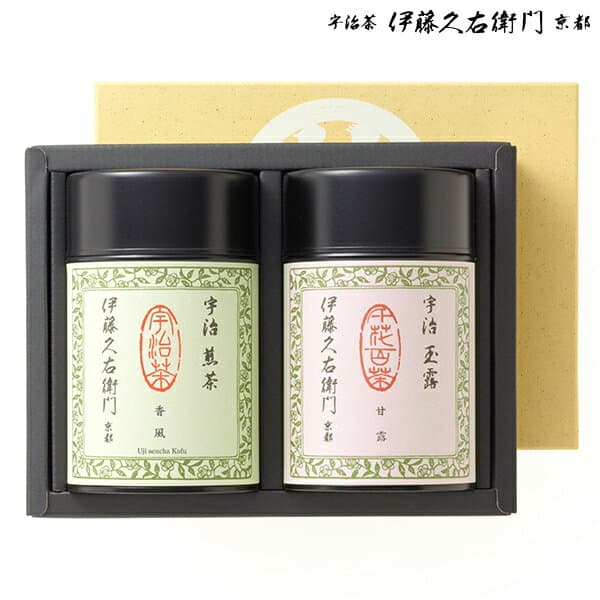
Itohkyuemon Uji Sencha & Uji Gyokuro Canned Tea Gift Set
送料無料 宇治茶 宇治煎茶 宇治玉露 茶葉 缶入りセット C-B § 緑茶お茶 高級 日本茶 専門店 お取り寄せ 京都 天保三年創業 老舗お茶屋 伊藤久右衛門 グリーンティー グリーンティ 茶 玉露 彼岸 ギフト お盆 お供え 粗供養 香典返し 御供 残暑見舞 帰省みやげ 帰省土産
抹茶スイーツ宇治茶 伊藤久右衛門
4.6 / 91 reviews
Japanese name宇治玉露
In southern Kyoto’s low basin, Uji’s temperature swings, soil, and rainfall support tea fields; covered cultivation, steaming, and kneading shape Uji gyokuro’s sweetness, umami, and aonori-like covered aroma.
Information last updated 167 days ago
Ordering from abroad works when the recipient has a Japanese address.
2 of the 3 listings below are sold as gifts in the shop's own wording (ギフト, のし対応 …), marked “Gift-ready”.
送料無料 宇治茶 宇治煎茶 宇治玉露 茶葉 缶入りセット C-B § 緑茶お茶 高級 日本茶 専門店 お取り寄せ 京都 天保三年創業 老舗お茶屋 伊藤久右衛門 グリーンティー グリーンティ 茶 玉露 彼岸 ギフト お盆 お供え 粗供養 香典返し 御供 残暑見舞 帰省みやげ 帰省土産
抹茶スイーツ宇治茶 伊藤久右衛門
4.6 / 91 reviews
玉露(70g袋) 煎茶と違う甘みのあるお茶です お手軽価格の京都の宇治玉露 老舗のおいしいお茶、緑茶(日本茶)です カテキン エピガロカテキンガレート
京都・山城 宇治茶通販の丸又園
4.8 / 54 reviews
金の宇治玉露 ありそうでなかった 京都 宇治玉露のティーバック40P(3gx10px4袋セット) 日本三大産地 京都 宇治玉露 宇治茶 贈答用 高級茶 紐付き 便利 贈答用 玉露 100% ティーバック 水出し
山城物産 楽天市場店
4.9 / 57 reviews
First time buying on Rakuten? How residents in Japan order →
Uji sits in southern Kyoto, in the low part of the Kyoto Basin. Marked temperature shifts, suitable soil, and moderate rainfall have supported tea growing there, and tea-making later spread across Kyoto Prefecture. Within Uji tea, gyokuro stands alongside Uji matcha and Uji sencha as a representative type. Its character begins before the cup: leaves are grown under cover, picked, steamed, and kneaded, then brewed slowly at low temperature so sweetness, umami, and a covered aroma compared with aonori can come forward.
Uji City lies in southern Kyoto, at the lowest part of the Kyoto Basin. Large temperature differences, soil suited to tea, and moderate rainfall helped the area produce quality tea over time; tea-making later spread through Kyoto Prefecture.
That setting gives Uji gyokuro its place, while the tea’s character comes through field and workshop practice. Uji matcha, Uji sencha, and Uji gyokuro are named as representative Uji tea types, and gyokuro’s cup depends on covered cultivation, careful picking, steaming, kneading, and finishing after the leaves leave the field.
Uji gyokuro is made from tea leaves grown under cover. Shading before harvest is tied to lower bitterness and deeper umami, and the tea’s sweetness and umami are connected with theanine in the leaf.
Covered cultivation is a concrete field practice. New shoots grow beneath cover before picking, then move into the practical sequence of steaming and kneading. The mellow taste associated with Uji gyokuro starts with this treatment of the leaf before harvest.
Tea production begins with new growth. Uji tea picking takes the newly sprouted parts once they reach a size suited to tea-making; hand-picking continues, and many producers also use powered shears. Work in the tea garden throughout the year supports that brief harvesting moment.
For gyokuro, covered leaves are picked, steamed, and kneaded into tea. Uji tea manufacturing has changed as fuel and power moved from charcoal to gas, oil, and electricity, and as manual work gave way in part to machinery; the core sequence still links the garden, steaming, kneading, and the final cup.
After producers make tea, tea merchants purchase it by judging quality and individual characteristics. Some transactions happen in tea markets, some directly between producers and merchants, and buying and selling among merchants is also active.
Finishing work then shapes much of the tea people drink. Tea merchants use appraisal skill to adjust taste and aroma according to the leaf’s character. For Uji gyokuro, covered leaves from the field and merchant finishing after production both matter to the sweetness, umami, and aroma that reach the cup.
The sensory path for Uji gyokuro is specific: mellow sweetness, umami, and a covered aroma likened to aonori. Those words point to things a drinker can notice in the cup, where sweetness and savory depth come forward more clearly than sharp bitterness.
Slow brewing at low temperature draws out gyokuro’s umami. This preparation gives the leaf time to release sweetness and savory depth, making the covered aroma and soft taste easier to follow than they would be in a quick, hotter pour.
The timeline for Uji tea reaches back to the late Kamakura period, and by the early Muromachi period Uji tea was enjoyed by imperial and shogunal households. The Uji method connected with sencha emerged in the mid-Edo period, and gyokuro appeared in the late Edo period. This keeps Uji tea’s longer continuity and gyokuro’s own later emergence in the same view.
Recent Kyoto dining gives Uji gyokuro another setting. Kyoto Prefecture and tea-sector groups began a project in fiscal 2017 to propose new ways of drinking Uji tea; one bottled Uji gyokuro drink took three years to develop and entered full rollout in September 2020. The aim was practical and culinary: make Uji tea easier to serve to visitors in Kyoto and create a non-alcoholic drink suited to Japanese cuisine.
Uji gyokuro can be read through a chain of concrete details: southern Kyoto’s basin conditions, covered new shoots, steaming and kneading, tea merchant finishing, and a low-temperature cup where sweetness, umami, and aonori-like covered aroma come forward. It belongs to the longer development of Uji tea, while gyokuro itself has its own late-Edo emergence and a present-day place at Kyoto dining tables.
Compiled from public records and official sources; see the recognition links below. Details may change over time.
Where this product is officially registered, designated, or recognized in Japan.
Regional collective trademark
Registered as a Regional Collective Trademark with the Japan Patent Office.
Sources1
It is written as 宇治玉露 in Japanese. Search Rakuten and other Japanese sites with that spelling — the English name will not bring up the listings.
Uji gyokuro is a gyokuro type within Uji tea, tied to tea fields around Uji in southern Kyoto. Uji City lies in the low Kyoto Basin, where temperature shifts, suitable soil, and moderate rainfall supported tea growing. It is made from covered-cultivation leaves that are picked, steamed, and kneaded; shading reduces bitterness and deepens umami, and the tea is described with mellow sweetness and an aonori-like covered aroma.
Uji gyokuro is named alongside Uji matcha and Uji sencha as a representative type of Uji tea. Uji gyokuro appears among Kyoto agricultural and food regional collective trademark names listed by the Kinki Regional Agricultural Administration Office. Uji tea cultivation is placed in the late Kamakura period, and gyokuro appeared in the late Edo period. Kyoto Prefecture and tea groups began a Uji tea new-development project in fiscal 2017; one bottled Uji gyokuro drink took three years to develop and entered full rollout in September 2020.
Slow brewing at low temperature lets gyokuro's sweetness and umami dissolve. Sealed refrigerated storage helps preserve flavor and quality, because tea quality drops with heat, sunlight, moisture absorption, and high humidity. A bottled Uji gyokuro drink was developed in response to Kyoto Japanese-cuisine chefs who needed a soft drink suited to Japanese cooking and easy service.
Water temperature varies a lot by type of Japanese tea: roughly 50–60°C for gyokuro, 70–80°C for sencha, and near-boiling 90–100°C for hojicha (including roasted stem tea), bancha, and genmaicha, steeped for about 30 seconds to a minute. A common ratio is about 3g of leaf per 150ml of water. Follow the instructions on the packaging where they differ.
Tea leaves are damaged by light, humidity, and absorbed odours. Once opened, keep them sealed and away from light at room temperature and drink them within a few weeks. If you refrigerate them, let the container return to room temperature before opening so condensation doesn't get in.
Most options are shelf-stable, boxed, and travel well, so they suit gifting or bringing home. Confirm the final storage and delivery terms on the Rakuten listing.
On Rakuten: the shops listed here right now are 抹茶スイーツ宇治茶 伊藤久右衛門, 京都・山城 宇治茶通販の丸又園, 山城物産 楽天市場店. We don't sell directly; purchase, payment, stock, and delivery are all handled on the Rakuten product page.