 3 images
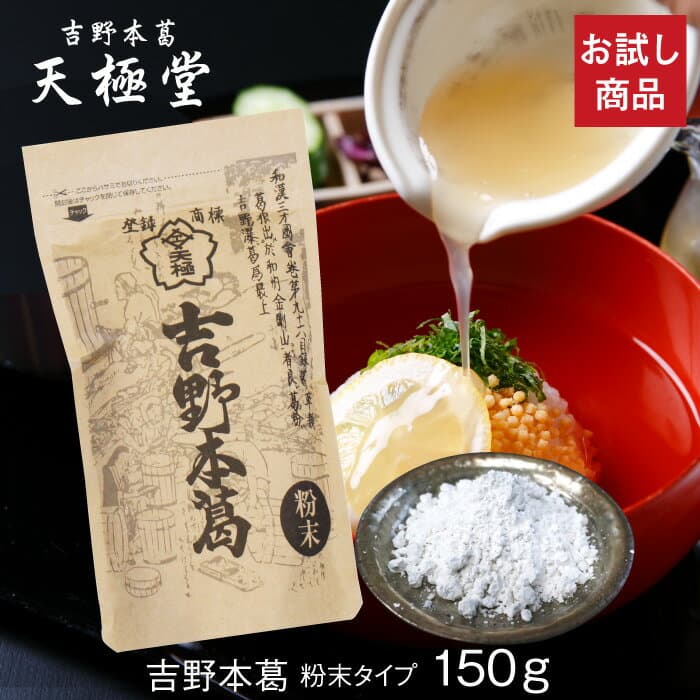
Tengyokudo Yoshino Honkuzu Trial Set
ポスト 投函 送料 無料 吉野本葛 お試しセット A|吉野本葛 粉末 150g|吉野葛 吉野本葛 本葛 葛粉 くず お試し おためし 和菓子 葛湯 くず湯 洋菓子 葛打ち 簡易パッケージ 奈良 天極堂
A, 150g powder (1 bag)吉野本葛 天極堂 楽天市場店
4.6 / 174 reviews
Japanese name吉野本葛
Yoshino honkuzu begins with kudzu roots and winter work around Yoshino and Uda, where repeated washing, settling, and drying turn a heavy root into a small amount of smooth, translucent starch.
Information last updated 121 days ago
3 imagesポスト 投函 送料 無料 吉野本葛 お試しセット A|吉野本葛 粉末 150g|吉野葛 吉野本葛 本葛 葛粉 くず お試し おためし 和菓子 葛湯 くず湯 洋菓子 葛打ち 簡易パッケージ 奈良 天極堂
A, 150g powder (1 bag)吉野本葛 天極堂 楽天市場店
4.6 / 174 reviews
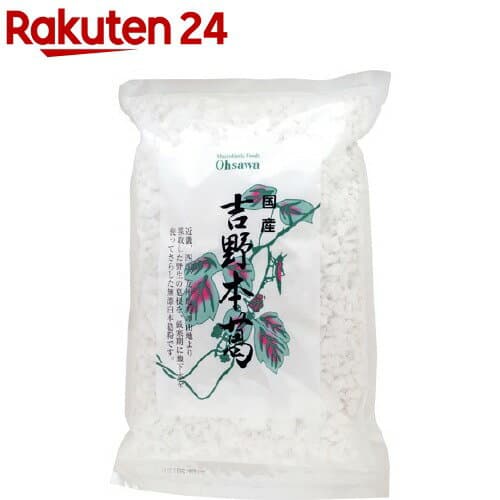
オーサワ 国産吉野本葛(1kg)【オーサワ】[ヴィーガン 葛 とろみづけ 葛餅 ヘルシー]
1 kg楽天24
4.7 / 73 reviews
 2 images
【国産】吉野本葛 50g(本葛100%最高級品)(1、3、6パック)本葛 葛 抹茶葛練り 前原製粉 吉野葛 葛粉 くず 和菓子 葛湯 くず湯 洋菓子 葛打ち
50gお餅と和粉のお店 義士楽天市場店
5.0 / 18 reviews
First time buying on Rakuten? How residents in Japan order →
In Nara Prefecture, Yoshino honkuzu is kudzu starch powder made in the Yoshino region. Its strict boundary is material: the starch is taken entirely from kudzu root. The quiet white powder carries winter work with it: roots dug in autumn and winter, crushed, washed in cold water, settled, separated, and dried. In kuzumochi, kuzuyu, goma-dofu, sweets, and thickened dishes, cooks value its smooth texture, translucence, and gloss.
Yoshino honkuzu belongs to a narrow kind of kuzuko. The material is starch from the root of kudzu, a perennial leguminous vine, and the stricter name points to 100 percent kudzu-root starch made in the Yoshino region of Nara.
That boundary matters because ordinary kuzuko may include sweet-potato, potato, or corn starch. Yoshino honkuzu keeps the ingredient centered on kudzu root, which is why the same powder can give kuzumochi and kuzuyu a fine, smooth body.
Uda sits next to the Yoshino area at higher elevation, with mountain water and a cool climate suited to washing and settling starch. The cold is practical: it helps keep impurities from developing while water is replaced again and again.
Refinement and processing continue around Uda, Gose, Yoshino, and Oyodo. Kudzu roots grown in Nara are now scarce, so roots may come from Kyushu or overseas before the starch is finished through Nara's water-based work.
After autumn and winter digging, kudzu roots are crushed, washed with water, filtered, and left so the starch sinks. The water is poured off, fresh water is added, and the cycle of stirring, settling, separating, and drying continues.
Yoshino-zarashi, also called kanzarashi, depends on cold water, repeated settling, and time. Some batches can take about a month; other work may stretch toward two or three months before the starch becomes a white, fine powder.
The yield is small: finished powder usually amounts to only about 6 to 10 percent of the root's weight. At that scale, 1 kilogram of kudzu root may leave roughly 100 grams of white powder.
The work begins before water touches the crushed root. People known as horiko or yamakata searched the mountains for usable kudzu roots, and the number of people carrying that digging skill has declined.
When heated with water, Yoshino honkuzu gives a clear, viscous body. In kuzumochi and kuzukiri, that body appears as smoothness, translucence, and gloss; in kuzuyu, the same starch turns hot water into a clear thickened drink.
The powder also appears in goma-dofu, yokan, kuzumanju, sauces, soups, and other thickened dishes. Because its thickness can hold after cooling, some preparations are difficult to replace fully with another starch.
Yoshino honkuzu brings together people who search for roots and makers who watch water, sediment, and drying. A four-company makers' group is connected with the name boundary around Yoshino and nearby processing areas, but the concrete clues are simpler: 100 percent kudzu-root starch, Nara refinement, and repeated cold-water finishing.
That continuity now has a raw-material tension inside it. Nara-grown roots have become limited, while the washing, settling, and drying work remains centered in the Yoshino and Uda orbit.
To understand Yoshino honkuzu, follow the white powder backward from a piece of kuzumochi or a bowl of kuzuyu. It leads to kudzu root, cold water, repeated settling, and the small yield left after a heavy root is washed and dried. The texture on the tongue is tied to those places and actions: Yoshino, Uda, winter roots, and patient water work.
Compiled from public records and official sources; see the recognition links below. Details may change over time.
Where this product is officially registered, designated, or recognized in Japan.
Regional collective trademark
Registered as a Regional Collective Trademark with the Japan Patent Office.
Sources1
It is written as 吉野本葛 in Japanese. Search Rakuten and other Japanese sites with that spelling — the English name will not bring up the listings.
Yoshino hon-kuzu starch is kudzu starch powder made in Nara's Yoshino region, with the stricter name tied to 100 percent starch from kudzu root. Roots are dug in autumn and winter, crushed, washed in cold water, settled, separated, and dried through Yoshino-zarashi or kanzarashi. Uda's cool climate and water support the work. The powder appears in kuzumochi, kuzukiri, kuzuyu, goma-dofu, sweets, and thickened dishes, where it gives smoothness, translucence, and gloss.
The stricter material boundary for Yoshino honkuzu is 100 percent kudzu-root starch. Ordinary kuzuko may include sweet-potato, potato, or corn starch, unlike the strict Yoshino honkuzu boundary. Finished powder is only about 6 to 10 percent of root weight; another scale gives about 100 grams from 1 kilogram of root. Nara-grown kudzu roots have become scarce, while refinement and processing continue around Uda, Gose, Yoshino, and Oyodo.
It is used in kuzumochi, kuzukiri, kuzuyu, goma-dofu, yokan, kuzumanju, sauces, soups, and other thickened dishes. Kudzu starch thickens when heated with water, producing a clear, viscous drink such as kuzuyu. It keeps its thickness after cooling, making it difficult to replace with other starches for some dishes.
Storage varies by product — shelf-stable, refrigerated, or frozen — and is stated on the packaging and the Rakuten listing. Shelf-stable processed foods usually need refrigerating once opened and eating within a few days; chilled and frozen items go straight into storage on arrival. Treat the best-before date on the physical packaging as authoritative.
Most options are shelf-stable, boxed, and travel well, so they suit gifting or bringing home. Confirm the final storage and delivery terms on the Rakuten listing.
On Rakuten: the shops listed here right now are 吉野本葛 天極堂 楽天市場店, 楽天24, お餅と和粉のお店 義士楽天市場店. We don't sell directly; purchase, payment, stock, and delivery are all handled on the Rakuten product page.