 3 images
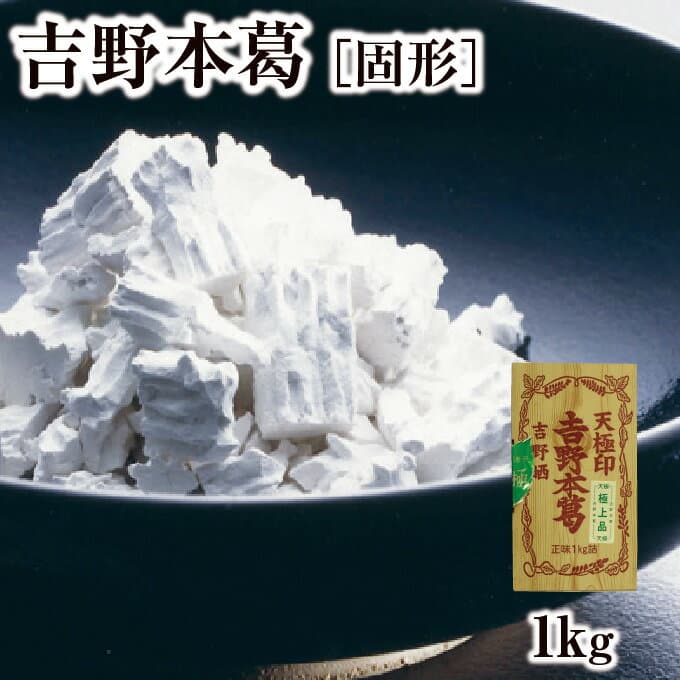
Tengyoku Mark Yoshino Honkuzu Kudzu Starch
本葛粉 天極印 吉野本葛 1kg 固形|くず粉 本くず粉 吉野本くず 吉野葛 吉野くず 料理素材 澱粉 食品 粉類 手作り 奈良 天極堂NHK『ならナビ』で紹介いただきました
1kg solid吉野本葛 天極堂 楽天市場店
4.8 / 21 reviews
Japanese name吉野葛
In Nara, winter-dug kudzu roots are crushed, washed, settled, dried, and refined with repeated cold-water changes into the white starch used for kuzumochi, kuzukiri, kuzu-yu, sesame tofu, and thickened dishes.
Information last updated 120 days ago
3 images本葛粉 天極印 吉野本葛 1kg 固形|くず粉 本くず粉 吉野本くず 吉野葛 吉野くず 料理素材 澱粉 食品 粉類 手作り 奈良 天極堂NHK『ならナビ』で紹介いただきました
1kg solid吉野本葛 天極堂 楽天市場店
4.8 / 21 reviews
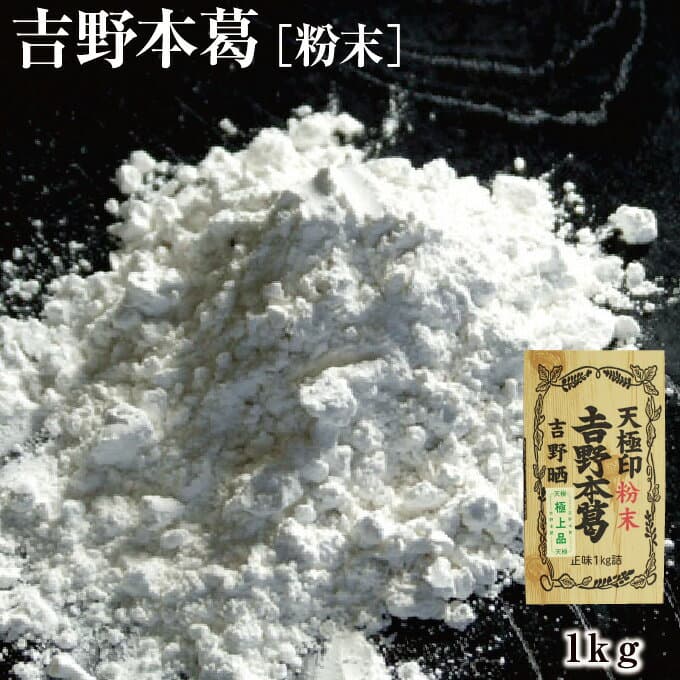 3 images
本葛粉 天極印 吉野本葛(粉末)1kg|くず粉 本くず粉 吉野本くず 吉野葛 吉野くず 料理素材 澱粉 食品 粉類 手作り 奈良 天極堂|NHK『ならナビ』で紹介いただきました
1 kg吉野本葛 天極堂 楽天市場店
4.6 / 20 reviews
 2 images
【国産】吉野本葛 50g(本葛100%最高級品)(1、3、6パック)本葛 葛 抹茶葛練り 前原製粉 吉野葛 葛粉 くず 和菓子 葛湯 くず湯 洋菓子 葛打ち
50gお餅と和粉のお店 義士楽天市場店
5.0 / 18 reviews
First time buying on Rakuten? How residents in Japan order →
Yoshino kuzu begins with a root under Nara soil. In winter, kudzu stores starch in its roots; skilled diggers look for suitable roots, and makers crush, wash, settle, dry, and refine that starch through repeated cold-water washing known as Yoshino-zarashi. The finished white powder carries a practical map of Yoshino, Uda, and Gose, and it appears in foods as different as kuzumochi, kuzukiri, kuzu-yu, sesame tofu, and glossy thickened sauces.
The name Yoshino kuzu points first to Nara's Yoshino region. Yoshino honkuzu is defined around kudzu-root starch made in the Yoshino area, or at least refined in Yoshino and its surrounding region. The living production map also reaches Uda and Gose, where the technique is still passed on; Uda matters because cold climate and suitable water help the repeated washing and settling that shape the starch. Yoshino gives the name and boundary, while Uda and Gose keep the winter-water work visible in the present.
The material boundary is narrow for Yoshino honkuzu: it uses starch taken from kudzu roots, with 100% kudzu starch marking the honkuzu line. Broader Yoshino kuzu uses kudzu starch as its main raw material but may contain other starches, which is why similar names can behave differently in sweets and cooking. Pure white honkuzu gives prepared foods a smooth mouthfeel, clear translucence, and a gentle gloss tied to both the root material and the refining process.
Kudzu is a perennial vine in the legume family, and winter is important because the plant stores starch in its roots. Suitable wild roots have traditionally been dug by skilled workers known as horiko, then carried into the first stages of crushing and washing. The yield is small: one account gives about 100 grams of white starch from one kilogram of root, while another places the yield at about 6% to 10%. Those figures make the labor behind a cup of kuzu-yu or a piece of kuzumochi easier to grasp: much root, cold work, and very little finished white starch.
After the roots are crushed, makers wash them, filter out the starch, let it settle, and dry it into rough kuzu. Yoshino-zarashi, also called kanzarashi, then repeats the slow sequence of dissolving the rough kuzu in cold water, stirring, waiting for sediment to settle, changing the water, and doing it again until impurities are removed. The winter refining can take about a month. Cold water and patient settling protect the starch granules, leading to the white color, smooth texture, and gloss valued in finished dishes.
Yoshino kuzu becomes visible in wagashi such as kuzumochi, kuzukiri, kuzu manju, and parts of yokan, and it also appears in kuzu-yu, sesame tofu, and cooking thickeners. With water and heat, the white starch turns translucent, smooth, and glossy; in kuzukiri it forms clear, elastic strips, while in sesame tofu it helps hold the richness of ground sesame. These uses keep the ingredient close to daily taste: a warm drink, a chilled sweet, a savory dish, and a sauce with quiet shine.
The older place thread often begins with Kuzu in present-day Yoshino Town, although the name has multiple explanations and should be read carefully. Wooden tablets excavated from Fujiwara-kyo include references to kudzu root, and early uses sit near medicinal and food contexts. Later, kudzu powder became clearer as a material for sweets and cooking from the Kamakura to Muromachi periods onward. In 2026, the manufacturing technique received a national intangible folk cultural property recommendation; for readers, the important point is the concrete practice behind that notice: winter roots, rough kuzu, cold-water refining, and hand-guided settling have continued in Nara since the seventeenth century.
Yoshino kuzu is best understood through motion: a root dug in winter, starch washed from crushed fibers, rough kuzu dried, cold water changed again and again, and a white powder brought into sweets, warm drinks, sesame tofu, and thickened dishes. Its character comes from Nara places and practical work. The smoothness in a spoonful of kuzu-yu and the gloss in kuzukiri both lead back to Yoshino, Uda, Gose, cold water, and the patient handling of a difficult root.
Compiled from public records and official sources; see the recognition links below. Details may change over time.
Where this product is officially registered, designated, or recognized in Japan.
Regional collective trademark
Registered as a Regional Collective Trademark with the Japan Patent Office.
Sources1
It is written as 吉野葛 in Japanese. Search Rakuten and other Japanese sites with that spelling — the English name will not bring up the listings.
Yoshino kuzu is kudzu-root starch tied to Nara's Yoshino region, with current production and transmission also connected to Uda, Gose, and nearby areas. Yoshino honkuzu is made from kudzu-root starch, and 100% kudzu starch marks the honkuzu boundary. Winter roots are crushed, washed, filtered, settled, and dried into rough kuzu, then repeatedly refined in cold water through Yoshino-zarashi. Traits include smoothness, translucence, whiteness, and gloss.
Yield is small: about 100 grams of white starch from one kilogram of root, or about 6% to 10% in another account. Broader Yoshino kuzu uses kudzu starch as its main raw material and may include other starches. Yoshino-zarashi repeats cold-water dissolving, stirring, settling, and water changes to remove impurities and finish the white starch. Kudzu stores starch in its roots in winter, and suitable roots have traditionally been dug by skilled horiko workers.
It is mainly used in wagashi such as kuzumochi, kuzukiri, kuzu manju, and part of sweets such as yokan, as well as in kuzu-yu, sesame tofu, and cooking thickeners. More than 60% of business use is estimated to go to confectionery materials, and roughly 40% is thought to go to other foods such as sesame tofu and cooking. Dishes using kudzu in Kyoto cuisine are called Yoshino-jitate.
Storage varies by product — shelf-stable, refrigerated, or frozen — and is stated on the packaging and the Rakuten listing. Shelf-stable processed foods usually need refrigerating once opened and eating within a few days; chilled and frozen items go straight into storage on arrival. Treat the best-before date on the physical packaging as authoritative.
Most options are shelf-stable, boxed, and travel well, so they suit gifting or bringing home. Confirm the final storage and delivery terms on the Rakuten listing.
On Rakuten: the shops listed here right now are 吉野本葛 天極堂 楽天市場店, お餅と和粉のお店 義士楽天市場店. We don't sell directly; purchase, payment, stock, and delivery are all handled on the Rakuten product page.