 3 images
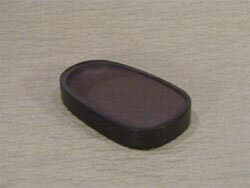
Akama Egg-Shaped Inkstone
【赤間硯 (卵様硯)】
egg-shapedアクアサービス株式会社
Japanese name赤間硯
Akama suzuri takes shape around Ube and Shimonoseki, where dense red shale is quarried, flattened, carved into land and sea, polished, and finished for smooth, well-colored ink.
Information last updated 120 days ago
3 images【赤間硯 (卵様硯)】
egg-shapedアクアサービス株式会社
First time buying on Rakuten? How residents in Japan order →
In Yamaguchi, Akama suzuri begins with a place name and a stone. The inkstones are made around Ube and Shimonoseki, and the name reaches back to Akama-seki, an older name for Shimonoseki. Their material is Akama stone, a reddish shale rich in quartz and iron, with a dense surface suited to grinding solid ink into a fine, well-colored liquid for brush writing.
Akama suzuri carries the sound of Akama-seki, the old Shimonoseki name, while today’s production belongs to the Ube and Shimonoseki area. Older accounts connect the craft with a late-twelfth-century dedication at Tsurugaoka Hachimangu in Kamakura, and the name Akama suzuri was already used in the early Edo period. After the eighteenth century, quarrying centered more on Ube, where the northern Mankura-Iwataki area now gives the maker community a concrete center through the Yamaguchi Akama Suzuri Production Cooperative: named makers, stone hills, quarry work, and inkstone finishing held in one regional frame.
Akama stone is reddish shale, and Ube’s description notes its quartz and iron content. The stone is dense and hard, yet workable enough for carving; it may show round stone-eye patterns and varied tones across the surface. Those details matter before decoration begins, because the material must become both a shaped object and a working plane for grinding ink. The stone’s density, tenacity, color, and pattern give the maker a material that can be cut, flattened, carved, polished, and then used repeatedly with solid ink and water.
Akama stone is taken from quarry tunnels cut into the mountain. Because the raw stone is weak against drying, the tunnels are usually kept filled with water; before quarrying, the water is pumped out and the maker enters a passage low enough to require a crouched body. At roughly five to forty meters in, the Akama stone layer appears. Stone is removed with tools such as explosives or a pick hammer, then lightly tapped with a metal hammer so the sound can help decide whether the piece can become an inkstone. The future writing tool begins with water management, depth, stone layers, and trained listening.
Once a usable stone is selected, the maker roughs out the form with tools such as a diamond cutter, small chisels, and a hammer. In the jigiri step, water and silica sand work as the abrasive while the front and back are brought close to an even plane. During fuchitate, the maker raises the border and separates the land, where ink is ground, from the sea, where ink collects. Further carving, polishing, surface preparation, and thin lacquer or cashew finishing follow; regional descriptions emphasize that more than ten steps may run from quarrying to finished inkstone, often through the hands of one craftsperson.
The working character of Akama suzuri is found in the fine, slightly jagged grinding surface of Akama stone. As solid ink moves over the land with water, the stone can make the particles fine and bring out smooth, well-colored ink; the sea then holds the liquid for the brush. Stone-eye patterns, carved edges, and red-purple tones remain visible around that use, but the central experience is practical: a dense stone surface, a stick of ink, water, and a brush meeting through repeated movement.
In the era when writing relied on brush and ink, inkstones were necessary stationery, and production flourished around Akama in Shimonoseki and Asa in present-day Sanyo-Onoda during the Edo period. Modern daily life sharply reduced the number of inkstone makers. Nobuo Horio in Shimonoseki is described as a successor to Horio Takuji’s technique and as a maker involved in training successors, while the cooperative in Ube’s Mankura-Iwataki area keeps a named maker community visible. In 1976, Akama suzuri was selected nationally as a traditional craft; here, that phrase points to specific work in Ube and Shimonoseki: quarrying Akama stone, shaping land and sea, polishing the grinding surface, and passing on the hand skills.
Akama suzuri holds its continuity in a sequence of concrete acts: water pumped from Ube quarry tunnels, reddish shale chosen by sound, stone flattened with water and silica sand, borders carved between land and sea, and solid ink opened into color on the surface. The old Shimonoseki name remains in Akama, while the quarrying and maker work around Ube give the inkstone its present weight in hand.
Compiled from public records and official sources; see the recognition links below. Details may change over time.
Where this product is officially registered, designated, or recognized in Japan.
It is written as 赤間硯 in Japanese. Search Rakuten and other Japanese sites with that spelling — the English name will not bring up the listings.
Akama suzuri is an inkstone family made around Ube and Shimonoseki in Yamaguchi, with a name tied to Akama-seki, an older name for Shimonoseki. It uses Akama stone, a reddish shale rich in quartz and iron; its dense surface grinds solid ink into fine, well-colored, smooth liquid ink. The work begins in water-managed quarry tunnels, continues through selection by sound, rough shaping, jigiri flattening, carving the land and sea, polishing, and finishing, while a smaller maker community carries the practice after daily brush-and-ink use declined.
Quarry tunnels for Akama stone are normally kept filled with water, then pumped out before makers enter roughly five to forty meters deep to find suitable stone layers. After carving, Akama suzuri finishing includes a thin coat of lacquer or a cashew lacquer substitute. During the Edo period, many inkstone makers worked around Akama and Asa, and their numbers declined after modern daily life moved away from brush-and-ink use. Most members of the Yamaguchi Akama Suzuri Production Cooperative are based in Ube's northern Mankura-Iwataki area, and Nobuo Horio is described as a successor who trains other makers.
Akama suzuri is used to grind solid ink for brush-and-ink writing, producing fine, well-colored, smooth liquid ink. It has long served as a writing tool in calligraphy and stationery use, including documented use by historical figures. Beyond its writing function, it is also appreciated as a crafted stone object for its color, stone-eye patterns, and carved finish.
Keep wood, bamboo, and lacquer out of prolonged soaking, dishwashers, and direct sun — wipe dry after use and let them air out in the shade. For metal and fabric goods, follow the care notes on the listing.
Most options are shelf-stable, boxed, and travel well, so they suit gifting or bringing home. Confirm the final storage and delivery terms on the Rakuten listing.
On Rakuten: the shops listed here right now are アクアサービス株式会社. We don't sell directly; purchase, payment, stock, and delivery are all handled on the Rakuten product page.