 3 images
Kikuchi Foods Aso Takana Pickles
【送料無料】九州熊本の逸品 阿蘇高菜漬け 厳選手折り 姿 250g×2 伝統の製法にこだわり続ける阿蘇の老舗たかな菊池食品 阿蘇たかな漬け・熊本・お土産・ご当地 ご飯のお供
whole, 2-pack熊本得販の森 楽天市場店
4.5 / 20 reviews
Japanese name阿蘇たかな漬
In Kumamoto’s Aso uplands, winter cold, well-drained volcanic-ash soil, spring takana-ori, salt, and red chili turn hand-snapped greens into crisp new pickles and deeper aged ones.
Information last updated 119 days ago
3 images【送料無料】九州熊本の逸品 阿蘇高菜漬け 厳選手折り 姿 250g×2 伝統の製法にこだわり続ける阿蘇の老舗たかな菊池食品 阿蘇たかな漬け・熊本・お土産・ご当地 ご飯のお供
whole, 2-pack熊本得販の森 楽天市場店
4.5 / 20 reviews
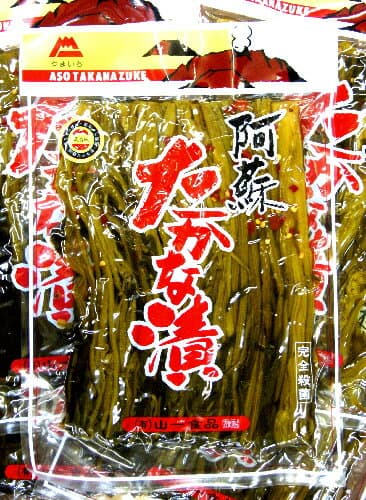
阿蘇高菜漬け 山一食品 3個までメール便可!(【阿蘇たかな漬】あそ高菜漬 aso takana
200gお茶の山麓園
4.4 / 12 reviews
 3 images
九州熊本の逸品 阿蘇高菜漬け 姿 250g 伝統の製法にこだわり続ける阿蘇の老舗たかな菊池食品 阿蘇たかな漬け・熊本・お土産・ご当地・ご飯のお供
whole leaf, 250g熊本得販の森 楽天市場店
4.4 / 10 reviews
First time buying on Rakuten? How residents in Japan order →
Aso takana-zuke begins in the fields of Aso City and Aso District in Kumamoto. Takana is sown in autumn, grows through the cold highland winter, and is harvested from March to April when the stems rise. The edible stems are snapped by hand in a local harvest known as takana-ori, then quickly salted with red chili because the young shoots change fast after harvest. After a few days, new pickles carry green aroma, heat, and crunch; aged pickles ferment longer, gaining acidity and a deeper savory taste.
Aso takana-zuke refers to pickles made in Aso City and Aso District from takana grown in that same area. Its base is plain: takana, salt, and chili. The local character comes through concrete work in Aso fields, the spring harvest window, and the way stems are salted and aged. That place-and-process boundary is the clearest way to distinguish Aso takana-zuke from generic takana pickles.
Aso takana grows in a highland setting described as more than 500 meters above sea level, with cold conditions and well-drained volcanic-ash soil. The crop is sown in autumn, endures winter, and reaches harvest in March and April. Local character here means winter growth in a cold caldera landscape, spring stems rising in the fields, and soil that drains beneath the plants before pickling work begins.
The spring harvest centers on snapping the stems by hand. When the takana stems thicken and rise, harvesters break off the edible section one by one, a practice called takana-ori. Local reporting places hand-breaking work from late March into mid-April, with a late-March peak. Soon after harvest, the greens move toward salting, because the young stems and leaves lose freshness quickly.
Freshly harvested takana is rubbed with salt, layered with red chili, placed in a pickling container or barrel, and pressed under a drop lid and weight. As liquid rises, the stems shift from spring greens into pickles that can keep across meals. The same materials lead to two paths: a short pickle with fresh bite, and a longer-aged pickle shaped by more salt and fermentation time.
New pickles can be eaten after only a short time, carrying green aroma, peppery heat, and a crisp bite. Aged pickles use more salt and longer lactic fermentation, which brings acidity and a concentrated savory taste. Both forms start with Aso takana, salt, and chili, but time changes the role of the vegetable: spring eating favors the fresh crunch, while cooked dishes often draw on the depth of aged pickles.
Aged pickles often become takana-meshi, made by chopping the pickle, stir-frying it, and mixing it into rice. In Kumamoto, takana-meshi also appears in school lunches, so Aso’s pickle reaches ordinary meal memory as well as regional food events. The pickle can also be used in rice balls, fried rice, dumpling filling, bread, and pasta, where its salt, heat, acidity, and aroma season the dish.
The Aso Takana-zuke Cooperative brings together seven long-established takana-pickle shops, giving the food a visible maker community around Aso. In Uchinomaki, the Aso Takana Festival is held in late March with harvest and pickling experiences. On March 15, 2026, the seven-company cooperative offered the season’s new pickles at Aso Shrine. These scenes connect fields, barrels, shopfronts, and local gatherings around the spring crop.
Aso takana-zuke is defined by a tight chain of concrete work: takana grown in Aso City and Aso District, cold upland fields with volcanic-ash soil, stems snapped by hand in spring, and quick salting with red chili. New pickles preserve green aroma and crunch, while aged pickles bring lactic acidity and savory depth to takana-meshi. Its continuity lives in harvest timing, pickling barrels, the seven-shop cooperative, and everyday rice bowls.
Compiled from public records and official sources; see the recognition links below. Details may change over time.
Where this product is officially registered, designated, or recognized in Japan.
Regional collective trademark
Registered as a Regional Collective Trademark with the Japan Patent Office.
Sources1
It is written as 阿蘇たかな漬 in Japanese. Search Rakuten and other Japanese sites with that spelling — the English name will not bring up the listings.
Aso takana pickles (Aso takana-zuke) are pickles made in Kumamoto’s Aso City and Aso District from takana grown there. The crop overwinters in cold highlands over 500 meters with well-drained volcanic-ash soil and is harvested by hand from March to April in a practice called takana-ori. The greens are salted quickly with red chili. New pickles are green, spicy, and crisp; aged pickles develop lactic acidity and savory depth.
The core ingredients are takana, salt, and chili. Aso takana is sown in autumn, grows through winter, and is harvested in March and April. During takana-ori, harvesters snap the edible stem sections by hand. After harvest, takana is quickly salted with red chili and pressed under a lid and weight in a pickling container or barrel.
New pickles are eaten after a short pickling time and keep a green aroma, heat, and crunch. Aged pickles can be eaten as pickles, lightly rinsed, oil-fried, or used in takana-meshi and other cooked foods. Takana-meshi is made by chopping and stir-frying takana pickle, then mixing it with rice; it is served in school lunches across Kumamoto.
Storage varies by product — shelf-stable, refrigerated, or frozen — and is stated on the packaging and the Rakuten listing. Shelf-stable processed foods usually need refrigerating once opened and eating within a few days; chilled and frozen items go straight into storage on arrival. Treat the best-before date on the physical packaging as authoritative.
Most options are shelf-stable, boxed, and travel well, so they suit gifting or bringing home. Confirm the final storage and delivery terms on the Rakuten listing.
On Rakuten: the shops listed here right now are 熊本得販の森 楽天市場店, お茶の山麓園. We don't sell directly; purchase, payment, stock, and delivery are all handled on the Rakuten product page.