 3 images
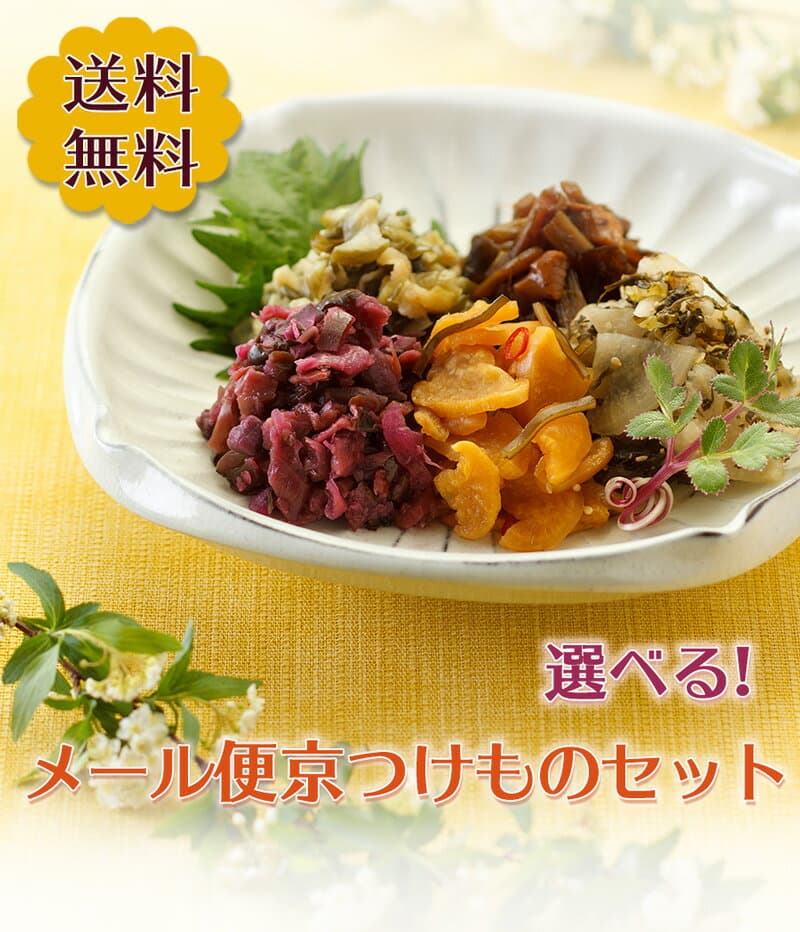
Doi Shibazuke Honpo Kyoto Pickles Assortment
送料無料 選べる4点セット NP5 メール便 10種から 詰め合わせ お試し すぐき しば漬け 柴漬け / 漬物 京漬物 ギフト 贈答 お返し ご飯のお供 京土産 お取り寄せ 京都 創業125年 老舗 母の日 健康 ヘルシー メッセージカード
choose 4 from 10 varieties土井志ば漬本舗 楽天市場店
4.7 / 339 reviews
Japanese name京つけもの
In Kyoto City and the Yamashiro area, a small dish of pickled vegetables carries Shogoin turnip, suguki greens, eggplant, red shiso, groundwater, and winter pickling to the table.
Information last updated 7 days ago
3 images送料無料 選べる4点セット NP5 メール便 10種から 詰め合わせ お試し すぐき しば漬け 柴漬け / 漬物 京漬物 ギフト 贈答 お返し ご飯のお供 京土産 お取り寄せ 京都 創業125年 老舗 母の日 健康 ヘルシー メッセージカード
choose 4 from 10 varieties土井志ば漬本舗 楽天市場店
4.7 / 339 reviews
 3 images
【全品ポイント10倍】京つけもの大安 ちいさなだいやす 15点詰合せ 直SYG-B 送料無料 敬老の日 京都 大安 漬物 つけもの 漬け物 ご飯のお供 お土産 国産 味すぐき ギフト 贈り物 老舗 京漬物 セット 詰め合わせ 内祝い お祝い お返し 人気 三大漬物
15-piece assortment京つけもの大安
4.7 / 75 reviews
 3 images
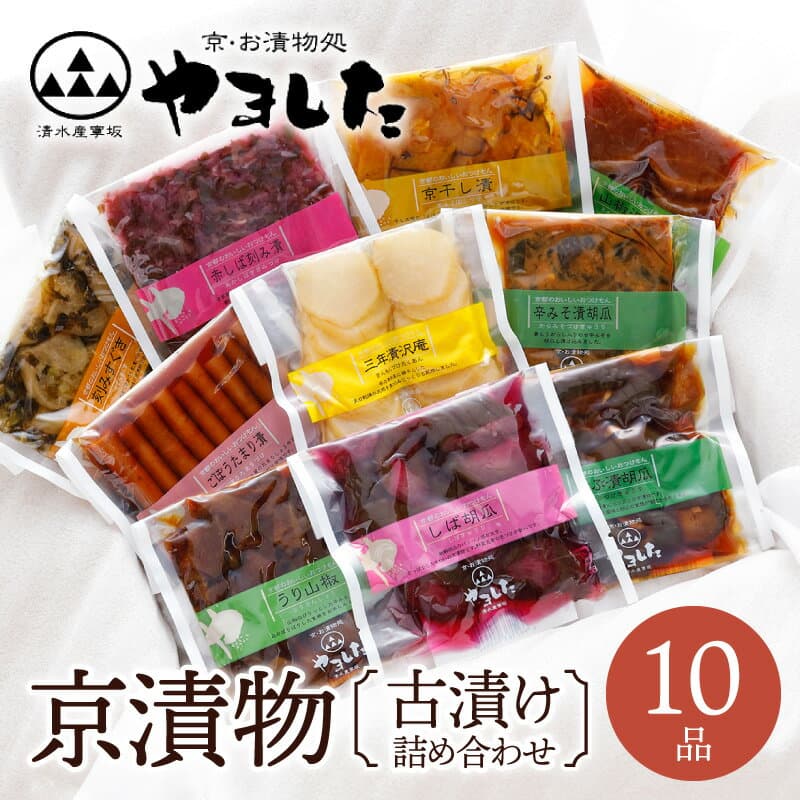
お中元 夏ギフト 京漬物・古漬10種類10品詰め合わせ 京つけもの 丹波 京漬物 京都 漬物 詰め合わせ 漬け物 老舗 漬物屋 漬物店 夏ギフト お中元 御中元 暑中見舞い 残暑見舞い 敬老の日 2026 ギフト プレゼント お祝い 内祝い お返し お礼 お土産 お取り寄せ【WS】
10 varieties, 10 packs栃木のタウン誌厳選 もんみや通販
4.7 / 10 reviews
 3 images
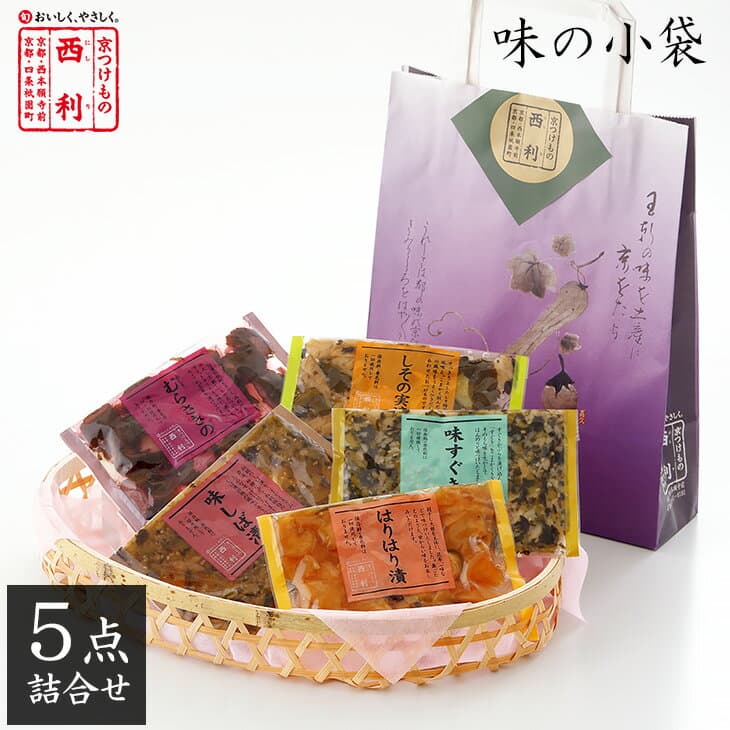
【京つけもの西利 公式】味の小袋 5袋入(紙袋付)京都 西利 漬物 京漬物 漬け物 お漬物 お土産 プレゼント プチギフト 伝統の味 詰合せ 詰め合わせ お茶漬け ごはんのお供
5 pouches with paper bag京つけもの西利
4.7 / 42 reviews
 3 images
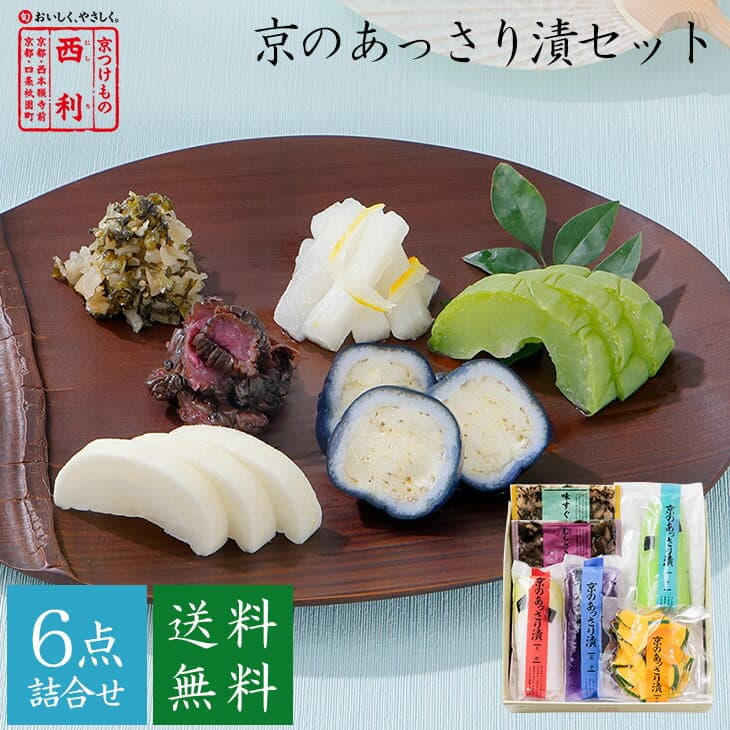
■ポイント5倍■ 【京つけもの西利 公式】京のあっさり漬 6点詰合せ NRY-37 送料無料京都 西利 漬物 ギフト プレゼント 京漬物 漬け物 ご挨拶 百貨店 人気 出産 お祝い 内祝い お返し
6-piece assortment京つけもの西利
4.6 / 446 reviews
 3 images
【全品ポイント10倍】京つけもの大安 ちいさなだいやす 10点詰合せ 直SYG-A 送料無料 敬老の日 京都 大安 漬物 つけもの 漬け物 ご飯のお供 お土産 国産 千枚漬け 味すぐき ギフト 贈り物 老舗 京漬物 セット 詰め合わせ 内祝い お祝い お返し 人気 三大漬物
10-piece assortment京つけもの大安
4.7 / 107 reviews
 3 images
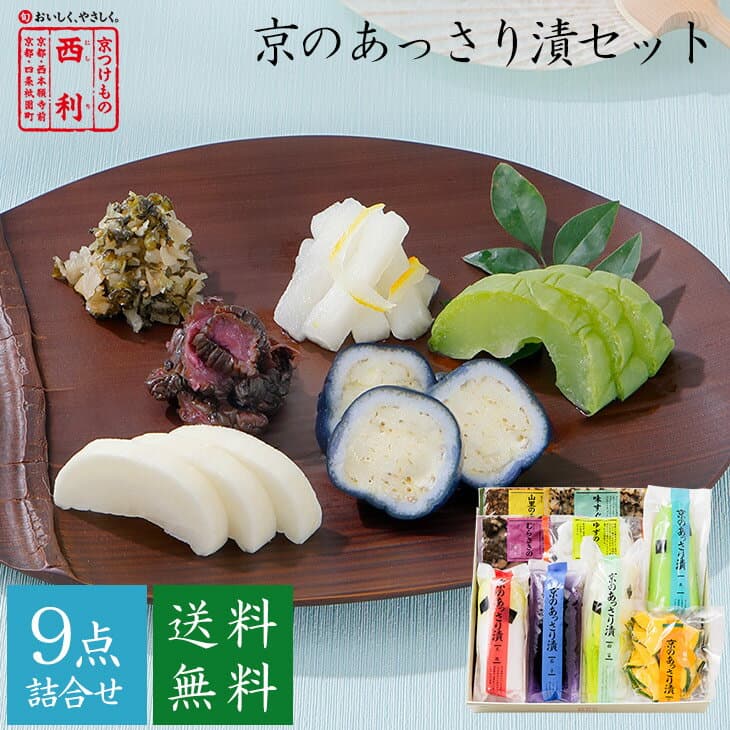
■ポイント5倍■ 【京つけもの西利 公式】京のあっさり漬 9点詰合せ NRY-50 送料無料京都 西利 漬物 ギフト プレゼント 京漬物 漬け物 ご挨拶 百貨店 人気 出産 お祝い 内祝い お返し
9-piece assortment京つけもの西利
4.7 / 76 reviews
 3 images
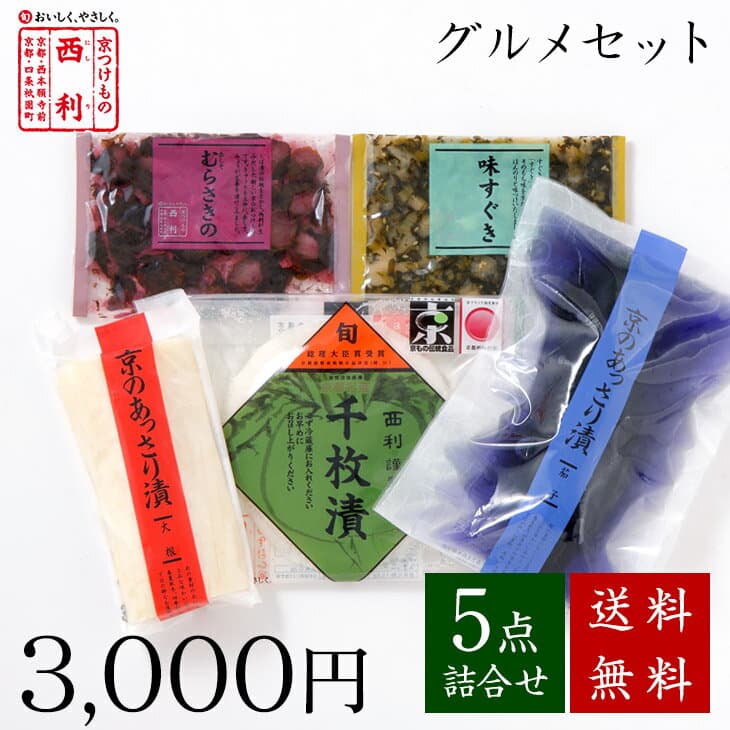
■ポイント5倍■ 【京つけもの西利 公式】西利のグルメセット 5点詰合せ 送料無料京都 西利 漬物 京漬物 漬け物 お漬物 高級 老舗 人気 百貨店 千枚漬 浅漬け 定番 グルメ 詰め合わせ
5-piece assortment京つけもの西利
4.7 / 112 reviews
 3 images
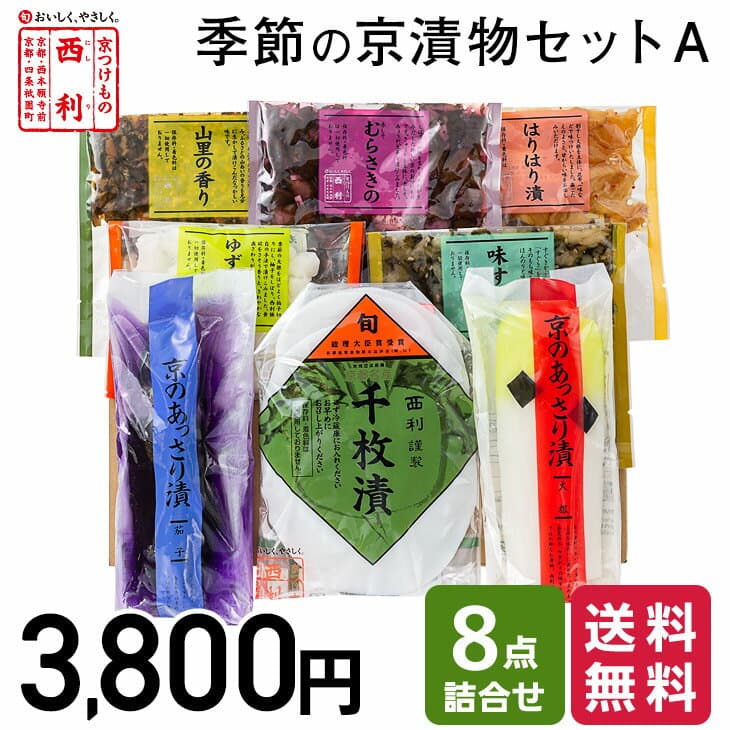
■ポイント5倍■ 【京つけもの西利 公式】季節の京漬物セットA 8点詰合せ 送料無料京都 西利 漬物 京漬物 漬け物 お漬物 高級 老舗 人気 百貨店 千枚漬け グルメ 季節限定 家庭用 自宅用 詰め合わせ
8-piece assortment京つけもの西利
4.7 / 38 reviews
 3 images
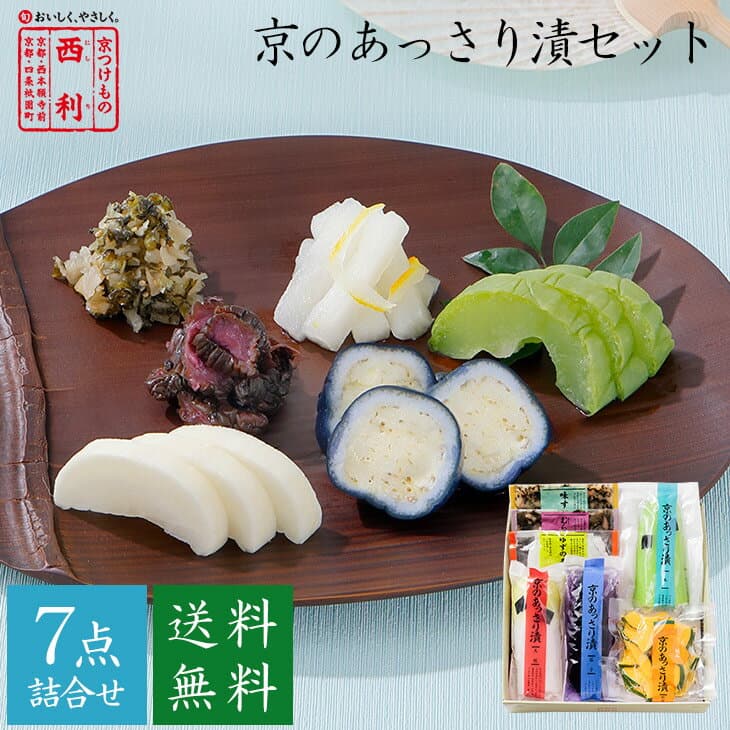
■ポイント5倍■ 【京つけもの西利 公式】京のあっさり漬 7点詰合せ NRY-40 送料無料京都 西利 漬物 ギフト プレゼント 京漬物 漬け物 ご挨拶 百貨店 人気 出産 お祝い 内祝い お返し
7-piece assortment NRY-40京つけもの西利
4.7 / 131 reviews
First time buying on Rakuten? How residents in Japan order →
All 10 listings of this product on Rakuten, lowest price first.
| Listing | Price | Shop | Reviews | Open listing |
|---|---|---|---|---|
Doi Shibazuke Honpo Kyoto Pickles Assortment choose 4 from 10 varietiesLowest priceGift-readySmall size to try | ¥1,000 | 土井志ば漬本舗 楽天市場店 | 4.7 / 339 reviews | View on Rakuten → |
Nishiri Aji no Kobukuro Kyoto Pickles Assortment 5 pouches with paper bagGift-ready | ¥1,296 | 京つけもの西利 | 4.7 / 42 reviews | View on Rakuten → |
Kyoto Pickles & Aged Pickles Assortment 10 varieties, 10 packsGift-ready | ¥2,520 | 栃木のタウン誌厳選 もんみや通販 | 4.7 / 10 reviews | View on Rakuten → |
Daiyasu Chiisana Daiyasu Kyoto Pickle Assortment 10-piece assortmentGift-ready | ¥2,980 | 京つけもの大安 | 4.7 / 107 reviews | View on Rakuten → |
Nishiri Kyoto Pickles Gourmet Set 5-piece assortment | ¥3,000 | 京つけもの西利 | 4.7 / 112 reviews | View on Rakuten → |
Nishiri Kyoto Light Pickle Assortment 6-piece assortmentMost reviewedGift-ready | ¥3,700 | 京つけもの西利 | 4.6 / 446 reviews | View on Rakuten → |
Nishiri Seasonal Kyoto Pickle Set A 8-piece assortmentValue pick | ¥3,800 | 京つけもの西利 | 4.7 / 38 reviews | View on Rakuten → |
Nishiri Kyo no Assari-zuke Kyoto Pickle Assortment 7-piece assortment NRY-40Gift-ready | ¥4,000 | 京つけもの西利 | 4.7 / 131 reviews | View on Rakuten → |
Daiyasu Chiisana Daiyasu Kyoto Pickles Assortment 15-piece assortmentGift-ready | ¥4,100 | 京つけもの大安 | 4.7 / 75 reviews | View on Rakuten → |
Nishiri Kyo no Assari-zuke Kyoto Pickles Assortment 9-piece assortmentGift-ready | ¥5,000 | 京つけもの西利 | 4.7 / 76 reviews | View on Rakuten → |
Japanese · new tab
Kyo-tsukemono is a Kyoto-linked pickle family built mainly from vegetables and salt, with Kyoto City and the Yamashiro area at its center. Kyoto’s inland setting, basin climate, abundant groundwater, and vegetable fields around the old city shaped a way of preserving and seasoning vegetables for everyday meals. Shibazuke, suguki, and senmaizuke make the family easy to picture: eggplant with red shiso, suguki greens, and thin Shogoin turnip each follow a different path into the pickle dish.
The place behind Kyo-tsukemono begins with Kyoto City and the Yamashiro area. Kyoto is an inland basin, and descriptions of the pickle family connect that setting with abundant groundwater, local climate, and vegetable growing around the old city. Shogoin turnip, mibuna, Kamo eggplant, Yamashina eggplant, and Momoyama daikon are named among the vegetables tied to Kyoto pickles. Salt stands beside those vegetables as a core material, turning field produce into small dishes that belong with rice.
Three names give Kyo-tsukemono a concrete shape. Shibazuke ferments eggplant and red shiso with salt, so its color and aroma come from the shiso leaf. Suguki uses a turnip green called suguki and develops sourness through salting and lactic fermentation. Senmaizuke starts with Shogoin turnip cut to about three millimeters, then layered with kombu, vinegar, mirin, and sugar. The shared family name holds distinct materials, timings, and flavors in one Kyoto table tradition explained through vegetables and methods.
The work of Kyo-tsukemono is visible in ordinary actions: slicing, salting, pressing, warming, and waiting. Senmaizuke depends on thin slices of Shogoin turnip and the smoothness of kombu between layers. Suguki is salted and lactic-fermented in a warmed room, where acidity develops over time. Shibazuke matures eggplant and red shiso under salt and pressure. Each step changes raw vegetables into something sharper, softer, more aromatic, or more suited to keeping beside a meal.
Kyo-tsukemono often sits beside rice, goes into ochazuke, or appears as a small side with alcohol. Senmaizuke is described with kombu smoothness and a delicate flavor, suguki with clear acidity, and shibazuke with red-shiso aroma. Mibuna pickles add fragrance, pungency, and a crisp bite. A small serving can shift the pace of a meal because sourness, aroma, crunch, and gentle sweetness meet plain rice, warm tea broth, or sake directly.
Around November, the making of senmaizuke and suguki begins, giving Kyoto a winter food scene tied to cutting turnips, salting greens, and waiting for fermentation. Shogoin turnip becomes thin slices layered with kombu and seasonings, while suguki greens take on acidity through salt and lactic fermentation. The seasonal rhythm is concrete: named vegetables, knives, vats, warmed rooms, and table uses return as the weather turns cold.
The family also rests on a producer community. A Kyoto pickle trade organization began in 1908, the present Kyoto Prefecture Pickles Cooperative was founded in 1971, and the cooperative listed 86 members at the end of May 2025. The shared name is also bounded by domestic vegetables chosen for pickling, Kyoto-style pickle techniques, and seasoning that lets the ingredients show. For readers, Kyo-tsukemono gathers many makers around vegetables, salt, fermentation, and local table use.
Kyo-tsukemono stays close to small things: Kyoto vegetables, salt, groundwater, slices, weights, warmed rooms, and time. Shibazuke brings eggplant together with red shiso, suguki turns salt and lactic fermentation into sourness, and senmaizuke layers Shogoin turnip with kombu. Beside rice, ochazuke, or sake, these pickles carry Kyoto’s winter work and everyday meals into one sharp, fragrant, crisp mouthful.
Compiled from public records and official sources; see the recognition links below. Details may change over time.
Where this product is officially registered, designated, or recognized in Japan.
Regional collective trademark
Registered as a Regional Collective Trademark with the Japan Patent Office.
Sources1
It is written as 京つけもの in Japanese. Search Rakuten and other Japanese sites with that spelling — the English name will not bring up the listings.
Kyo pickles (Kyo-tsukemono) are a Kyoto vegetable and salt pickle family linked to Kyoto City, the Yamashiro area, the region's basin climate, and its groundwater. The best-known types are shibazuke, suguki, and senmaizuke, each made with a different local vegetable and fermentation method. They are typically eaten with rice, in ochazuke, or alongside sake, and their production is closely tied to Kyoto's winter season.
Shibazuke is made by salting eggplant and red shiso, and the red shiso gives it its color and aroma. Suguki uses suguki greens and gets its sourness from salting and lactic fermentation. Senmaizuke layers thinly sliced Shogoin turnip, about three millimeters thick, with kombu, vinegar, mirin, and sugar, and the kombu gives it texture and a delicate flavor. Nanohana pickles have a slight bitterness, while mibuna is known for its pungency, aroma, and crisp texture.
Kyo pickles are eaten with rice, mixed into ochazuke, or served alongside sake. Senmaizuke and suguki are pickled starting around November, marking a winter food scene in Kyoto. They are enjoyed by local residents and are also popular with visitors as travel souvenirs.
Storage varies by product — shelf-stable, refrigerated, or frozen — and is stated on the packaging and the Rakuten listing. Shelf-stable processed foods usually need refrigerating once opened and eating within a few days; chilled and frozen items go straight into storage on arrival. Treat the best-before date on the physical packaging as authoritative.
Most options are shelf-stable, boxed, and travel well, so they suit gifting or bringing home. Confirm the final storage and delivery terms on the Rakuten listing.
On Rakuten: the shops listed here right now are 土井志ば漬本舗 楽天市場店, 京つけもの大安, 栃木のタウン誌厳選 もんみや通販, 京つけもの西利. We don't sell directly; purchase, payment, stock, and delivery are all handled on the Rakuten product page.