 3 images
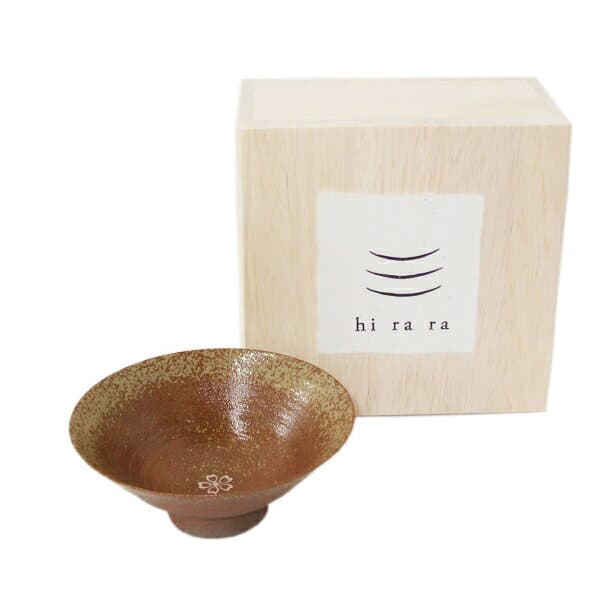
Echizen Ware Hirara Sakura Thin-Rim Sake Cup
越前焼 越前うすくち盃 ひらら 桜 ハンドメイド酒器 純国産 伝統工芸 日本酒 冷酒 大吟醸 薄焼 杯 ぐい呑 おちょこ おしゃれ ギフト プレゼント
Sakura design酒器・グラスの専門店 美酒器や
5.0 / 1 reviews
Japanese name越前焼
Around Ozowara in Echizen Town, iron-rich clay, high-heat anagama firing, natural ash surfaces, storage jars, tableware, and tea rooms share one ceramic landscape.
Information last updated 119 days ago
3 images越前焼 越前うすくち盃 ひらら 桜 ハンドメイド酒器 純国産 伝統工芸 日本酒 冷酒 大吟醸 薄焼 杯 ぐい呑 おちょこ おしゃれ ギフト プレゼント
Sakura design酒器・グラスの専門店 美酒器や
5.0 / 1 reviews
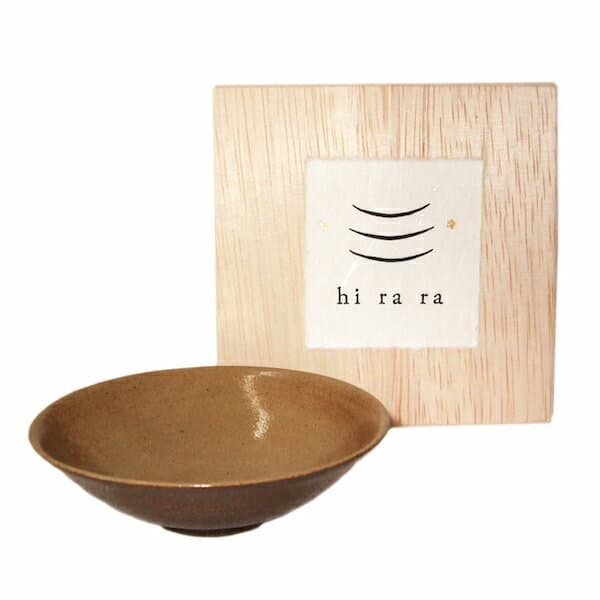
越前焼 越前うすくち盃 ひらら 極 ハンドメイド酒器 純国産 伝統工芸 日本酒 冷酒 大吟醸 薄焼 杯 ぐい呑 おちょこ おしゃれ ギフト プレゼント
8 cm x 2.8 cm酒器・グラスの専門店 美酒器や
First time buying on Rakuten? How residents in Japan order →
Echizen-yaki is rooted in the Ozowara area of Echizen Town, Fukui Prefecture. In the late Heian period, local production began with kiln technology introduced from Tokoname, and more than 200 kiln sites from medieval to modern times have been found around Oda and Miyazaki. Its first impression is clay: iron-rich, fire-resistant earth that tightens in high heat and turns red-black or red-brown, linking old jars and mortars with present-day bowls, cups, and tea settings.
Early Echizen-yaki production began around Ozowara in Echizen Town, then spread to nearby hill areas such as Kumatani and Byodo. The more than 200 kiln sites found around Oda and Miyazaki anchor the name in slopes, kiln remains, clay, and the movement of ware into fire.
The modern name took shape in stages. Koyama Fujio used the word “Echizen” for the old kilns in a 1947 paper; before that, local names included Oda-yaki and Ozowara-yaki. In 1965, ceramics produced in Fukui Prefecture were unified under the name Echizen-yaki, connecting older village names to a modern regional ceramic family.
The clay used for Echizen-yaki contains abundant iron and has strong fire resistance. After firing, the surface often becomes red-black or red-brown, and the body tightens enough to reduce water leakage; old pots and jars held water, sake, dye liquid for indigo, and grain.
Yakishime firing and natural ash glaze are recurring surface traits. Wood ash falls onto the ware and melts in the kiln heat, forming ash glaze; in Ozowara today, natural-ash-glazed jars and vases appear alongside plates, bowls, beer mugs, and wine cups, keeping clay color and ash surface in the same field of view.
Older Echizen-yaki centered on practical vessels such as pots, large jars, and mortars, and it was also used for sutra containers and burial urns. Those forms place the ware close to water, sake, dye liquid, grain storage, and grinding in daily work.
Present-day Echizen-yaki also reaches the table. Echizen-yaki no Yakata in Ozowara presents natural-ash jars and flower vessels together with everyday plates, bowls, beer mugs, wine cups, and about 1,000 items in total. These forms do not define every Echizen-yaki object, but they show one clear contemporary path from storage ware to eating and drinking vessels.
Early firing used anagama, tunnel-like kilns cut into mountain slopes. A kiln about 13 meters long could fire roughly one ton of pots, jars, and mortars at nearly 1300 degrees Celsius for about a week; those figures point to coordinated work with clay, fuel, kiln space, and many hands.
By the late Muromachi period, kiln bodies in the Byodo area of Echizen Town reached more than 25 meters in length. Some could fire about five tons at once, including 60 large jars and 1,200 mortars, and Sengoku-period production expanded as castle towns were built and ware moved along the Sea of Japan coast.
The Echizen Ancient Kiln Museum stands in Echizen Pottery Village, and its collection history is closely tied to Mizuno Kuemon. Mizuno spent more than 40 years collecting old Echizen ware and investigating old kiln sites, built the Mizuno Old Ceramics Museum in 1968, and the present museum opened in 2017 with that line of objects and kiln-site work.
This modern chapter gives Echizen-yaki continuity through vessels, kiln remains, reconstructed kilns, and firing experiments. The museum also includes tea rooms and an old house used as a community space, placing old Echizen objects, tea use, and local learning within the same pottery village.
Modern production activity is also tied to the Echizen-yaki promotion association and the later Echizen-yaki Industrial Cooperative Association. The promotion association began in 1968; in 1971, alongside the Echizen Pottery Village project and a shared clay-preparation plan, the cooperative was founded, and a water-levigation facility was completed to supply stable clay to member kilns.
Today the cooperative maintains a clay-preparation facility, warehouse, office, and display space around Echizen Pottery Village. Its member mark points to a present-day boundary of clay from Echizen Town and surrounding areas, prepared by an established clay-making method; that boundary applies to member-marked ware, not to every historical object called Echizen-yaki.
Echizen Pottery Village gathers the museum, tea rooms, community space, clay facilities, and present-day ware displays around Ozowara. In one local setting, late-Heian kiln beginnings, large medieval kilns, modern collections, and current plates, bowls, and cups can be seen as connected parts of the same ceramic place.
Echizen-yaki becomes legible through Echizen Town’s hills, iron-rich clay, natural ash surfaces, high-temperature anagama firing, and vessels used for water, sake, grain, meals, and tea. Those touchable objects explain its continuity more clearly than an abstract label can.
Echizen-yaki is held together by recurring clay, kilns, vessels, and local work around Ozowara in Echizen Town. Iron-rich earth turns red-black or red-brown near 1300 degrees Celsius; older vessels stored water, sake, dye liquid, and grain; newer plates, bowls, cups, and tea settings keep the ware in use. From more than 200 kiln sites to the Mizuno collection and cooperative clay supply, Fukui’s ceramic line continues through specific places and objects.
Compiled from public records and official sources; see the recognition links below. Details may change over time.
Where this product is officially registered, designated, or recognized in Japan.
It is written as 越前焼 in Japanese. Search Rakuten and other Japanese sites with that spelling — the English name will not bring up the listings.
Echizen ware is a ceramic family rooted around Ozowara in Echizen Town, Fukui Prefecture, where production began in the late Heian period with kiln technology from Tokoname. It uses iron-rich, fire-resistant clay that fires red-black or red-brown, with yakishime and natural ash surfaces. Early work centered on storage jars and mortars, and present-day forms include plates, bowls, cups, and tea settings.
More than 200 medieval-to-modern kiln sites have been found around the Oda and Miyazaki districts. Koyama Fujio used the word Echizen for the old kilns in a 1947 paper, and in 1965 the name Echizen-yaki was unified for ceramics produced in Fukui Prefecture. Early anagama kilns were about 13 meters long and fired about one ton of ware near 1300 degrees Celsius for roughly a week. By the late Muromachi period, kilns in the Byodo area exceeded 25 meters and could fire about five tons of ware at once.
Older pots, jars, and mortars were used to hold water, sake, dye liquid, and grain. The ware was also used for sutra containers and burial urns. It is used as plates, bowls, beer mugs, and wine cups, and in tea rooms at the Echizen Ancient Kiln Museum for tea gatherings.
Porous earthenware is usually given a "medome" treatment first — simmer it gently in rice-rinsing water (or water with a little flour), then cool, rinse, and air-dry. This reduces staining and odour absorption. Porcelain normally just needs a wash. Follow the listing where it says otherwise.
Handmade earthenware, pieces with gold or silver overglaze, and lacquerware generally should not go in a dishwasher, microwave, or heated drying cabinet; heat-resistant porcelain usually can. Check the Rakuten listing for the specific piece.
Most options are shelf-stable, boxed, and travel well, so they suit gifting or bringing home. Confirm the final storage and delivery terms on the Rakuten listing.
On Rakuten: the shops listed here right now are 酒器・グラスの専門店 美酒器や. We don't sell directly; purchase, payment, stock, and delivery are all handled on the Rakuten product page.