 3 images
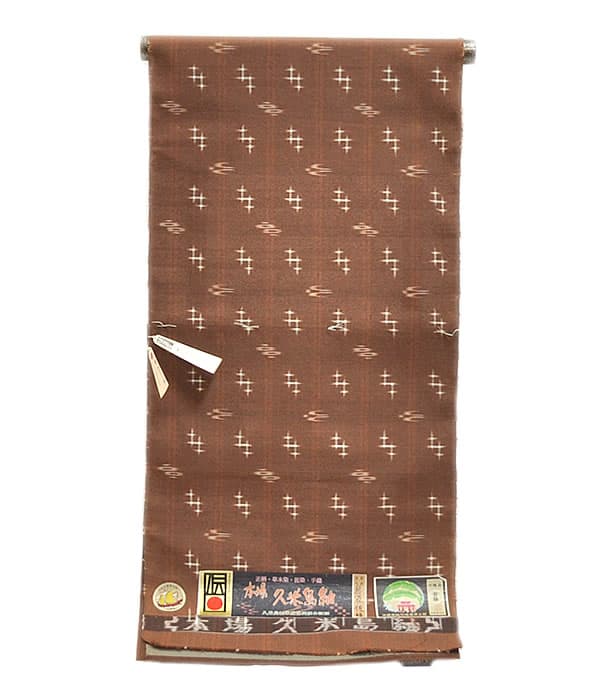
Honba Kumejima Tsumugi Pure Silk Kimono Bolt for Women
女物 正絹 本場久米島紬 着尺 -茶系地- [ 1811-2891 ] フルオーダー 未仕立て 誂え きぬ シルク 女性 レディース つばめ 絣 かすり カジュアル 街着 日本製 植物染 泥染 沖縄 くるめつむぎ 伝統工芸 白
brown ground和-closet 浅野屋呉服店
Japanese name本場久米島紬
In Kumejima Town, Okinawa, Honba Kumejima Tsumugi is shaped by tsumugi yarn or drawn silk, island plant dyes, mud dyeing, hand-tied kasuri, and hand weaving. The result is a silk textile known for deep tones, soft luster, and careful finishing.
Information last updated 119 days ago
3 images女物 正絹 本場久米島紬 着尺 -茶系地- [ 1811-2891 ] フルオーダー 未仕立て 誂え きぬ シルク 女性 レディース つばめ 絣 かすり カジュアル 街着 日本製 植物染 泥染 沖縄 くるめつむぎ 伝統工芸 白
brown ground和-closet 浅野屋呉服店
 3 images
169-本場久米島紬 当店オススメ 送料無料 国の重要無形文化財指定 植物染め 500年の歴史を持つと言われる絣の源流 砧打ち しなやかな風合いが魅力 白地にツバメ柄
white swallow patternきもの工芸 雁金屋
 3 images
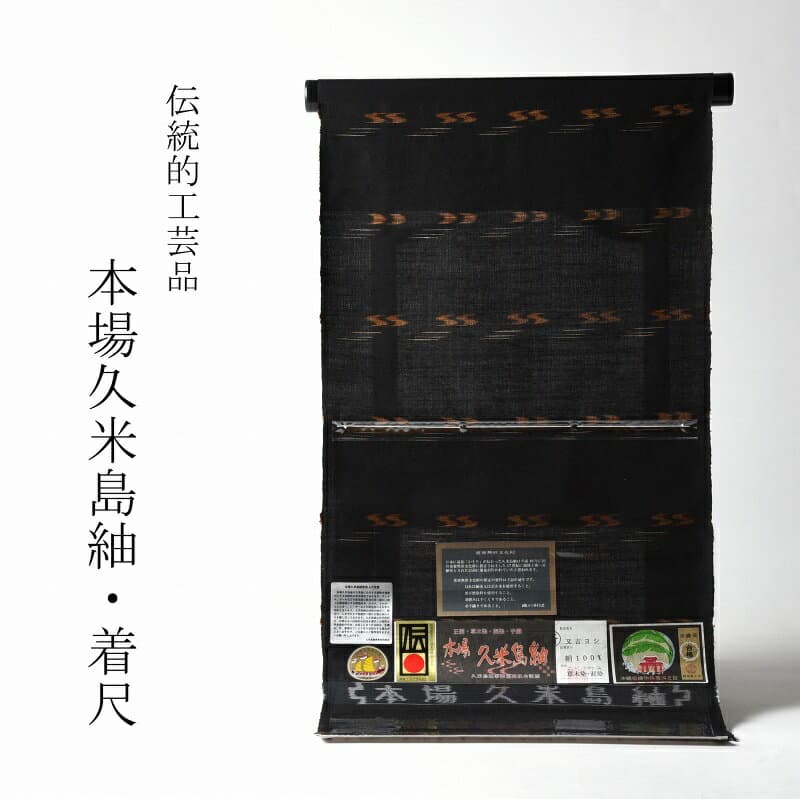
本場久米島紬 袷フルオーダーお仕立て付き 絣 チミヌカータ 黒色 お洒落着物 【着物/和服/遊び着/カジュアル】【裄70.5cmまで】 送料込み
lined full custom tailoring, yuki up to 70.5 cmさわらび〜ほりだし堂〜
First time buying on Rakuten? How residents in Japan order →
Honba Kumejima Tsumugi begins with silk thread and island materials before it reaches the loom. A weaver chooses the pattern, gathers plants for dye, dyes the thread, and weaves by hand; after weaving, the cloth is washed, dried in the sun, and beaten with wooden mallets until the surface gains a quiet sheen and a softer hand.
Honba Kumejima Tsumugi is a silk textile transmitted on Kumejima in Okinawa, with its production area tied to Kumejima Town. The name is bounded by concrete making conditions: the thread is tsumugi yarn or drawn silk, the dyes are natural, the kasuri is tied by hand, and the cloth is handwoven. Those four points give the textile its practical outline before any discussion of pattern or color begins.
The dark tones of Kumejima Tsumugi come from plant dyeing and mud dyeing. The thread may be tsumugi yarn or drawn silk, and dyes are made with plants that grow on the island, with mud also used in the coloring process. Soot-bamboo, reddish brown, silver gray, yellow, and uguisu green are named among its tones, so the island enters the cloth through material color rather than scenery alone.
The making process described for Kumejima Tsumugi places pattern choice, dye-material gathering, thread dyeing, and weaving in the hands of one weaver. That continuity matters at the level of the thread: a decision about pattern affects tying, dyeing, alignment, and finally the woven surface. The cloth is therefore built through repeated hand decisions, not through a single dramatic moment at the loom.
Kasuri patterning starts before the thread is dyed. The sections meant to resist color are tied by hand, and their position must correspond to the future design when the threads meet on the loom. Tying tension also affects the softness of the kasuri edge, making this preparatory step one of the places where the finished pattern receives its character.
After hand weaving, the roll is washed and dried in the sun, then finished by kinuta beating. In this step, two people strike the cloth for about 20 to 30 minutes with mallets of roughly 4.5 kilograms, bringing out luster and hand feel. The finish is concrete and physical: water, sun, wood, rhythm, and two workers turn a woven roll into a textile with a softer surface.
The historical line often begins with Do no Hiya, who is said to have traveled to Ming in the late fourteenth century and brought back sericulture skills. During Ryukyu rule, and later after Satsuma’s 1609 invasion, Kumejima Tsumugi was made as tribute cloth until poll-tax production ended in 1903; improvement work from around 1905 helped it develop as an industry. On Kumejima today, Yuimaru Kan connects visitors with exhibitions and weaving or dyeing experiences, while the cooperative and local bodies work on training successors, preserving sericulture techniques, and sharing the craft publicly.
Honba Kumejima Tsumugi is best understood through its sequence of materials and hands: silk thread, island plants, mud, hand-tied kasuri, the loom, washing, sunlight, and kinuta beating. The deep cloth carries Kumejima through color and touch, from the tied thread to the finished roll.
Compiled from public records and official sources; see the recognition links below. Details may change over time.
Where this product is officially registered, designated, or recognized in Japan.
Regional collective trademark
Registered as a Regional Collective Trademark with the Japan Patent Office.
Sources1
It is written as 本場久米島紬 in Japanese. Search Rakuten and other Japanese sites with that spelling — the English name will not bring up the listings.
Honba Kumejima tsumugi is a silk textile from Kumejima Town, Okinawa, defined by tsumugi yarn or drawn silk, natural dyes, hand-tied kasuri, and hand weaving. Its deep tones come from island plant dyeing and mud dyeing. A weaver handles pattern choice, dye-material gathering, thread dyeing, and weaving, and the finished roll is washed, sun-dried, and beaten by two people to bring out luster and a soft hand.
The name "Honba" applies only when tsumugi yarn or drawn silk, natural dyes, hand-tied kasuri, and hand weaving are all present. Kasuri sections are tied by hand before dyeing, and the position and tension of the tying affect how the pattern aligns and how soft its edges look. In finishing, two people beat the woven roll with mallets of about 4.5 kilograms for 20 to 30 minutes, which brings out its luster and soft hand. The textile's history includes the Do no Hiya tradition, tribute-cloth production from the Ryukyu kingdom era through the period after Satsuma's 1609 invasion, the end of poll-tax production in 1903, and improvement work from around 1905.
Visitors can join weaving and dyeing experience programs at Yuimaru Kan in Kumejima Town. The cloth has also been worn in dressing experiences and presented in fashion shows.
Naturally dyed textiles shed some colour on first wash. Hand-wash separately with a neutral detergent, avoid long soaking and bleach, and dry in the shade to prevent fading. Silk, ramie, and traditionally dyed pieces often need professional cleaning — the care label on the listing takes precedence.
Most options are shelf-stable, boxed, and travel well, so they suit gifting or bringing home. Confirm the final storage and delivery terms on the Rakuten listing.
On Rakuten: the shops listed here right now are 和-closet 浅野屋呉服店, きもの工芸 雁金屋, さわらび〜ほりだし堂〜. We don't sell directly; purchase, payment, stock, and delivery are all handled on the Rakuten product page.