 3 images
Kikuma Tile Coaster by Koizumi Seiga (Kikutei)
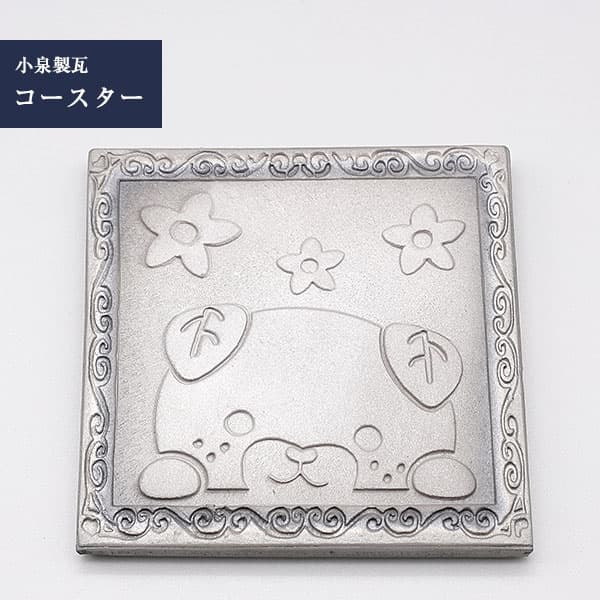
菊間瓦 コースター 【瓦コースター みきゃん】 吸水性 いぶし銀 正方形 伝統工芸品 小泉製瓦 菊貞 koizumi-004
Mikyan collaboration砥部焼と愛媛の雑貨のお店ワパル
5.0 / 1 reviews
Japanese name菊間瓦
In Imabari’s Kikuma-cho, Sanuki clay, local Gomi clay, hand polishing, kiln fire, and smoke shape silver roof tiles, special tiles, and onigawara across a coastal tile town.
Information last updated 119 days ago
3 images菊間瓦 コースター 【瓦コースター みきゃん】 吸水性 いぶし銀 正方形 伝統工芸品 小泉製瓦 菊貞 koizumi-004
Mikyan collaboration砥部焼と愛媛の雑貨のお店ワパル
5.0 / 1 reviews
First time buying on Rakuten? How residents in Japan order →
Kikuma tiles begin in Kikuma-cho, Imabari, in Ehime. On April 1, 2017, the Kikuma-cho kiln cooperative counted twelve member makers, all working in the same town; along the coast, tile signs, roofs, parks, and public facilities make the smoked-silver surface part of the everyday view. Paint does not give the tiles their silver tone. After firing, sealed smoking brings out the sheen, while a clay body of Sanuki clay from Kagawa and local Gomi clay moves through resting, shaping, hand finishing, shaded drying, firing, and inspection.
Kikuma-cho sits in western Imabari, where the coastal road brings tile signs, roofs, parks, public facilities, flowerbeds, and slides into the same field of view. At Kawara no Furusato Park, tiles appear on playground features and planting beds, while onigawara also mark the townscape. The material is visible beyond roof ridges: Kikuma tiles show up on signs, public spaces, and everyday streets that people pass on foot or by car.
The clay body is described as a blend of 60 percent Sanuki clay from Kagawa and 40 percent Gomi clay dug within the town. Because the two clays differ in grain size, mineral structure, water content, and stickiness, the raw clay is crushed, given suitable moisture, and kneaded into a more stable body. The mixed clay is then covered and left for about ten days, a resting period that calms the material before it becomes the base for shaped tiles.
After resting, the clay passes through a vacuum kneader that removes air, then becomes the rough body for tile shaping. It rests again at the workshop for four to ten days before pressing. Standard forms can be pressed by machine, while special tiles are shaped by tile makers’ hands. Finished forms receive mica and a surface treatment called migaki; this hand polishing helps control warping during drying and brings a clearer luster to the surface. The family covers about fifty product types, from basic roof tiles and special functional tiles to onigawara.
Polished tiles are shade-dried for about five days, using conditions close to natural drying and residual kiln heat so that rapid drying does not damage quality. Once dry, the tiles enter a gas kiln fueled by butane, with roughly 1,000 to 1,500 tiles fired in one kiln. The firing temperature reaches 1,000 to 1,050 C, followed by about twenty hours of sealed smoking. Each tile is then checked for strength, dimensions, bending, smoked color, and water absorption before it leaves the workshop.
Kikuma tilemaking is traced to the Kamakura period, and later growth is connected with protection under the Matsuyama domain. The kiln cooperative also links Kikuma tiles with Matsuyama Castle work and with tiles selected for Imperial Palace construction in 1884. Castle roofs, temple and shrine roofs, and onigawara place strength, silver surface, and sculptural form on the same roofline. In Kikuma’s streets, onigawara also appear as recognizable public shapes, not only as parts of private roofs.
Kawara-kan in Imabari’s Kikuma-cho gathers the history, techniques, collected works, and clay activities of Kikuma tiles in one place near JR Kikuma Station. There, the roof material becomes something visitors can see at close range and handle through clay work. Separate maker examples also extend roof-tile techniques into plates, sake vessels, wall tiles, interior pieces, and small objects. These forms should be read as maker-led applications, while the core family remains rooted in roof tiles, special tiles, and onigawara.
Kikuma tiles are defined by concrete steps and places: a maker community in Imabari’s Kikuma-cho, Sanuki clay and local Gomi clay, ten days of clay resting, hand migaki, five days of shaded drying, kiln fire above 1,000 C, and twenty hours of smoke. Those steps settle into roofs, onigawara, parks, and clay activities at Kawara-kan. The silver surface remains part of Kikuma’s daily landscape because clay, fire, smoke, and local workshops still meet on the same coastal ground.
Compiled from public records and official sources; see the recognition links below. Details may change over time.
Where this product is officially registered, designated, or recognized in Japan.
Regional collective trademark
Registered as a Regional Collective Trademark with the Japan Patent Office.
Sources1
It is written as 菊間瓦 in Japanese. Search Rakuten and other Japanese sites with that spelling — the English name will not bring up the listings.
Kikuma tiles are a roof-tile and ceramic craft family from Kikuma-cho in Imabari, Ehime, including basic roof tiles, special functional tiles, and onigawara. The clay body blends 60 percent Sanuki clay from Kagawa with 40 percent Gomi clay, then passes through about ten days of resting, shaping, hand migaki, about five days of shaded drying, firing at 1,000 to 1,050 C, and about twenty hours of smoking.
On April 1, 2017, the Kikuma-cho kiln cooperative listed 12 members, all making Kikuma tiles in Imabari-shi Kikuma-cho. The mixed clay is crushed, moisture-adjusted, and kneaded, then vacuum-kneaded before shaping. Special tiles are shaped by hand, and formed tiles receive mica and migaki surface finishing. Smoking creates the smoked-silver surface of Kikuma tiles, rather than paint.
Kikuma tiles roof formal buildings such as Matsuyama Castle, temples, and shrines, and selected tiles were used in Imperial Palace construction. At Kawara-kan in Imabari's Kikuma-cho, visitors can learn the tiles' history and try clay-shaping techniques through exhibits and hands-on activities. One maker applies Kikuma tile techniques to interior objects, tableware, sake vessels, and wall tiles, as a maker-specific example rather than a standard use for the whole family.
Keep wood, bamboo, and lacquer out of prolonged soaking, dishwashers, and direct sun — wipe dry after use and let them air out in the shade. For metal and fabric goods, follow the care notes on the listing.
Most options are shelf-stable, boxed, and travel well, so they suit gifting or bringing home. Confirm the final storage and delivery terms on the Rakuten listing.
On Rakuten: the shops listed here right now are 砥部焼と愛媛の雑貨のお店ワパル. We don't sell directly; purchase, payment, stock, and delivery are all handled on the Rakuten product page.