 3 images
Sanuki White Miso
【サヌキ白みそ】1kg 讃岐のお雑煮は白味噌
1 kg高松南新町商店街
5.0 / 1 reviews
Japanese nameサヌキ白みそ
Miso, soy sauce & fermented seasonings overview
In Kagawa, rice, soybeans, and salt pass through a short, careful process: hulled beans, repeated water changes, seven-day maturation, and a smooth cream-colored finish.
Information last updated 119 days ago
3 images【サヌキ白みそ】1kg 讃岐のお雑煮は白味噌
1 kg高松南新町商店街
5.0 / 1 reviews
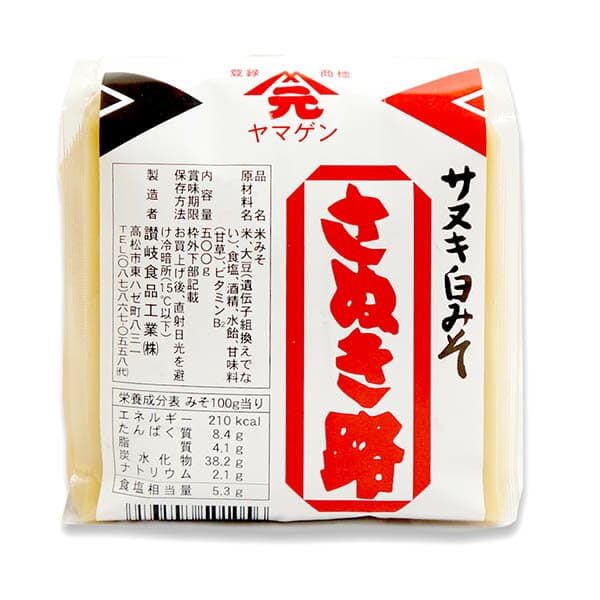
さぬき路 サヌキ白みそ 500g袋入り (讃岐白味噌)白みそ 白味噌 甘口 讃岐 お正月 お雑煮 あん餅雑煮
500g bag讃岐うまいもん処 大森屋
First time buying on Rakuten? How residents in Japan order →
Sanuki shiro miso is a rice-miso seasoning from Kagawa Prefecture, made with rice, soybeans, and salt. It is smooth and translucent cream in color, with a low-salt, high-sugar profile that places it in Kagawa local dishes, white-miso zoni, and seasonal home meals.
The first impression of Sanuki shiro miso is visual: a smooth paste with a translucent cream color. Its low-salt, high-sugar character gives the seasoning a mild sweetness, so the miso can sit gently inside local Kagawa dishes and New Year bowls of white-miso zoni rather than dominating them with a heavy fermented color or sharp salinity.
Kagawa’s place in the Setouchi region matters in concrete terms: warm, low-rain weather supported rice, soybeans, and salt, the three main materials of Sanuki shiro miso. After the autumn rice harvest, local farm households made white miso with steamed soybeans, generous rice koji, and salt; one origin account reaches back to the Heian period, when a Kyoto-born white-miso method is said to have reached Kagawa.
The batch is shaped around rice koji. For Sanuki shiro miso, the rice used to make koji is twice the amount of soybeans, a proportion that gives the product a concrete identity before any tasting language begins. Rice, soybeans, and salt then appear together in a low-salt, high-sugar white miso whose sweetness is carried by the way rice is brought into the mash.
The pale, smooth finish depends on small steps repeated with discipline. Soybeans are hulled, soaked for at least eight hours, and boiled from cold water with at least two water changes. Fermentation and maturation finish within seven days, and the matured miso is finally crushed with mortar-like equipment into a smooth, cream-like paste.
Sanuki shiro miso stays close to use. It appears in many Kagawa local dishes and has been well regarded as an ingredient for white-miso zoni in the Kansai area. Zoni belongs to the New Year table, while this white miso also moves through ordinary household meals across the seasons.
Commercial production in Kagawa grew after 1950, when ship transport made routes to the Keihanshin area convenient and demand there for sweet white miso increased. The production base now stands at four manufacturers; shipments have been declining as eating habits diversify, while makers are also developing exports centered on Southeast Asia. Its geographical indication status gives the Kagawa name a practical boundary: place, maker community, materials, and method remain tied together.
Follow Sanuki shiro miso from Setouchi weather to autumn farm batches, from twice-the-soybean rice koji to hulled beans and a seven-day finish, and its pale color becomes more than surface detail. The cream-colored paste carries rice, soybeans, salt, Kagawa kitchens, New Year zoni, and everyday meals in one gentle white miso.
Compiled from public records and official sources; see the recognition links below. Details may change over time.
Where this product is officially registered, designated, or recognized in Japan.
Geographical Indication (GI)
Registered under Japan's Geographical Indication Protection System, run by the Ministry of Agriculture, Forestry and Fisheries.
Sources1
It is written as サヌキ白みそ in Japanese. Search Rakuten and other Japanese sites with that spelling — the English name will not bring up the listings.
Sanuki white miso is a rice-miso seasoning from Kagawa Prefecture, made from rice, soybeans, and salt into a smooth, translucent, cream-colored paste that is low in salt and high in sugar. Rice for the koji is used at twice the soybean amount, and the miso ferments and matures within seven days before being ground smooth. It flavors Kagawa's local dishes, white-miso zoni, and everyday home meals, and commercial production grew after 1950 with shipping routes to Keihanshin.
Soybeans are hulled, soaked for at least eight hours, and boiled from cold water with at least two water changes. Kagawa's warm, low-rain Setouchi climate supported production of the rice, soybeans, and salt used for white miso. After the autumn rice harvest, local farmers made homemade white miso with steamed soybeans, generous rice koji, and salt. The present production base is four manufacturers, with declining shipments and export efforts centered on Southeast Asia.
Sanuki white miso is used in many Kagawa local dishes and appears on household tables throughout the seasons. It is valued for Kansai-style white-miso zoni, a New Year dish with regional variations. Its low-salt, high-sugar profile suits recipes calling for a mild, sweet miso flavor.
Storage varies by product — shelf-stable, refrigerated, or frozen — and is stated on the packaging and the Rakuten listing. Shelf-stable processed foods usually need refrigerating once opened and eating within a few days; chilled and frozen items go straight into storage on arrival. Treat the best-before date on the physical packaging as authoritative.
Most options are shelf-stable, boxed, and travel well, so they suit gifting or bringing home. Confirm the final storage and delivery terms on the Rakuten listing.
On Rakuten: the shops listed here right now are 高松南新町商店街, 讃岐うまいもん処 大森屋. We don't sell directly; purchase, payment, stock, and delivery are all handled on the Rakuten product page.