 3 images
Sendai Tansu Chomen Storage Chest
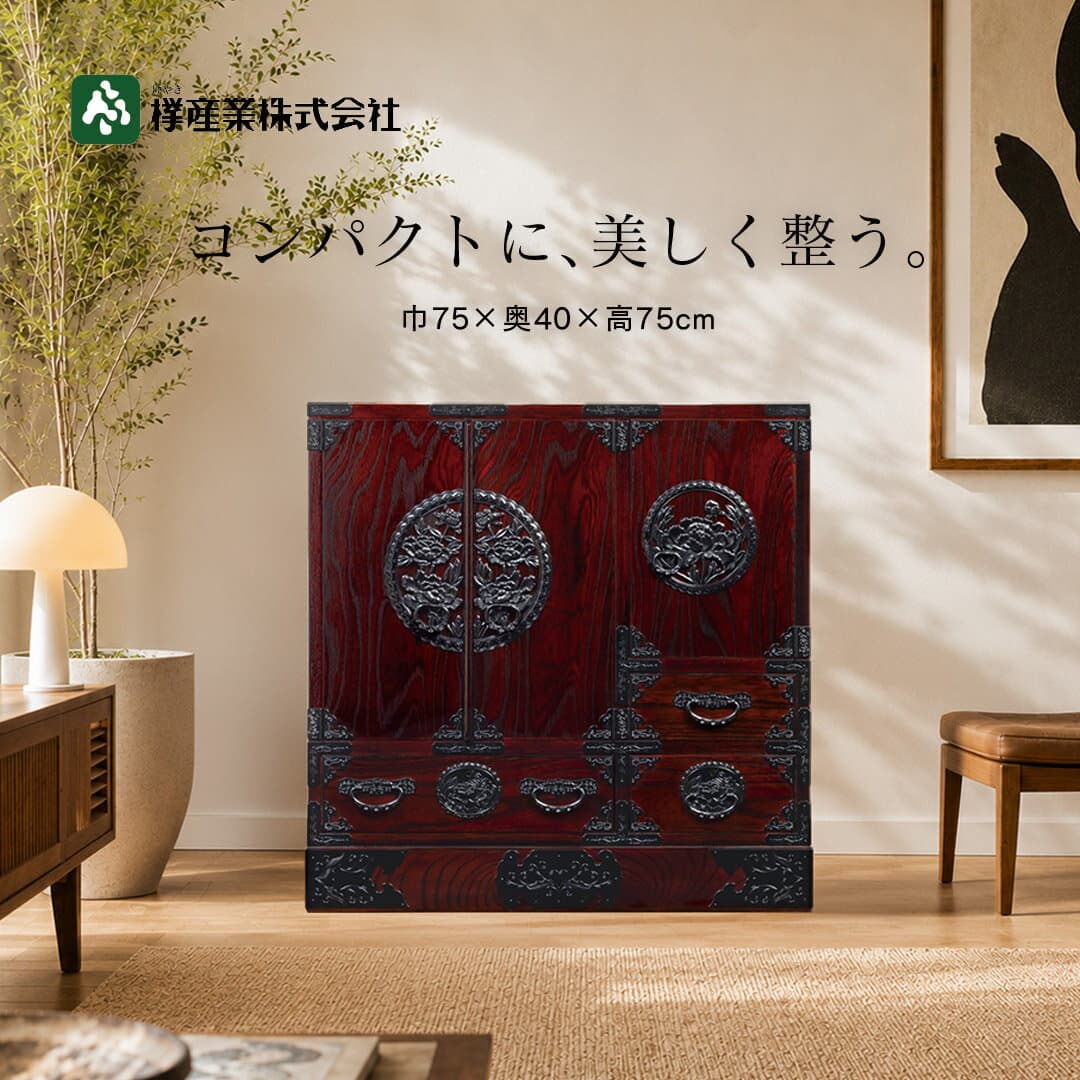
[仙台箪笥]帖面箪笥 KC-29 KB-29D KEB-29 和箪笥 収納家具 チェスト 玄関 リビング 書類収納 アルバム収納 書籍収納 漆塗り 金具 伝統工芸 欅材 桐無垢 日本製 高級 和モダン インテリア コンパクト 国産家具 職人手作り 桐箪笥 岩谷堂箪笥 一生もの家具 欅産業
KC-29 / KB-29D / KEB-29仙台箪笥・仙台仏壇の欅産業
Japanese name仙台箪笥
From Sendai and Shiogama to nearby Miyagi towns, Sendai tansu joins a four-shaku chest form, zelkova wood, kijiro lacquer, and hand-forged iron fittings in weighty household storage.
Information last updated yesterday
3 images[仙台箪笥]帖面箪笥 KC-29 KB-29D KEB-29 和箪笥 収納家具 チェスト 玄関 リビング 書類収納 アルバム収納 書籍収納 漆塗り 金具 伝統工芸 欅材 桐無垢 日本製 高級 和モダン インテリア コンパクト 国産家具 職人手作り 桐箪笥 岩谷堂箪笥 一生もの家具 欅産業
KC-29 / KB-29D / KEB-29仙台箪笥・仙台仏壇の欅産業
 3 images
仙台箪笥風 小引き出し 木製 ミニチェスト 卓上 コンパクトチェスト おしゃれ 小物入れ 鍵付き 小物収納ボックス 和風 和モダン 日本製 国産 古民家家具 高級 黒 ブラック
blackINTERIOR MARUDAI
3.0 / 1 reviews
First time buying on Rakuten? How residents in Japan order →
The name Sendai tansu begins with Sendai, while the production area extends across Miyagi to Shiogama, Higashimatsushima, Tomiya, Ohira, Shibata, Wakuya, Rifu, and Watari. Production began in the late Edo period, and the form now associated with the chest settled through the Meiji and Taisho periods. Built from a four-shaku chest form, centered on zelkova wood, finished with kijiro lacquer, and fitted with hand-forged iron motifs such as peony and Chinese lion, it gathers woodwork, lacquer work, and metalwork in one sturdy piece of storage furniture.
Sendai tansu carries Sendai in its name, and its production area reaches beyond the city to Shiogama, Higashimatsushima, Tomiya, Ohira, Shibata, Wakuya, Rifu, and Watari. Those municipalities place the chest within Miyagi rather than within a single urban point.
The place connection becomes tangible in the object itself. A zelkova-centered wooden body, a lacquered surface, and iron fittings sit together on one chest, turning the production area from a list of names into a visible furniture form.
Sendai tansu began to be made in the late Edo period, and its present form became established during the Meiji and Taisho periods. Its base was the four-shaku chest, a scale tied to furniture for clothing and household goods.
The finished chest is described as sturdy and weighty, and that weight has material reasons. Zelkova forms the main wooden body, kijiro lacquer gives the surface its finish, and iron fittings on the front carry motifs such as peony and Chinese lion.
The material list begins with zelkova and also includes cedar, chestnut, paulownia, iron, and lacquer. Natural solid woods such as zelkova, chestnut, cedar, and paulownia are paired with lacquer coating and iron fittings; even the rust-preventive coloring of the iron uses animal proteins such as silk or hair together with lacquer.
Kijiro lacquer keeps the wood grain present on the surface, so the zelkova body remains part of the visual character. On the front, hand-forged iron fittings add peony and Chinese-lion motifs, giving the chest a face made from wood, lacquer, and metal rather than from ornament alone.
Sendai tansu is made through three skilled trades: joinery, lacquer finishing, and metal fitting work. Joinery moves from wood seasoning and board drying to cutting, carving, and assembly, turning zelkova and other woods into drawers, frames, and panels that can bear repeated use.
Lacquer work then carries the surface through sanding, base preparation, spatula application, brushing, and polishing. Metalwork begins with drawing and line carving, then moves through repoussé, correction, edge finishing, filing, and coloring; the finished front holds all three sequences in one piece of furniture.
The main forms include clothing chests, utility chests, small hand chests, and wheeled chests. Those names place Sendai tansu in the household, where clothing, daily objects, small belongings, and movable storage all belong to its vocabulary.
Sturdiness and weight matter because the furniture is made for storage over time. Drawers, wooden boards, lacquered surfaces, and iron fittings all meet repeated opening, touch, and movement; the physical heaviness of the chest is tied to use as well as appearance.
The Sendai Tansu Cooperative places repair and restyling within the present life of the craft. It describes remembered chests passed from mother to child and grandchild, and it also names the problem of a chest too large for a new residence, where restyling can bring the furniture back into use.
Continuity here is practical: old zelkova, lacquer, iron fittings, and a changed room have to fit one another again. The cooperative also introduces seven craftspeople who carry the techniques forward, keeping joinery, lacquer finishing, and metal fitting work available for furniture that has already lived in a home.
Sendai tansu is clearest when seen through its materials and use: a Miyagi production area, the four-shaku chest form, zelkova wood, kijiro lacquer, hand-forged iron, peony and Chinese-lion motifs, repair, and restyling. When an older chest is repaired for another room, drawers continue to open, lacquer continues to show the wood, and iron fittings continue to meet the hand.
Compiled from public records and official sources; see the recognition links below. Details may change over time.
Where this product is officially registered, designated, or recognized in Japan.
Traditional craft
Designated a Traditional Craft (dentō kōgeihin) by Japan's Ministry of Economy, Trade and Industry.
Sources1
It is written as 仙台箪笥 in Japanese. Search Rakuten and other Japanese sites with that spelling — the English name will not bring up the listings.
Sendai tansu is a sturdy Miyagi storage chest from a production area that includes Sendai, Shiogama, Higashimatsushima, and nearby towns. It began in the late Edo period and took its present form during the Meiji and Taisho periods. Based on a four-shaku chest, it uses zelkova wood, kijiro lacquer, and hand-forged iron fittings with peony and Chinese lion motifs. It is made through joinery, lacquer, and metal fitting work, and repair or restyling keeps older chests in use.
The Sendai tansu production area specifically includes Sendai, Shiogama, Higashimatsushima, Tomiya, Ohira, Shibata, Wakuya, Rifu, and Watari. Main product forms include clothing chests, utility chests, small hand chests, and wheeled chests. The Sendai Tansu Cooperative describes repair as a way to keep chests passed from mother to child and grandchild in continued use. The cooperative also offers restyling for chests that no longer fit a new residence after a move.
Sendai tansu serves as household storage, taking forms such as clothing chests, utility chests, hand chests, and wheeled chests for clothing and belongings. Repair can revive a chest passed down from mother to child and grandchild for continued household use. Restyling can adapt an old chest that no longer fits a new residence.
Keep wood, bamboo, and lacquer out of prolonged soaking, dishwashers, and direct sun — wipe dry after use and let them air out in the shade. For metal and fabric goods, follow the care notes on the listing.
Most options are shelf-stable, boxed, and travel well, so they suit gifting or bringing home. Confirm the final storage and delivery terms on the Rakuten listing.
On Rakuten: the shops listed here right now are 仙台箪笥・仙台仏壇の欅産業, INTERIOR MARUDAI. We don't sell directly; purchase, payment, stock, and delivery are all handled on the Rakuten product page.