 3 images
豊稔企販 豊稔光山作 Special-Forged Shinshu Medium-Thick Sickle
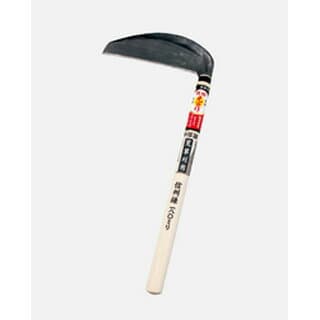
豊稔企販 HT-0485 豊稔光山作 別打信州鎌 中厚 195mm 中厚鎌
195mm bladeものうりばPlantz
Japanese name信州鎌
In northern Nagano, winter forge work, a single-bevel thin blade, shibatsuke, and tsuri shaped a grass sickle around the movement of the hand.
Information last updated 119 days ago
3 images豊稔企販 HT-0485 豊稔光山作 別打信州鎌 中厚 195mm 中厚鎌
195mm bladeものうりばPlantz
 2 images
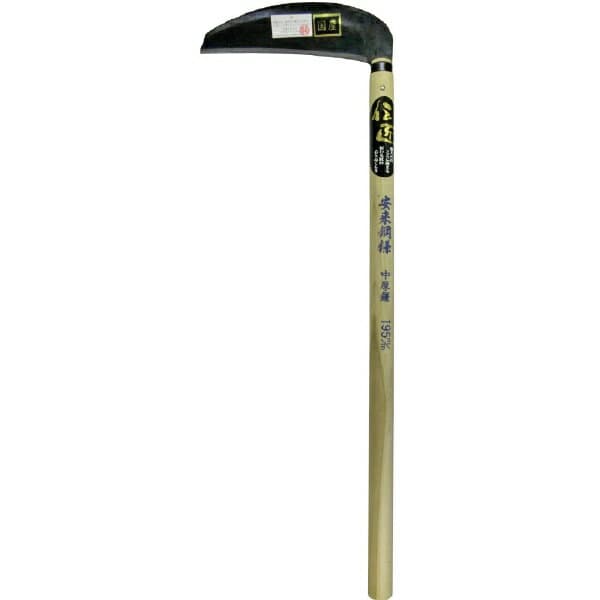
伝匠 伝匠 信州鎌 中厚鎌 尺8柄
1.8-shaku handle楽天ビック(ビックカメラ×楽天)
 3 images
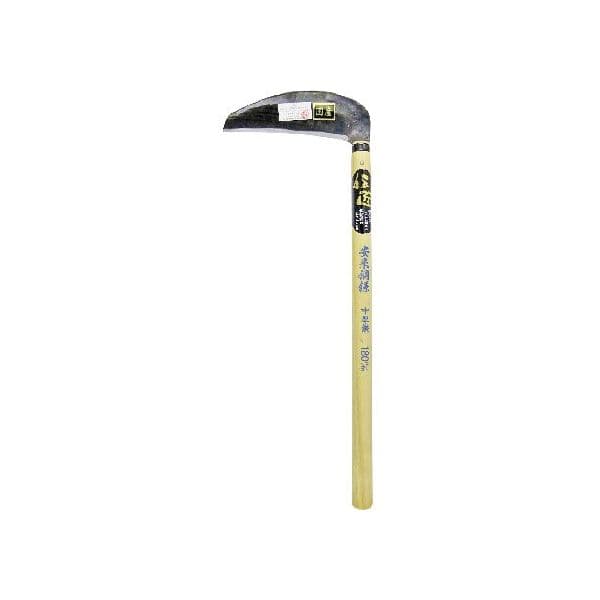
4969968384941 伝匠 信州鎌 中厚鎌 尺5柄 180mm 38494
180mm blade, 450mm handle測定器・工具のイーデンキ
First time buying on Rakuten? How residents in Japan order →
Shinshu kama belongs to the blade-making communities of northern Nagano, especially Furuma and Kashiwara in Shinano-machi. Its working form is a single-bevel, thin-bladed grass sickle with a wide blade body, a fine cutting edge, and a thicker back. After forging, the blade is hammered out into a strong tool, while shibatsuke and tsuri guide cut grass back toward the hand. Around that form are winter side work in mountain settlements, orders from wholesalers, comments from users, a cooperative in Shinano-machi, and school visits where children encounter heat, steel, hammering, and blade angle at a local forge.
Furuma and Kashiwara are the clearest place anchors for Shinshu kama in northern Nagano. In these Shinano-machi settlements, sickle forging developed as side work during the long winter, tying farm households, forge fires, and grass-cutting tools to the season when field labor slowed. The present Shinshu struck-blade cooperative is also based in Shinano-machi, and its member list connects workshops, sickle makers, and wholesalers with settlements such as Funadake-kami, Fukino, Minami-nakamachi, Kamimachi, Suwanohara, and Kashiwara.
Shinshu kama refers to a locally developed single-bevel, thin-bladed sickle for cutting grass. The blade body is wide, the cutting edge is made very thin, and the back keeps more thickness; after forging, sickles and knives are hammered out into strong blades. The design is built for use in grass rather than display. Even when the handle is held level, the blade stands diagonally, and the cut grass moves back toward the user’s hand through the combined effect of shibatsuke and tsuri.
Shibatsuke and tsuri name small adjustments with a direct effect on the body at work. Shibatsuke changes the way the blade meets grass, so cut stems gather inward instead of scattering away from the user. Tsuri sets the blade’s curve and angle, allowing the blade body to stand diagonally while the handle stays horizontal. The angle chosen at the forge becomes a field motion: wrist, handle, thin edge, and cut grass moving in one sequence.
The beginning of Shinshu kama is often told through the late sixteenth century, when village people are said to have learned smithing from blade makers who repaired weapons and swords around the Kawanakajima battles. By the first half of the nineteenth century, shibatsuke and tsuri had been devised, and double-edged sickles were improved into single-bevel thin blades. That timeline joins battlefield blade repair, village farm-tool making, and the practical shape of a grass sickle in the same northern Nagano setting.
In Furuma and Kashiwara, sickle forging reached notable scale by the late Meiji period, with annual production reported at about 800,000 sickles and distribution across Japan. The trade later contracted as farming households declined, farm tools became mechanized, and lower-priced foreign-made sickles entered the market. Furuma maker Kosaka Shigeo described making each sickle while thinking about user satisfaction and improving tools through comments from wholesalers and users; as both groups became fewer, the path for hand-forged farm tools narrowed.
The Shinshu struck-blade cooperative was established in 1981 to support Shinshu kama and related hand-forged blades, and it now brings together ten workshop and wholesaler members. Its timeline includes kajiya-san experience activities from 1983, the Takumi no Sato model workshop in 1988, and school social-learning visits. When children enter a local forge, the craft appears through concrete things: heat, steel, hammering, blade angle, and a grass-cutting tool made for northern Nagano fields.
Shinshu kama becomes clearest when the eye follows the motion of cutting grass. Furuma and Kashiwara winter work, the single-bevel thin blade, a thicker back, shibatsuke and tsuri, comments from wholesalers and users, the 1981 cooperative, and children visiting forges all point to the same object: a northern Nagano sickle shaped so cut grass returns toward the hand.
Compiled from public records and official sources; see the recognition links below. Details may change over time.
Where this product is officially registered, designated, or recognized in Japan.
Regional collective trademark
Registered as a Regional Collective Trademark with the Japan Patent Office.
Sources1
It is written as 信州鎌 in Japanese. Search Rakuten and other Japanese sites with that spelling — the English name will not bring up the listings.
Shinshu sickles are single-bevel, thin-bladed grass sickles from northern Nagano, especially Furuma and Kashiwara in Shinano-machi. The wide blade body, very thin edge, and thicker back are forged and hammered into a strong blade, with shibatsuke and tsuri shaped so cut grass gathers toward the hand.
The origin of Shinshu kama is commonly told through blade makers who repaired weapons and swords around the late-sixteenth-century Kawanakajima battles. By the first half of the nineteenth century, shibatsuke and tsuri had been devised and formed the basis of today's Shinshu kama. By the late Meiji period, Furuma and Kashiwara reportedly produced about 800,000 sickles per year. The trade later shrank with fewer farming households, mechanization, and imported sickles.
It is used for grass cutting and farm work. The blade shape and the shibatsuke and tsuri work are designed so cut grass gathers toward the user during work. Tsuri sets the blade so it stands diagonally even when the handle is level.
Keep wood, bamboo, and lacquer out of prolonged soaking, dishwashers, and direct sun — wipe dry after use and let them air out in the shade. For metal and fabric goods, follow the care notes on the listing.
Most options are shelf-stable, boxed, and travel well, so they suit gifting or bringing home. Confirm the final storage and delivery terms on the Rakuten listing.
On Rakuten: the shops listed here right now are ものうりばPlantz, 楽天ビック(ビックカメラ×楽天), 測定器・工具のイーデンキ. We don't sell directly; purchase, payment, stock, and delivery are all handled on the Rakuten product page.