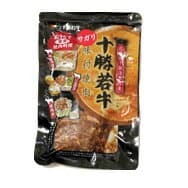
Tokachi Wakaushi Seasoned Yakiniku Sagari (Harami)
【十勝若牛】[味付焼肉十勝若牛サガリ(ハラミ)400g]
400g十勝亭
Japanese name十勝若牛
Tokachi Wakaushi comes from Shimizu Town in Hokkaido, where male Holstein cattle are finished at about 14 months. Western Tokachi dairy land, five producers, and shared standards shape its tender lean meat and juicy umami.
Information last updated 120 days ago
【十勝若牛】[味付焼肉十勝若牛サガリ(ハラミ)400g]
400g十勝亭
First time buying on Rakuten? How residents in Japan order →
In Shimizu Town in western Tokachi, farmland covers about 14,600 hectares and cattle number about 50,000, roughly five times the town’s population. Tokachi Wakaushi grows out of that dairy and livestock setting. It is beef from male Holstein cattle, finished at about 14 months, about six months earlier than ordinary mature beef. Its character is built around fine-grained tender lean meat, juicy umami, and a production rhythm shared by five local producers.
Shimizu Town sits in the western part of Tokachi, with about 14,600 hectares of farmland. Fields for wheat, sugar beet, and potatoes stand alongside land for dent corn and pasture, with crop acreage and feed acreage described as roughly balanced. About 50,000 cattle live in a town of about 9,500 people, so barns, grassland, feed crops, and dairy work form the everyday setting around Tokachi Wakaushi. Its production area is Hokkaido’s Kamikawa-gun Shimizu Town, tying the name to a specific livestock landscape.
Tokachi Wakaushi is made from male Holstein cattle and finished at about 14 months. That age matters in Shimizu Town’s approach to lean beef: when the cattle are younger, texture and meat flavor are described as insufficient; when fattening continues longer, a stronger beefy note can appear and eating quality declines. The 14-month window keeps the meat young, tender, and clearly flavored.
The meat is described as fine-grained, tender lean beef with juicy umami released through chewing. Compared with Japanese Black beef, which is often discussed through fat marbling, Tokachi Wakaushi is framed around the softness and meat juice of young lean beef. That sensory profile explains why age, meat color, and meat quality are all part of the production conversation in Shimizu Town.
Five producers make up the Tokachi Wakaushi production group, shipping about 5,000 head a year. They study together at regular meetings, align production methods, and work on standardizing meat color and meat quality. JA Tokachi Shimizu and Tokachi Shimizu Food Service are also named in quality-improvement work, so the beef is connected to a small, clearly defined producer community rather than an anonymous regional label.
The lean beef appears in local dishes with recognizable forms. Roast beef nigiri made with Tokachi Wakaushi won at the 2012 Beef Summit, and Tokachi Shimizu Gyutama steak bowl placed first three years in a row, from 2013 to 2015, in the New Local Gourmet Grand Prix before entering its hall of fame. Hamburg steaks and curry also show how the tender lean meat moves from cattle barns into everyday plates and bowls.
After beef import liberalization in 1991, meat-cattle production in Shimizu Town shifted toward young-age fattening and developed its own fattening techniques to find the point where lean-meat umami was strongest. In August 2016, four typhoons hit Shimizu Town and livestock farms lost water. JA gathered empty milk tank trucks from across Hokkaido and supplied about 1,000 tons of water a day to livestock farmers in town. Barns, water, tank trucks, and daily farm work make the community behind the beef visible.
The geographical indication later linked the Tokachi Wakaushi name with Shimizu Town and its production conditions, but the clearest impression remains in the meat itself: tender, juicy lean beef from male Holsteins finished at about 14 months. From 14,600 hectares of farmland to the meetings of five producers, Tokachi Wakaushi carries western Tokachi’s dairy landscape into a young red-meat beef.
Compiled from public records and official sources; see the recognition links below. Details may change over time.
Where this product is officially registered, designated, or recognized in Japan.
Regional collective trademark
Registered as a Regional Collective Trademark with the Japan Patent Office.
Sources1
It is written as 十勝若牛 in Japanese. Search Rakuten and other Japanese sites with that spelling — the English name will not bring up the listings.
Tokachi Wakaushi is a lean-beef product family from Shimizu Town, Hokkaido's Kamikawa-gun, made from male Holstein cattle finished at about 14 months. Shimizu Town, in western Tokachi, has about 14,600 hectares of farmland and about 50,000 cattle, reflecting its dairy and livestock background. Five producers form a production group that aligns methods, meat color, and quality. The beef is fine-grained and tender with juicy umami, used in roast beef nigiri, Gyutama steak bowls, hamburg steaks, and curry.
The 14-month timing is described as balancing lean-meat umami and texture; younger cattle lack flavor and texture, while longer fattening strengthens a beefy note. Shimizu Town is in western Tokachi, with about 14,600 hectares of farmland and about 50,000 cattle, roughly five times its population. After beef import liberalization in 1991, Shimizu Town meat-cattle production shifted toward young-age fattening and developed its own fattening techniques. Tokachi Wakaushi is listed under Japan's geographical indication protection system as registration number 164, dated March 18, 2025, in the fresh meat/beef category.
Roast beef nigiri made with Tokachi Wakaushi won first place at the 2012 beef summit (gyuniku summit). The Tokachi Shimizu Gyutama steak bowl (gyutama steak don) won first place three years running, from 2013 to 2015, at the Shin-Gotouchi Gourmet Grand Prix, and was inducted into its hall of fame. The lean meat is noted for being low in fat and calories, with restaurant and butcher-shop channels expanding, and it is also made into roast steaks, hamburg steaks, and curry, including curry with whole Tokachi Wakaushi steak pieces.
Storage varies by product — shelf-stable, refrigerated, or frozen — and is stated on the packaging and the Rakuten listing. Shelf-stable processed foods usually need refrigerating once opened and eating within a few days; chilled and frozen items go straight into storage on arrival. Treat the best-before date on the physical packaging as authoritative.
Most options are shelf-stable, boxed, and travel well, so they suit gifting or bringing home. Confirm the final storage and delivery terms on the Rakuten listing.
On Rakuten: the shops listed here right now are 十勝亭. We don't sell directly; purchase, payment, stock, and delivery are all handled on the Rakuten product page.