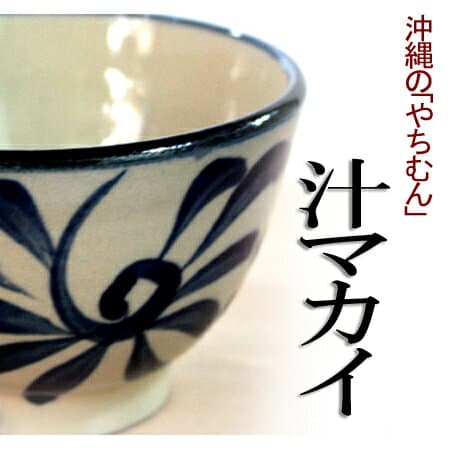
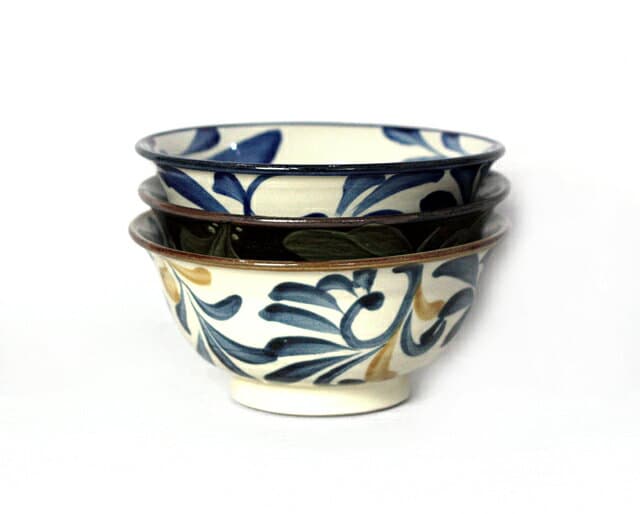
Tsuboya Ware 陶眞窯 3.5 Sun Makai Bowl
やちむん(焼き物/陶器)3.5寸マカイ(染付 コバルト唐草・染付 ゴスアメ唐草・一珍 ゴス白)直径 約10.5cm 高さ 約5.5cm 壺屋焼窯元 陶眞窯ギフト プレゼント 沖縄の食器 おしゃれ カフェ食器 カフェ風 和モダン どんぶり アウトレットではありません
沖縄うまいもの屋!長浜商店
4.9 / 7 reviews
Japanese name壺屋焼
Tsuboya-yaki begins in Naha’s Tsuboya district and takes shape through Okinawan clay, glazed jo-yaki, unglazed ara-yaki, rice-husk-ash white glaze, carved lines, karakara flasks, jars, and shisa forms.
Information last updated 166 days ago
Ordering from abroad works when the recipient has a Japanese address.
All 3 listings below are sold as gifts in the shop's own wording (ギフト, のし対応 …), marked “Gift-ready”.
やちむん(焼き物/陶器)3.5寸マカイ(染付 コバルト唐草・染付 ゴスアメ唐草・一珍 ゴス白)直径 約10.5cm 高さ 約5.5cm 壺屋焼窯元 陶眞窯ギフト プレゼント 沖縄の食器 おしゃれ カフェ食器 カフェ風 和モダン どんぶり アウトレットではありません
沖縄うまいもの屋!長浜商店
4.9 / 7 reviews
やちむん(焼き物/陶器)汁マカイ(染付 コバルト唐草・染付 ゴスアメ唐草・一珍 ゴス白)直径 約12cm 高さ 約7cm壺屋焼窯元 陶眞窯ギフト プレゼント 沖縄の食器 おしゃれ カフェ食器 カフェ風 和モダン どんぶり アウトレットではありません
沖縄うまいもの屋!長浜商店
4.8 / 6 reviews
やちむん(焼き物/陶器)そばマカイ(染付 コバルト唐草・染付 ゴスアメ唐草・一珍 ゴス白)直径 約18cm 高さ 約8cm 壺屋焼窯元 陶眞窯ギフト プレゼント 沖縄の食器 おしゃれ カフェ モダン そば丼 ラーメン鉢 どんぶり アウトレットではありません
沖縄うまいもの屋!長浜商店
4.7 / 10 reviews
First time buying on Rakuten? How residents in Japan order →
In Naha’s Tsuboya district, Tsuboya-yaki begins with a place name and a working kiln town. In 1682, the Ryukyu royal government gathered the Chibana, Takaraguchi, and Wakuta kilns south of Makishi village, the area now known as Tsuboya. The Naha Municipal Tsuboya Pottery Museum also connects its displays to the surrounding Tsuboya townscape. From that setting, the ware appears in bowls, plates, serving bowls, karakara awamori flasks, sake jars, water jars, and ceramic shisa near homes.
The place history of Tsuboya-yaki turns on the kiln consolidation of 1682, when the Chibana, Takaraguchi, and Wakuta kilns were brought together south of Makishi village. Okinawa had already been receiving imported ceramics from around the 12th century, and Ryukyu trade from the 14th to 16th centuries brought ceramics from China and southern regions. Tsuboya’s clay work therefore sits within an island setting shaped by ports, exchange, local kilns, and the later concentration of production in Naha.
Tsuboya-yaki is commonly divided into jo-yaki and ara-yaki. Jo-yaki is glazed and fired at about 1,200°C; it includes bowls, plates, serving bowls, karakara flasks, and jars for daily use. Ara-yaki is fired without glaze at around 1,120°C and centers on large vessels such as sake jars and water jars. The distinction is practical as well as visual: glazed surfaces suit tableware and flasks, while unglazed clay bodies carry the scale of storage vessels.
The body of Tsuboya-yaki begins with Okinawan clay, with good clay layers found across the prefecture. Its glaze palette includes white, black, green, amber, gosu, and milky glaze. The white glaze is built from slaked lime, rice-husk ash made by mixed firing with chaff, Gushichan white clay, and slip clay. Those materials give the vessels a warm surface and a grounded weight in bowls, serving pieces, and sake ware.
The making process names the hand at several stages. Forming methods include the wheel, press molds, mold-raising, and hand-building; glazing methods include dipping, pouring, sprinkling, and cloth application. Decoration may use brush marks, inlay, stamping, scraping, line carving, tobashi-kanna, red painting, raised application, and attached clay parts. On the vessel, these methods become visible as brush direction, cut grooves, impressed patterns, and small clay additions.
Many Tsuboya-yaki forms are tied to use. Karakara is an awamori flask still seen in Okinawan izakaya; dachi-bin is a crescent-shaped portable sake vessel that is now often decorative; yushibin is an awamori vessel for celebratory occasions; and zushigame served as a bone jar. Shisa forms moved from roofs to concrete roofs, gateposts, and entrance ornaments, placing ceramic figures at the edge of the home as well as near everyday living space.
After the war, Tsuboya recovered relatively early because the district suffered lighter damage. As housing increased in Naha, smoke from wood-fired kilns became a problem; some makers changed to gas or kerosene kilns, while others who wanted to continue wood firing moved to Yomitan, where clay was abundant nearby. Present-day support also has a community structure: the Tsuboya Pottery Cooperative is based at 1-21-14 Tsuboya, Naha, has 24 member kilns, and works on shared raw-material purchasing, successor training, clay making, and quality inspection.
The shape of Tsuboya-yaki can be followed through Naha’s Tsuboya streets, jo-yaki fired at about 1,200°C, ara-yaki fired around 1,120°C, Okinawan clay, rice-husk-ash white glaze, karakara flasks, large jars, and shisa at home entrances. It is a family of Okinawan ceramics held together by place, kiln heat, material, vessels for use, and the makers who continue the clay work.
Compiled from public records and official sources; see the recognition links below. Details may change over time.
Where this product is officially registered, designated, or recognized in Japan.
It is written as 壺屋焼 in Japanese. Search Rakuten and other Japanese sites with that spelling — the English name will not bring up the listings.
Tsuboya-yaki is an Okinawan ceramic family rooted in Naha's Tsuboya district. In 1682, the Ryukyu royal government gathered the Chibana, Takaraguchi, and Wakuta kilns in the area now known as Tsuboya. The ware is divided into glazed jo-yaki, fired at about 1,200°C, and unglazed ara-yaki, fired around 1,120°C for large sake and water jars; its material character comes from Okinawan clay, rice-husk-ash white glaze, brush marks, carved lines, karakara flasks, and shisa forms.
Jo-yaki includes bowls, plates, hachi serving bowls, karakara flasks, and jars, while ara-yaki centers on large vessels such as sake jars and water jars. Tsuboya-yaki uses Okinawan clay and glazes including white, black, green, amber, gosu, and milky glaze. The white glaze is mixed from slaked lime, rice-husk ash, Gushichan white clay, and slip clay. Forming and decoration methods include the wheel, press molds, hand-building, brush marks, inlay, line carving, and tobashi-kanna.
Glazed jo-yaki tableware such as bowls, plates, and hachi serving bowls is used as everyday household ware. Karakara is still used as a sake flask in Okinawan izakaya, yushibin serves as a celebratory awamori vessel, and dachi-bin, a crescent-shaped portable sake vessel, is now mostly decorative. Shisa figures, once placed on rooftops, are also used today on concrete roofs, gateposts, and entrances as ornaments.
Porous earthenware is usually given a "medome" treatment first — simmer it gently in rice-rinsing water (or water with a little flour), then cool, rinse, and air-dry. This reduces staining and odour absorption. Porcelain normally just needs a wash. Follow the listing where it says otherwise.
Handmade earthenware, pieces with gold or silver overglaze, and lacquerware generally should not go in a dishwasher, microwave, or heated drying cabinet; heat-resistant porcelain usually can. Check the Rakuten listing for the specific piece.
Most options are shelf-stable, boxed, and travel well, so they suit gifting or bringing home. Confirm the final storage and delivery terms on the Rakuten listing.
On Rakuten: the shops listed here right now are 沖縄うまいもの屋!長浜商店. We don't sell directly; purchase, payment, stock, and delivery are all handled on the Rakuten product page.