 3 images
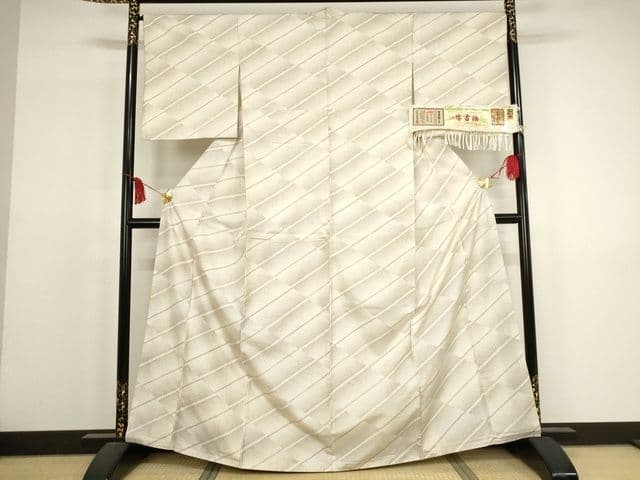
Hakusan Kobo Ushikubi Tsumugi Handwoven Pure Silk Kimono, Irregular Diagonal Stripe
平和屋本店■極上 石川県指定無形文化財 牛首紬 白山工房 手織り 変わり斜縞 山口房子 証紙 やまと金ラベル 正絹 逸品 KAAA1763kk5
平和屋
Japanese name牛首紬
In Shiramine, Hakusan, the old place name Ushikubi lives on in a tsumugi textile made with double-cocoon tama-ito, silk warp threads, and shuttle weaving.
Information last updated 119 days ago
3 images平和屋本店■極上 石川県指定無形文化財 牛首紬 白山工房 手織り 変わり斜縞 山口房子 証紙 やまと金ラベル 正絹 逸品 KAAA1763kk5
平和屋
 3 images
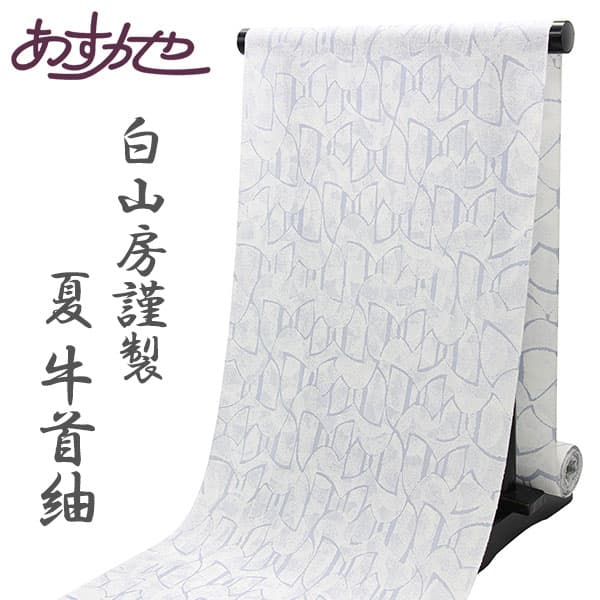
反物 単衣 手挽き糸 夏 牛首紬 着尺 石川県牛首紬生産振興協同組合認定織物 白山工房謹製 あすかや [商品番号t2029]
gray-white x soft blue, 36.5 cm x 12 m+あすかや
 3 images
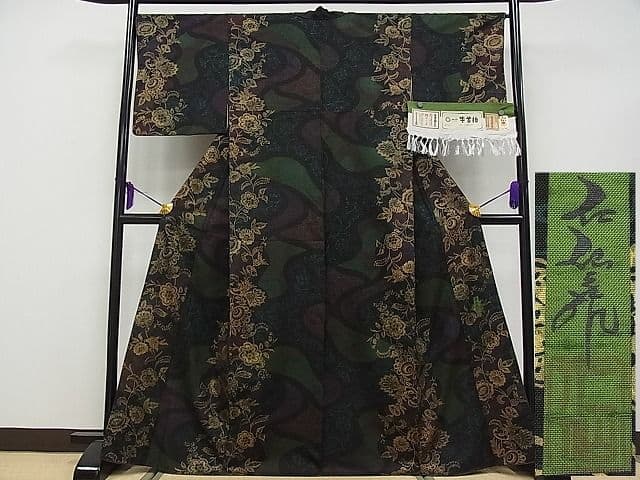
平和屋本店●極上 石川県指定無形文化財 牛首紬 角印 白山工房 手織り 前田仁仙 仁仙更紗 花唐草文 金彩 証紙付き 逸品 CYAA0405s4
with certificate平和屋
First time buying on Rakuten? How residents in Japan order →
Ushikubi tsumugi takes its name from Ushikubi, the former name of the Shiramine area in Hakusan, Ishikawa. The setting matters: Shiramine sits at the foot of Mount Hakusan, with steep land, little farmland, and snow that can reach three to four meters. In that mountain life, sericulture, winter thread-making, and weaving gave a use to tama-mayu, the double cocoon made by two silkworms. The textile is woven with silk warp and zaguri-reeled tama-ito as the weft, usually in plain weave or related structures.
The word Ushikubi points first to place. It was the old name of the Shiramine area in present-day Hakusan, Ishikawa, and the textile is described through methods derived from that former village and production in Hakusan. Read this way, Ushikubi tsumugi is not an abstract regional label: it is a woven cloth tied to Shiramine, Hakusan, the old village name, and a weft made from double-cocoon tama-ito.
Shiramine was shaped by mountain conditions: deep snow, sloped land, and limited fields. Local accounts describe an outlying farming pattern in which families moved to mountain huts in spring and returned in late autumn with harvested crops. Sericulture became important in that livelihood, and winter gave time for spinning and weaving. The cloth’s background is therefore concrete: silkworms, cocoons, snowbound months, and looms in a Hakusan mountain village.
The material that defines Ushikubi tsumugi is tama-mayu, a double cocoon made by two silkworms. From those cocoons, tama-ito is drawn directly by zaguri reeling and used as the weft, while silk is used for the warp. This gives the textile a clear material boundary: it is a tsumugi built from silk warp threads and tama-ito weft, not a general name for any silk cloth made in the area.
The making rules name the tools as well as the yarn. Ushikubi tsumugi is associated with takabata looms, plain weave or related structures, silk warp, zaguri-reeled tama-ito weft, and weft insertion with shuttles such as tenage-hi or hiki-hi. Those details turn the textile from a broad craft category into a sequence of actions: prepare the silk and tama-ito, set the warp, and send each weft thread through the loom.
Ushikubi tsumugi is also known as kugi-nuki tsumugi, a nickname linked to the idea that the cloth is so tough it could pull out a nail caught in it. The same family descriptions balance that toughness with softness, luster, and a comfortable fit against the body. The result is a cloth remembered for both resilience and wearability: a textured tama-ito surface, a quiet sheen, and a softness that belongs to clothing rather than display alone.
The textile appears in use as kimono fabric, obi, Japanese dress goods, and small items. Other descriptions name homongi, komon, yarn-dyed kimono fabric, fukuro obi, and accessories. These forms keep the material close to the body: a length of cloth for a kimono, an obi wrapped at the waist, or a small item carried with everyday dress.
Origin accounts in Shiramine and Kuwajima are best read as local tradition: they tell of weaving being taught after the Heiji Rebellion by people connected with defeated Genji families. More firmly, supplied accounts describe fame by the Genroku era, disappearance during World War II, and postwar revival by committed local people. In present-day Shiramine, Hakusan Kobo provides a visible setting for Ushikubi tsumugi and weaving activities, keeping the line from cocoons to thread to cloth within the Hakusan foothills.
Ushikubi tsumugi is easiest to understand through its concrete pieces: Shiramine in Hakusan, the old name Ushikubi, snow-heavy mountain life, double cocoons, zaguri-reeled tama-ito, silk warp threads, looms, and shuttles. Together they make a cloth known for luster, softness, and the strength carried in the nickname kugi-nuki tsumugi.
Compiled from public records and official sources; see the recognition links below. Details may change over time.
Where this product is officially registered, designated, or recognized in Japan.
It is written as 牛首紬 in Japanese. Search Rakuten and other Japanese sites with that spelling — the English name will not bring up the listings.
Ushikubi tsumugi is a silk tsumugi textile from Shiramine in Hakusan, Ishikawa, named after the former village of Ushikubi. It uses silk for the warp and a specially reeled silk thread for the weft. The craft is rooted in Shiramine's mountain setting, heavy snow, sericulture, and winter weaving traditions, and the resulting cloth is prized for its toughness and softness.
The weft thread, called tama-ito, is reeled by the zaguri method from tama-mayu, double cocoons formed by two silkworms together. The cloth is nicknamed kugi-nuki tsumugi (nail-puller tsumugi) because of its durability. Ushikubi tsumugi is described as lustrous and soft against the body. Main products include kimono fabric, obi, other Japanese dress goods, and small items.
Ushikubi tsumugi includes not only yarn-dyed cloth but also later-dyed homongi and fukuro obi that can be worn as semi-formal pieces. Visitors can see Ushikubi tsumugi weaving and try weaving experiences at Hakusan Kobo in Shiramine, Hakusan, which has seasonal and opening-hour information.
Naturally dyed textiles shed some colour on first wash. Hand-wash separately with a neutral detergent, avoid long soaking and bleach, and dry in the shade to prevent fading. Silk, ramie, and traditionally dyed pieces often need professional cleaning — the care label on the listing takes precedence.
Most options are shelf-stable, boxed, and travel well, so they suit gifting or bringing home. Confirm the final storage and delivery terms on the Rakuten listing.
On Rakuten: the shops listed here right now are 平和屋, あすかや. We don't sell directly; purchase, payment, stock, and delivery are all handled on the Rakuten product page.